Department of Pharmacy, The Second Xiangya Hospital, Central South University, Changsha, China.
Institute of Clinical Pharmacy, Central South University, Changsha, China.
Front Immunol. 2021 Dec 16;12:756872. doi: 10.3389/fimmu.2021.756872. eCollection 2021.
Immune checkpoint inhibitors (ICIs) have updated the treatment landscape for patients with advanced malignancies, while their clinical prospect was hindered by severe immune-related adverse events (irAEs). The aim of this study was to research the association between gut microbiome diversity and the occurrence of ICI-induced irAEs.
We prospectively obtained the baseline fecal samples and clinical data from patients treated with anti-PD-1 inhibitors as monotherapy or in combination with chemotherapy or antiangiogenesis regardless of treatment lines. The 16S rRNA V3-V4 sequencing was used to test the gene amplicons of fecal samples. The development of irAEs was evaluated and monitored from the beginning of therapy based on CTCAE V5.01.
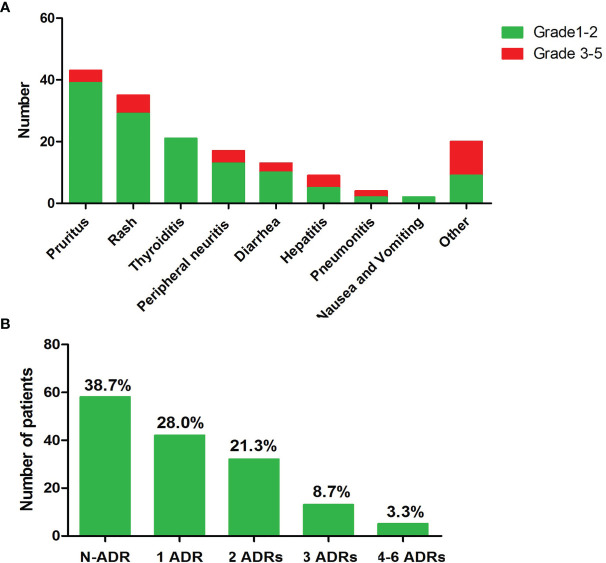
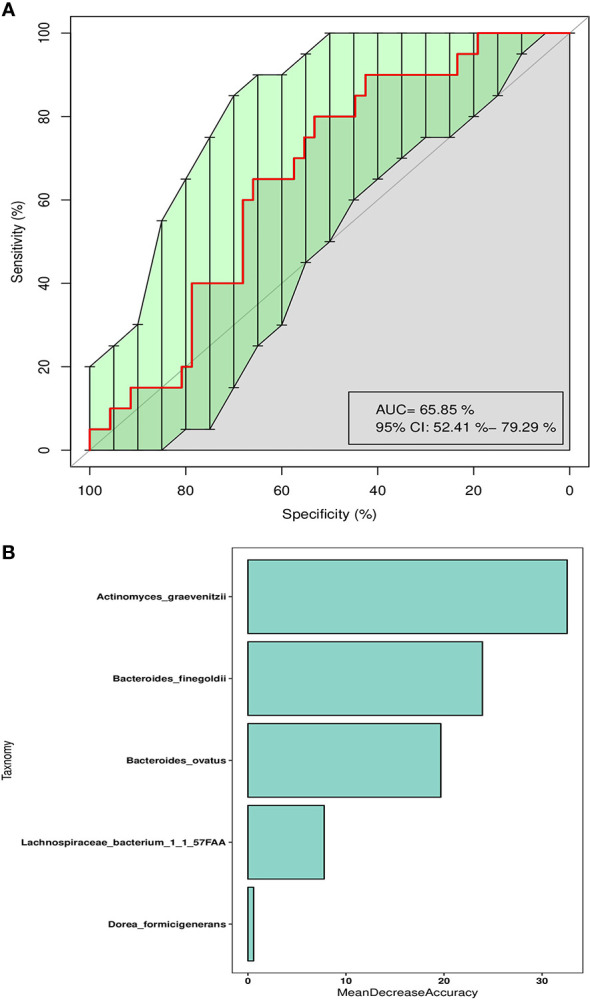
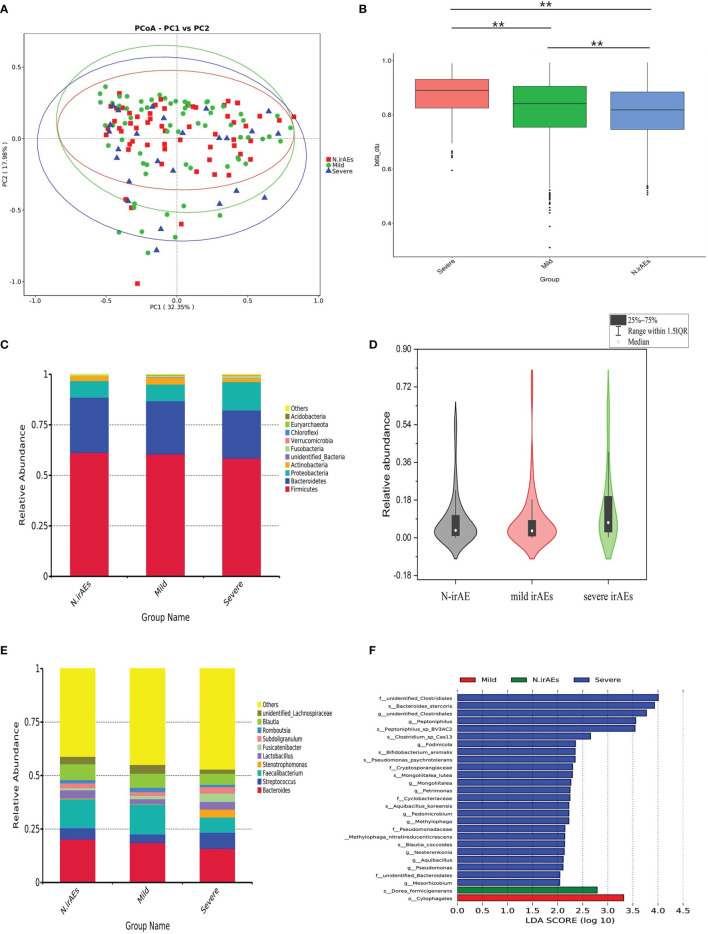
A total of 150 patients were included in the study and followed up for at least 6 months. A total of 90 (60%) patients developed at least one type of adverse effect, among which mild irAEs (grades 1-2) occurred in 65 patients (72.22%) and severe irAEs (grades 3-5) in 25 patients (27.78%). Patients with severe irAEs showed a visible higher abundance of , , and , and patients with mild irAEs had a higher abundance of and unidentified_. With the aid of a classification model constructed with 5 microbial biomarkers, patients without irAEs were successfully distinguished from those with severe irAEs (AUC value was 0.66).
Certain intestinal bacteria can effectively distinguish patients without irAEs from patients with severe irAEs and provide evidence of gut microbiota as an informative source for developing predictive biomarkers to predict the occurrence of irAEs.
免疫检查点抑制剂(ICIs)更新了晚期恶性肿瘤患者的治疗前景,但其临床前景受到严重免疫相关不良事件(irAEs)的阻碍。本研究旨在研究肠道微生物多样性与 ICI 诱导的 irAEs 发生之间的关系。
我们前瞻性地从接受抗 PD-1 抑制剂单药或联合化疗或抗血管生成治疗的患者中获得基线粪便样本和临床数据,无论治疗线如何。使用 16S rRNA V3-V4 测序检测粪便样本的基因扩增子。根据 CTCAE V5.01 从治疗开始时评估和监测 irAEs 的发展。
共有 150 名患者入组并至少随访 6 个月。共有 90 名(60%)患者发生至少一种不良事件,其中 65 名(72.22%)患者发生轻度 irAEs(1-2 级),25 名(27.78%)患者发生重度 irAEs(3-5 级)。重度 irAEs 患者的、、和丰度明显更高,轻度 irAEs 患者的丰度更高和未鉴定的_。借助一个由 5 种微生物生物标志物构建的分类模型,成功地区分了无 irAEs 患者和重度 irAEs 患者(AUC 值为 0.66)。
某些肠道细菌可以有效地区分无 irAEs 患者和重度 irAEs 患者,并为肠道微生物群作为预测 irAEs 发生的预测生物标志物的开发提供信息来源的证据。