Institute of Virology and Immunology, Mittelhäusern, Switzerland.
Department of Population Health and Pathobiology, College of Veterinary Medicine, North Carolina State University, Raleigh, NC, United States.
Front Immunol. 2021 Dec 16;12:779747. doi: 10.3389/fimmu.2021.779747. eCollection 2021.
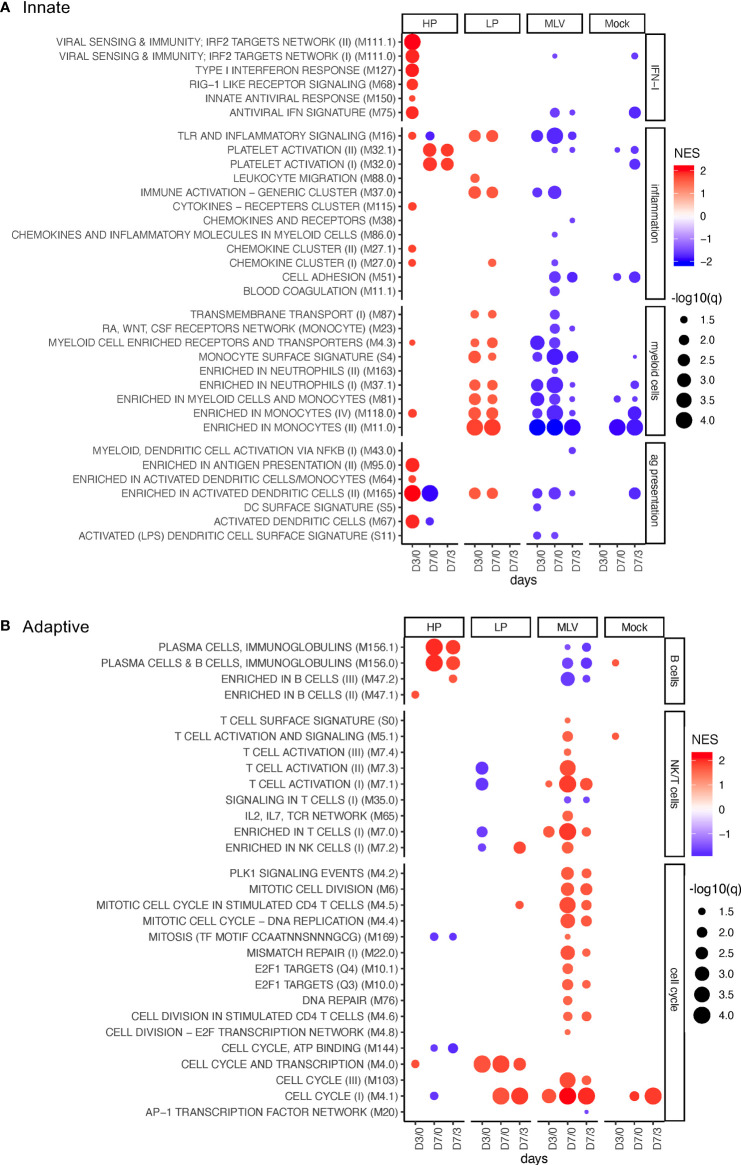
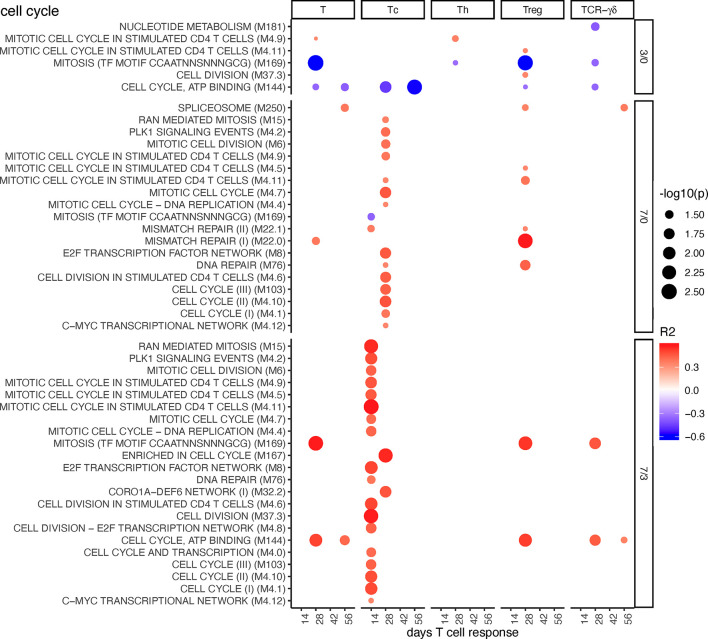
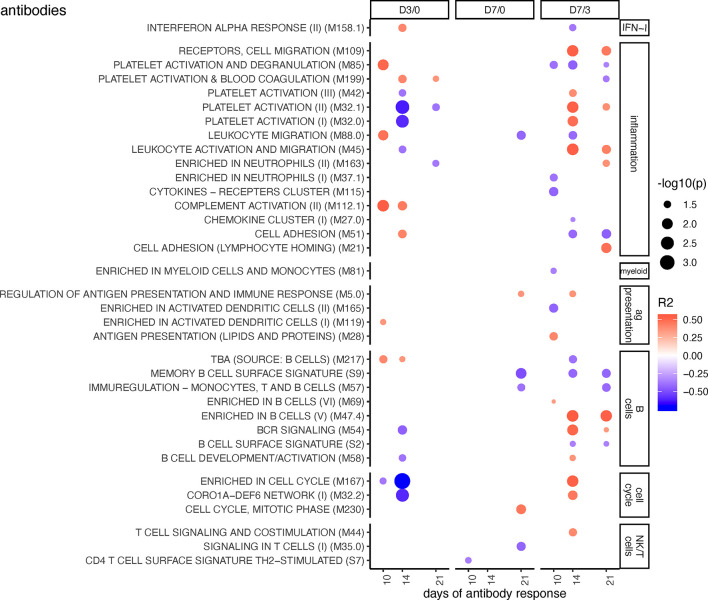
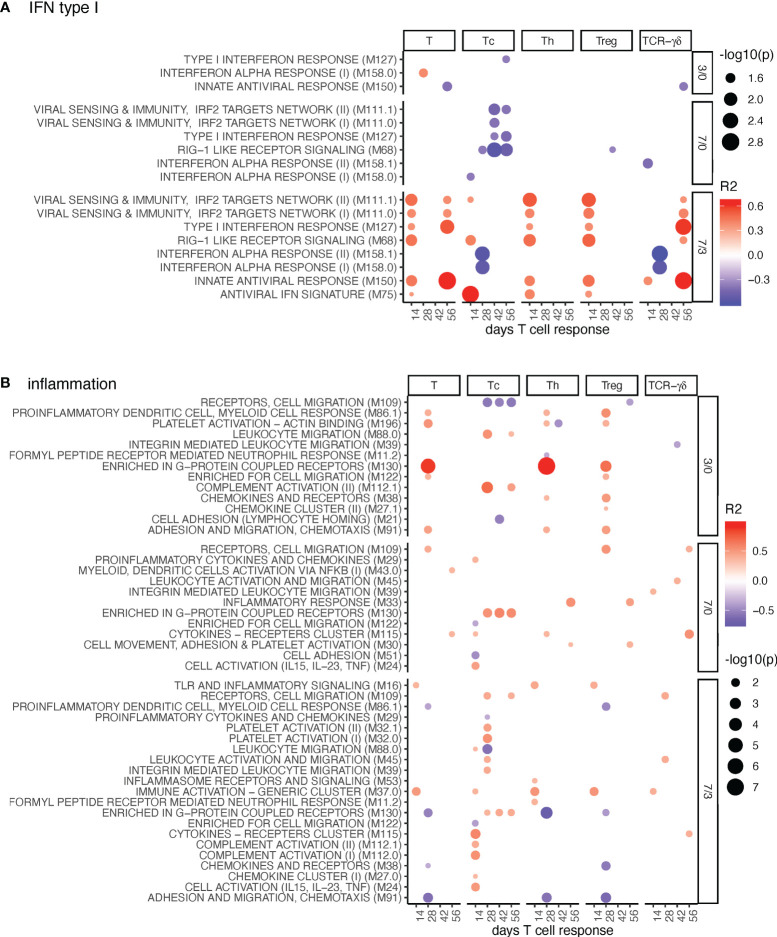
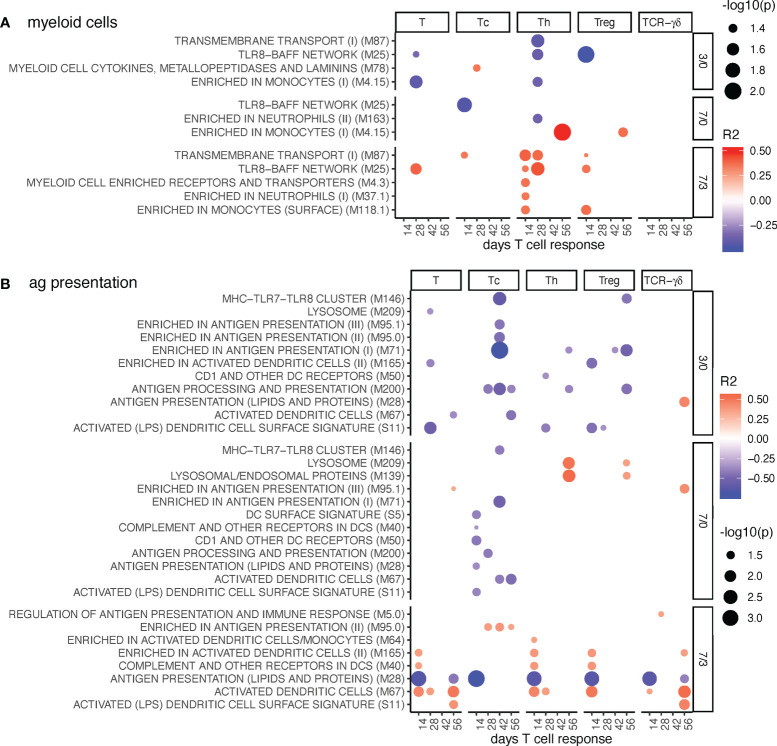
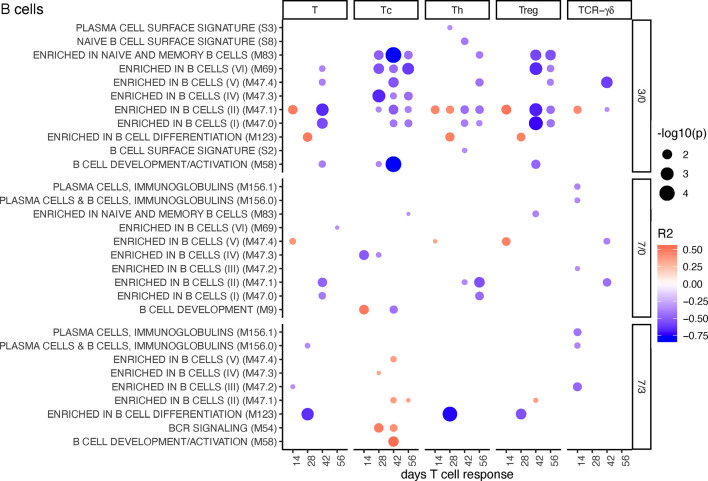
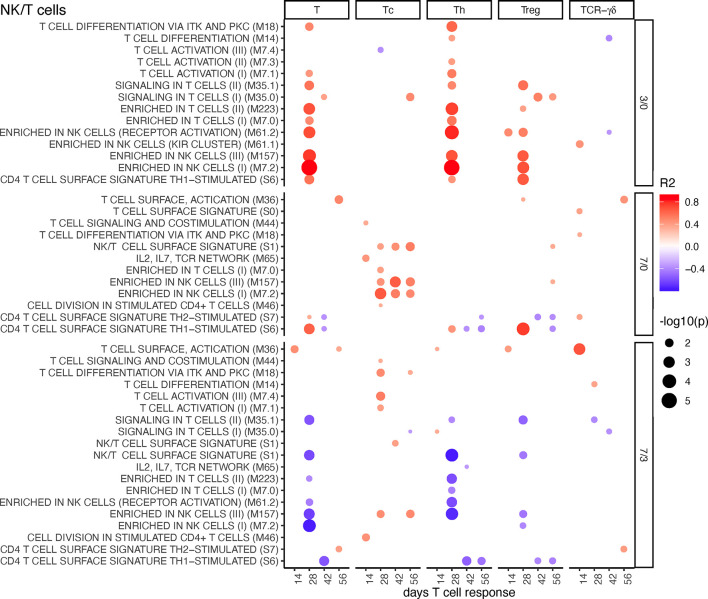
This study was initiated to better understand the nature of innate immune responses and the relatively weak and delayed immune response against porcine reproductive and respiratory syndrome virus (PRRSV). Following modified live virus (MLV) vaccination or infection with two PRRSV-2 strains, we analyzed the transcriptome of peripheral blood mononuclear cells collected before and at three and seven days after vaccination or infection. We used blood transcriptional modules (BTMs)-based gene set enrichment analyses. BTMs related to innate immune processes were upregulated by PRRSV-2 strains but downregulated by MLV. In contrast, BTMs related to adaptive immune responses, in particular T cells and cell cycle, were downregulated by PRRSV-2 but upregulated by MLV. In addition, we found differences between the PRRSV strains. Only the more virulent strain induced a strong platelet activation, dendritic cell activation, interferon type I and plasma cell responses. We also calculated the correlations of BTM with the neutralizing antibody and the T-cell responses. Early downregulation (day 0-3) of dendritic cell and B-cell BTM correlated to both CD4 and CD8 T-cell responses. Furthermore, a late (day 3-7) upregulation of interferon type I modules strongly correlated to helper and regulatory T-cell responses, while inflammatory BTM upregulation correlated more to CD8 T-cell responses. BTM related to T cells had positive correlations at three days but negative associations at seven days post-infection. Taken together, this work contributes to resolve the complexity of the innate and adaptive immune responses against PRRSV and indicates a fundamentally different immune response to the less immunogenic MLV compared to field strains which induced robust adaptive immune responses. The identified correlates of T-cell responses will facilitate a rational approach to improve the immunogenicity of MLV.
本研究旨在更好地了解固有免疫反应的本质以及针对猪繁殖与呼吸综合征病毒(PRRSV)的相对较弱和延迟的免疫反应。在进行了减毒活疫苗(MLV)接种或感染两种 PRRSV-2 株后,我们分析了接种或感染前以及接种或感染后 3 天和 7 天收集的外周血单核细胞的转录组。我们使用了基于血液转录模块(BTM)的基因集富集分析。PRRSV-2 株上调了与固有免疫过程相关的 BTMs,而下调了 MLV。相比之下,与适应性免疫反应相关的 BTMs,特别是 T 细胞和细胞周期,被 PRRSV-2 下调,而被 MLV 上调。此外,我们还发现了两种 PRRSV 株之间的差异。只有毒力更强的株诱导强烈的血小板活化、树突状细胞活化、I 型干扰素和浆细胞反应。我们还计算了 BTM 与中和抗体和 T 细胞反应的相关性。树突状细胞和 B 细胞 BTM 的早期下调(第 0-3 天)与 CD4 和 CD8 T 细胞反应均相关。此外,干扰素 I 型模块的晚期上调(第 3-7 天)与辅助性和调节性 T 细胞反应强烈相关,而炎症性 BTM 的上调与 CD8 T 细胞反应更相关。与 T 细胞相关的 BTM 在第 3 天呈正相关,但在感染后第 7 天呈负相关。总之,这项工作有助于解决针对 PRRSV 的固有和适应性免疫反应的复杂性,并表明与诱导强大适应性免疫反应的田间株相比,对免疫原性较低的 MLV 产生根本不同的免疫反应。鉴定出的与 T 细胞反应相关的指标将有助于改善 MLV 的免疫原性。