Almazov National Medical Research Centre, Personalized Medicine Centre, Saint Petersburg, Russia.
Institute of Cytology, Laboratory of Gene Expression Regulation, Russian Academy of Sciences, Saint Petersburg, Russia.
Front Immunol. 2021 Dec 15;12:780145. doi: 10.3389/fimmu.2021.780145. eCollection 2021.
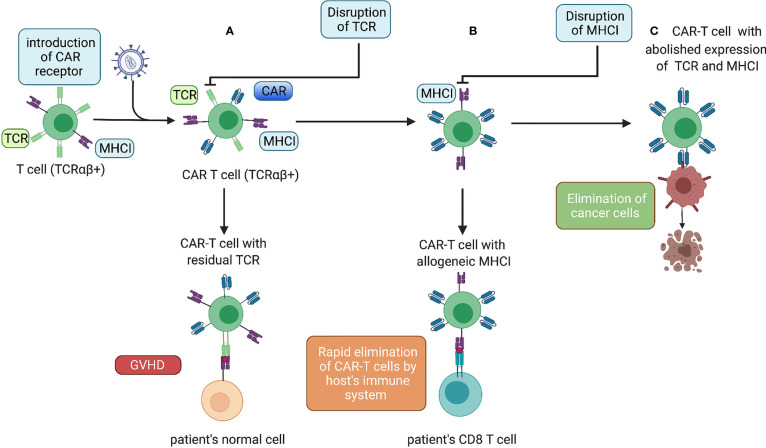
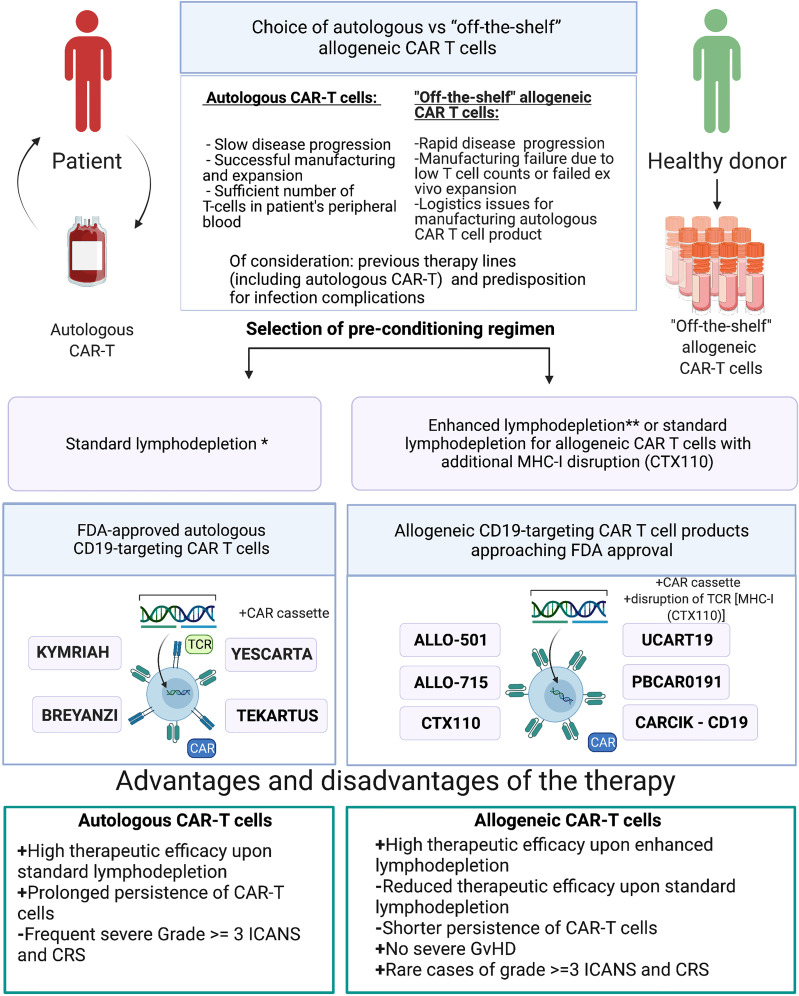
Despite the outstanding results of treatment using autologous chimeric antigen receptor T cells (CAR-T cells) in hematological malignancies, this approach is endowed with several constraints. In particular, profound lymphopenia in some patients and the inability to manufacture products with predefined properties or set of cryopreserved batches of cells directed to different antigens in advance. Allogeneic CAR-T cells have the potential to address these issues but they can cause life-threatening graft-versus-host disease or have shorter persistence due to elimination by the host immune system. Novel strategies to create an "off the shelf" allogeneic product that would circumvent these limitations are an extensive area of research. Here we review CAR-T cell products pioneering an allogeneic approach in clinical trials.
尽管使用自体嵌合抗原受体 T 细胞(CAR-T 细胞)治疗血液系统恶性肿瘤的效果显著,但该方法仍存在一些局限性。特别是,一些患者存在严重的淋巴细胞减少症,而且无法预先制造具有预定特性或针对不同抗原的冷冻保存批次的产品。同种异体 CAR-T 细胞有可能解决这些问题,但它们可能会导致危及生命的移植物抗宿主病,或由于宿主免疫系统的清除而导致持久性较短。开发一种能够规避这些限制的“现成”同种异体产品的新策略是一个广泛的研究领域。在这里,我们回顾了在临床试验中率先采用同种异体方法的 CAR-T 细胞产品。