Key Laboratory of Cell Engineering in Guizhou Province, Affiliated Hospital of Zunyi Medical University, Zunyi, China.
Bio-X Institutes, Key Laboratory for the Genetics of Developmental and Neuropsychiatric Disorders (Ministry of Education), Shanghai Jiao Tong University, Shanghai, China.
Front Immunol. 2021 Dec 15;12:792711. doi: 10.3389/fimmu.2021.792711. eCollection 2021.
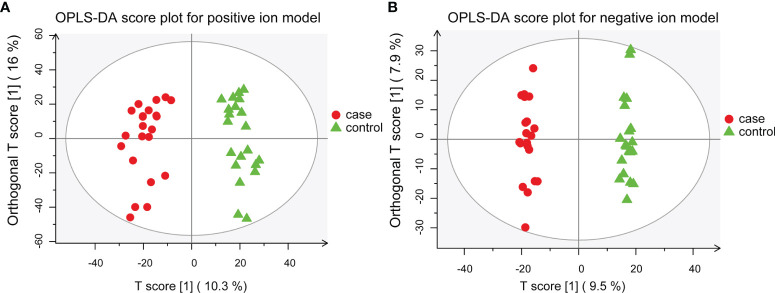
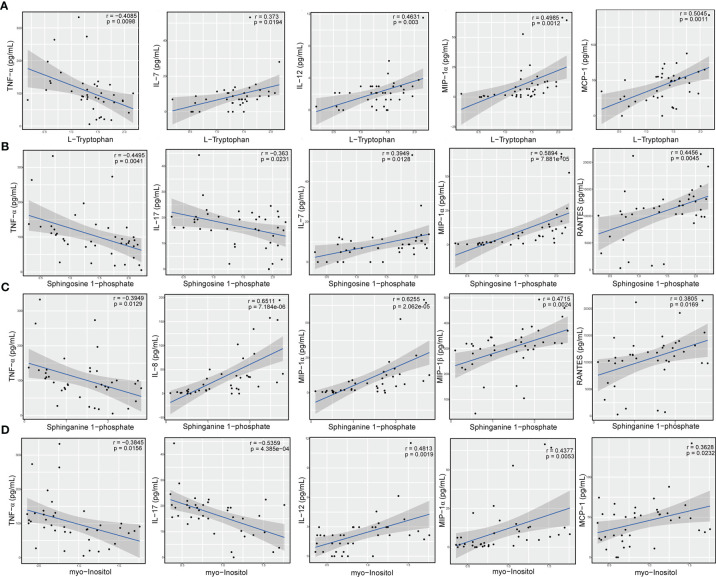
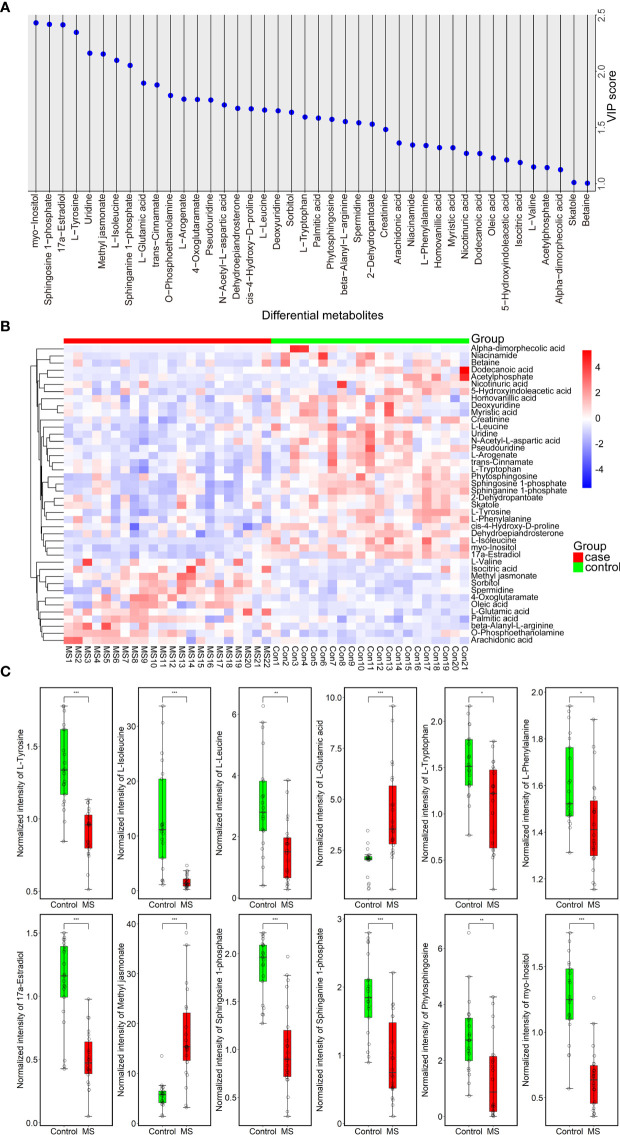
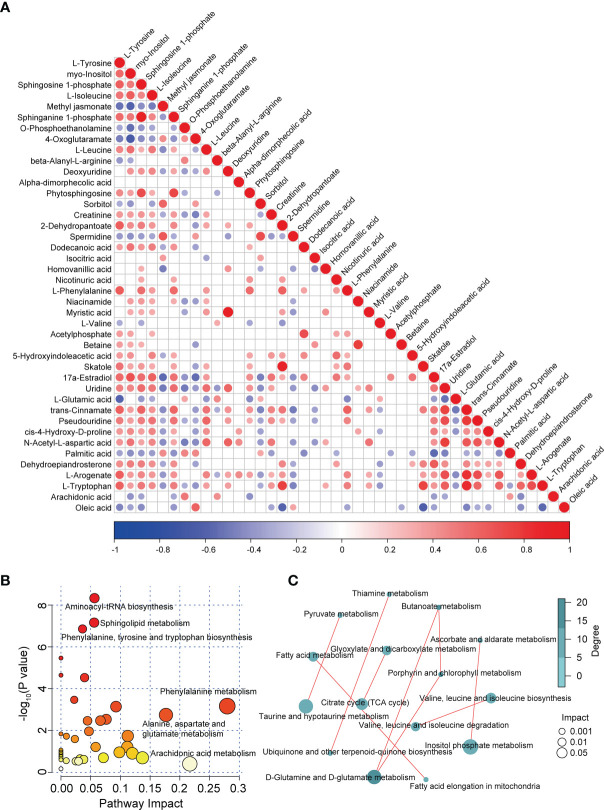
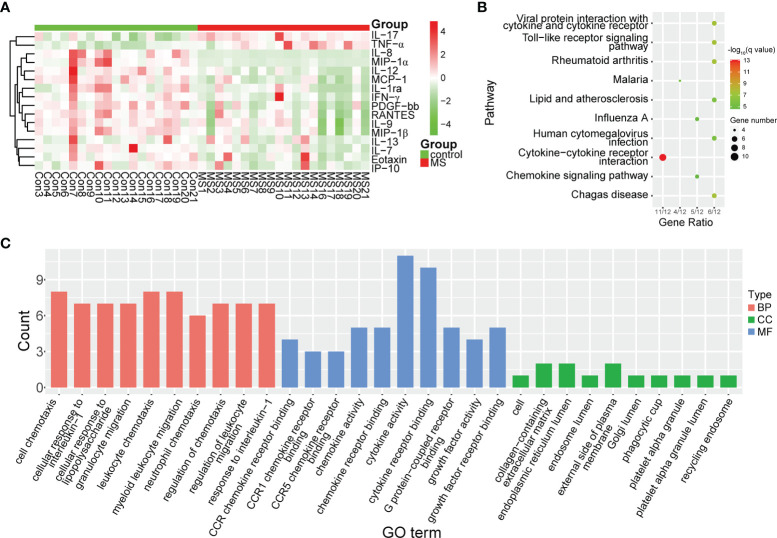
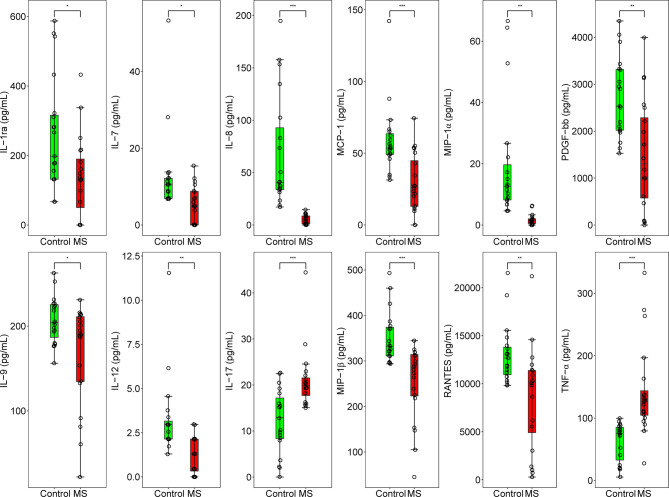
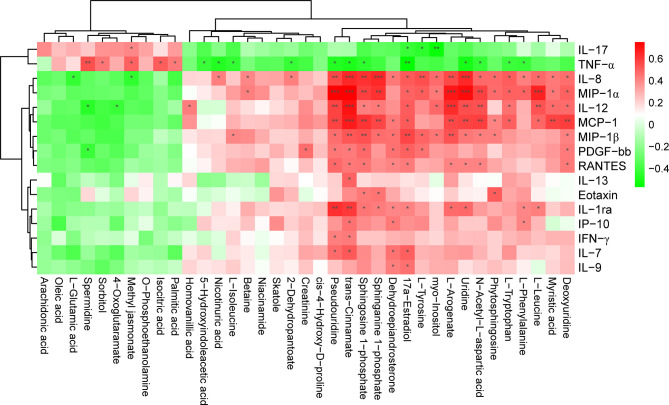
Multiple sclerosis (MS) is an autoimmune disease that leads to the demyelination of nerve axons. An increasing number of studies suggest that patients with MS exhibit altered metabolic profiles, which might contribute to the course of MS. However, the alteration of metabolic profiles in Chinese patients with MS and their potential roles in regulating the immune system remain elusive. In this study, we performed a global untargeted metabolomics approach in plasma samples from 22 MS-affected Chinese patients and 21 healthy subjects. A total of 42 differentially abundant metabolites (DAMs) belonging to amino acids, lipids, and carbohydrates were identified in the plasma of MS patients and compared with those in healthy controls. We observed an evident reduction in the levels of amino acids, such as L-tyrosine, L-isoleucine, and L-tryptophan, whereas there was a great increase in the levels of L-glutamic acid and L-valine in MS-affected patients. The levels of lipid and carbohydrate metabolites, such as sphingosine 1-phosphate and myo-inositol, were also reduced in patients with MS. In addition, the concentrations of proinflammatory cytokines, such as IL-17 and TNF-α, were significantly increased, whereas those of several anti-inflammatory cytokines and chemokines, such as IL-1ra, IL-7, and MIP-1α, were distinctly reduced in the plasma of MS patients compared with those in healthy subjects. Interestingly, some DAMs, such as L-tryptophan and sphingosine 1-phosphate, showed an evident negative correlation with changes in the level of TNF-α and IL-17, while tightly positively correlating with altered concentrations of anti-inflammatory cytokines and chemokines, such as MIP-1α and RANTES. Our results revealed that altered metabolomic profiles might contribute to the pathogenesis and course of MS disease by modulating immuno-inflammatory responses in the peripheral system, which is essential for eliciting autoimmune responses in the central nervous system, thus resulting in the progression of MS. This study provides potential clues for developing therapeutic strategies for MS in the near future.
多发性硬化症(MS)是一种自身免疫性疾病,导致神经轴突脱髓鞘。越来越多的研究表明,MS 患者表现出代谢谱的改变,这可能有助于 MS 的病程。然而,中国 MS 患者代谢谱的改变及其在调节免疫系统中的潜在作用仍不清楚。在这项研究中,我们对 22 名 MS 患者和 21 名健康受试者的血浆样本进行了非靶向代谢组学分析。在 MS 患者的血浆中鉴定出了 42 种差异丰富的代谢物(DAMs),它们属于氨基酸、脂质和碳水化合物,并与健康对照组进行了比较。我们观察到氨基酸水平明显降低,如 L-酪氨酸、L-异亮氨酸和 L-色氨酸,而 L-谷氨酸和 L-缬氨酸水平显著升高。脂质和碳水化合物代谢物,如 1-磷酸鞘氨醇和肌醇,在 MS 患者中也减少。此外,促炎细胞因子(如 IL-17 和 TNF-α)的浓度显著增加,而抗炎细胞因子和趋化因子(如 IL-1ra、IL-7 和 MIP-1α)的浓度在 MS 患者的血浆中明显降低。有趣的是,一些 DAMs,如 L-色氨酸和 1-磷酸鞘氨醇,与 TNF-α和 IL-17 水平的变化呈明显负相关,而与抗炎细胞因子和趋化因子(如 MIP-1α和RANTES)的浓度变化呈紧密正相关。我们的研究结果表明,代谢组学图谱的改变可能通过调节外周系统的免疫炎症反应,从而导致中枢神经系统自身免疫反应的发生,进而导致 MS 的进展,从而有助于 MS 的发病机制和病程。这为未来开发 MS 的治疗策略提供了潜在线索。