Darazam Ilad Alavi, Besharati Sajad, Shabani Minoosh, Shokouhi Shervin, Fallahzadeh Mohammad, Shabanpour Dehbsneh Hadiseh, Khalili Negar, Soleymaninia Azam, Hoseyni Kusha Akram, Taleb Shoushtari Maryam, Amirdosara Mahdi, Hajiesmaeili Mohammadreza, Rezaei Omidvar, Khoshkar Ali, Naghibi Irvani Seyed Sina, Kheyrian Mahnaz, Goudarzi Fatemeh
Clinical Research Development Unit of Loghman Hakim Hospital, Shahid Beheshti University of Medical Sciences, Tehran, Iran.
Infectious Diseases and Tropical Medicine Research Center, Shahid Beheshti University of Medical Sciences, Tehran, Iran.
Tanaffos. 2021 Feb;20(2):156-163.
Coronavirus disease 2019 (COVID-19) has been pandemic and has caused a great burden on almost all countries across the world. Different perspectives of this novel disease are poorly understood. This study sought to investigate the clinical and epidemiological characteristics of COVID-19 to efficiently assist the health system of Iran to conquer the outbreak.
This retrospective observational study was performed on 394 patients with a diagnosis of COVID-19. The patients should have a history of hospitalization at Loghman-Hakim hospital, Tehran, Iran, for 10 weeks, beginning from the first official report of the disease in Iran. In the subsequent step, the baseline demographic and clinical and paraclinical information of the patients was documented. Finally, the patients were assessed if they had exhibited any morbidity or mortality.
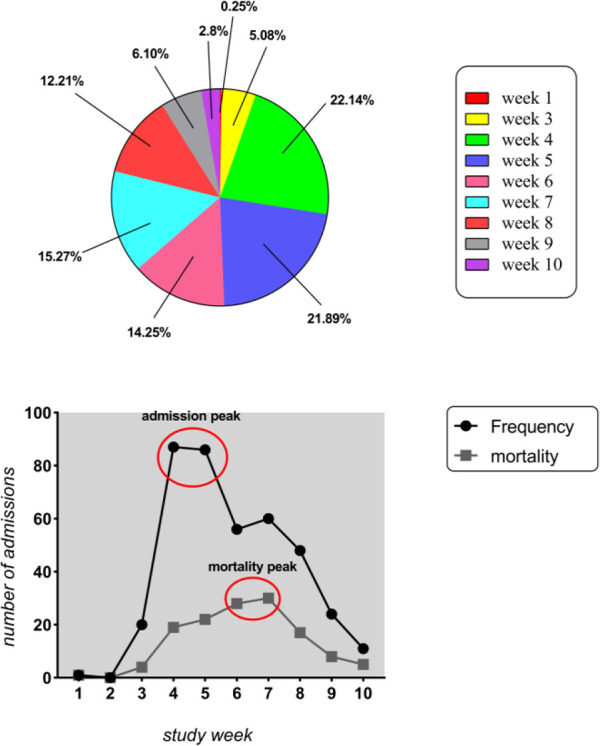
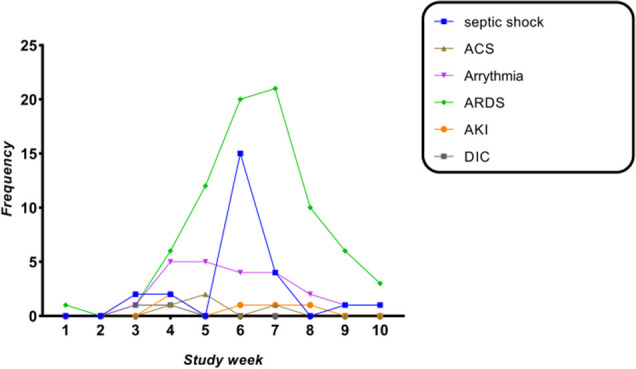
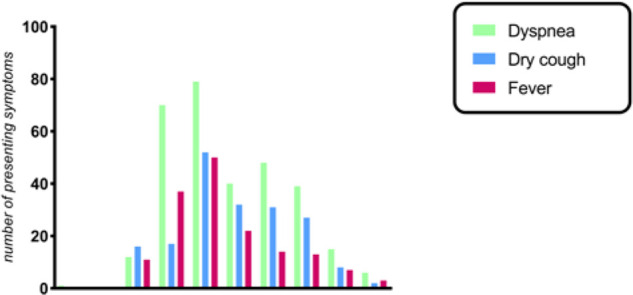
The epidemiological examination of the COVID-19 population suggested a bell diagram pattern for the hospitalization rate, in which the 4th week of the study was the peak. The highest rate of secondary adverse events due to the virus was observed at the 6th and 7th weeks of the study course. On another note, clinical evaluations resulted in identifying specific abnormalities, such as bilateral opacity in chest computed tomography scans or low oxygen saturation in laboratory data.
This study provides evidence concerning the clinical and epidemiological characteristics of COVID-19 in the first phase of the virus outbreak in Iran. Further studies comparing the disease features in the subsequent phases with findings of this study can pave the way for additional information in this regard.
2019年冠状病毒病(COVID-19)已成为大流行病,给世界上几乎所有国家都带来了巨大负担。人们对这种新型疾病的不同方面了解甚少。本研究旨在调查COVID-19的临床和流行病学特征,以有效协助伊朗的卫生系统控制疫情。
本回顾性观察研究对394例确诊为COVID-19的患者进行。这些患者应自伊朗首次官方报告该疾病起,在伊朗德黑兰的洛格曼-哈基姆医院有10周的住院史。接下来,记录患者的基线人口统计学、临床和辅助检查信息。最后,评估患者是否出现任何发病或死亡情况。
对COVID-19患者群体的流行病学检查显示住院率呈钟形图模式,其中研究的第4周为峰值。在研究过程的第6周和第7周观察到由该病毒引起的继发性不良事件发生率最高。另一方面,临床评估发现了一些特定异常,如胸部计算机断层扫描中的双侧模糊影或实验室数据中的低氧饱和度。
本研究提供了有关伊朗病毒爆发第一阶段COVID-19临床和流行病学特征的证据。进一步比较后续阶段疾病特征与本研究结果的研究可为这方面的更多信息铺平道路。