
在衰老过程中,M3受体在调节大鼠心脏电活动方面的作用会减弱。
The role of M3 receptors in regulation of electrical activity deteriorates in the rat heart during ageing.
作者信息
Tapilina Svetlana V, Ivanova Alexandra D, Filatova Tatiana S, Galenko-Yaroshevsky Pavel A, Abramochkin Denis V
机构信息
Department of Human and Animal Physiology, Moscow State University, Leninskiye Gory 1, 12, Moscow, Russia.
Department of Physiology, Pirogov Russian National Research Medical University, Ostrovityanova Str 1, Moscow, Russia.
出版信息
Curr Res Physiol. 2021 Dec 8;5:1-7. doi: 10.1016/j.crphys.2021.12.001. eCollection 2022.
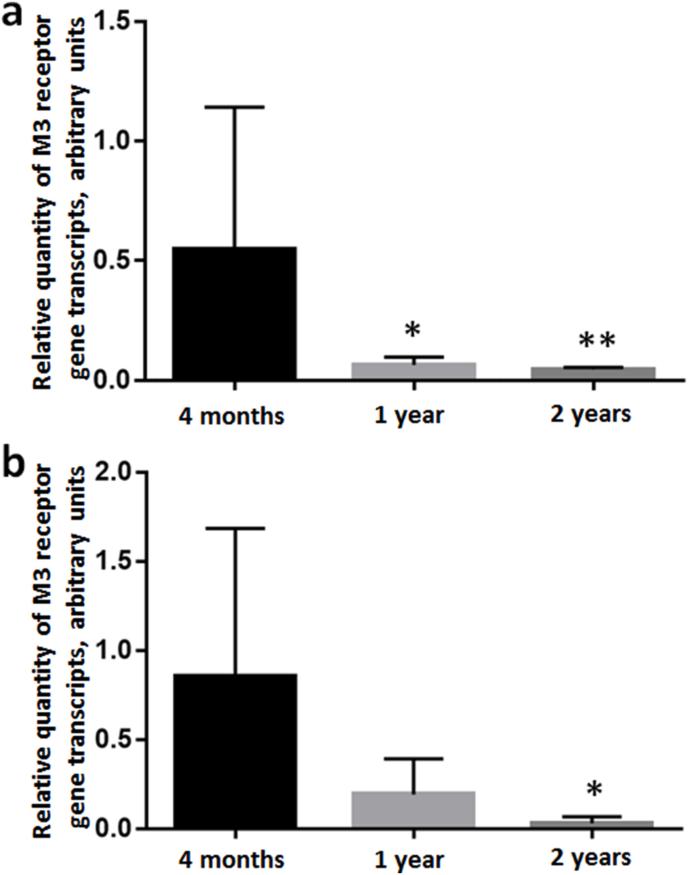
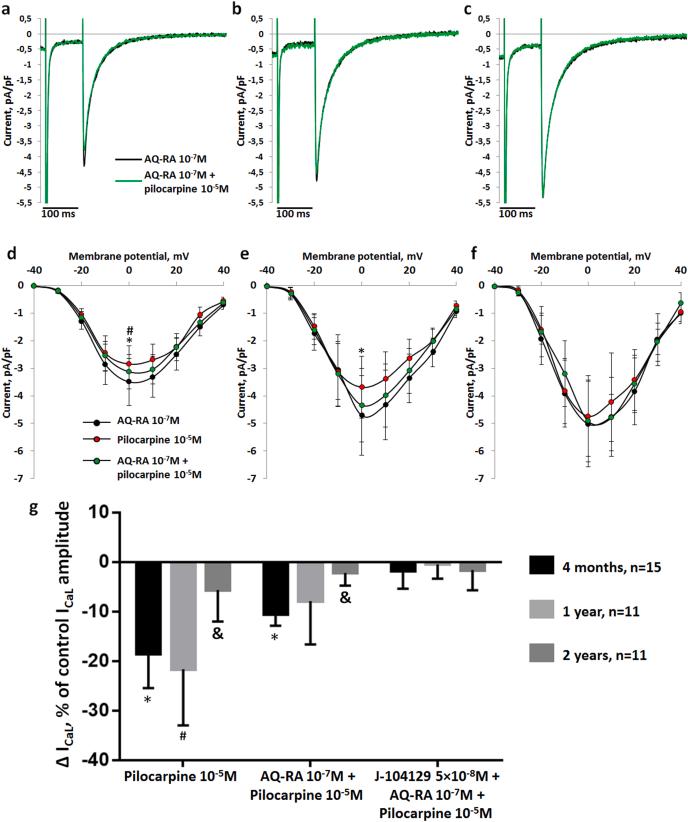
Ageing is a complex process which affects all systems of the organism and therefore changes the environment where the heart is working. In this study we demonstrate the ageing-related changes in the mechanisms of parasympathetic regulation of mammalian heart. Electrophysiological effects produced by selective activation of M3-cholinoreceptors were compared in isolated cardiac preparations from young adult (4 months), adult (1 year) and ageing (2 years) rats using sharp glass microelectrode technique. M3-receptors were activated with muscarinic agonist pilocarpine (10M) in the presence of selective M2 antagonist AQ-RA741 (10M). In atrial and ventricular myocardium from young rats M3 stimulation induced shortening of action potentials(APs), while no significant effect was observed in both elder groups. The main mechanism of M3-induced AP shortening is inhibition of L-type Ca current, estimated using whole-cell patch-clamp. It was negligible in atrial myocytes from ageing animals in comparison with young rats. The loss of sensitivity to stimulation of M3-receptors is due to decrease in M3 gene expression, shown by RT-PCR both in atrial and ventricular samples from ageing rats. Thus, in ageing rat heart M3-receptors are down-regulated and not involved in regulation of electrical activity.
衰老过程复杂,影响机体所有系统,进而改变心脏工作的环境。在本研究中,我们展示了哺乳动物心脏副交感神经调节机制中与衰老相关的变化。使用尖锐玻璃微电极技术,比较了在成年早期(4个月)、成年期(1年)和老龄期(2年)大鼠的离体心脏标本中,选择性激活M3胆碱能受体所产生的电生理效应。在选择性M2拮抗剂AQ-RA741(10μM)存在的情况下,用毒蕈碱激动剂毛果芸香碱(10μM)激活M3受体。在年轻大鼠的心房和心室心肌中,M3刺激诱导动作电位(AP)缩短,而在两个老年组中未观察到显著影响。M3诱导AP缩短的主要机制是抑制L型钙电流,这是通过全细胞膜片钳技术评估的。与年轻大鼠相比,老龄动物心房肌细胞中的这种抑制作用可忽略不计。RT-PCR显示,老龄大鼠心房和心室样本中M3基因表达下降,这导致对M3受体刺激的敏感性丧失。因此,在老龄大鼠心脏中,M3受体下调,不参与电活动调节。


 Zotero 插件