Key Laboratory for Animal Genetics, Breeding and Reproduction of Shaanxi Province, College of Animal Science and Technology, Northwest A&F University, Yangling, Shaanxi, China.
Institute of Animal Genetics and Breeding, College of Animal Science and Technology, Sichuan Agricultural University, Chengdu, Sichuan, China.
J Biol Chem. 2022 Feb;298(2):101559. doi: 10.1016/j.jbc.2021.101559. Epub 2022 Jan 1.
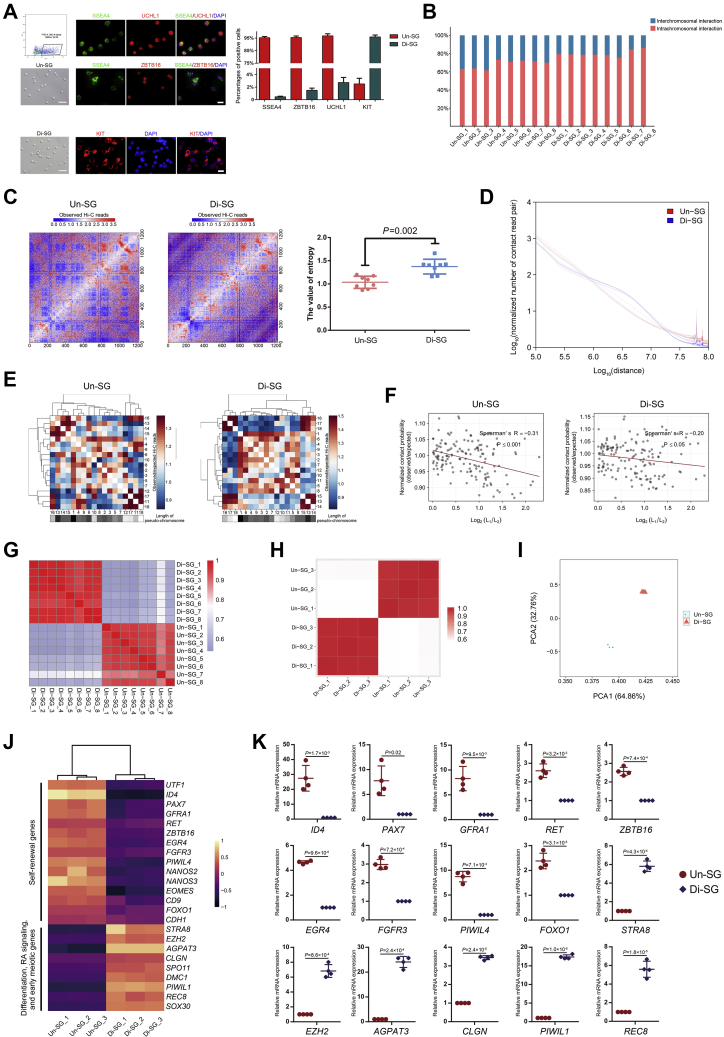
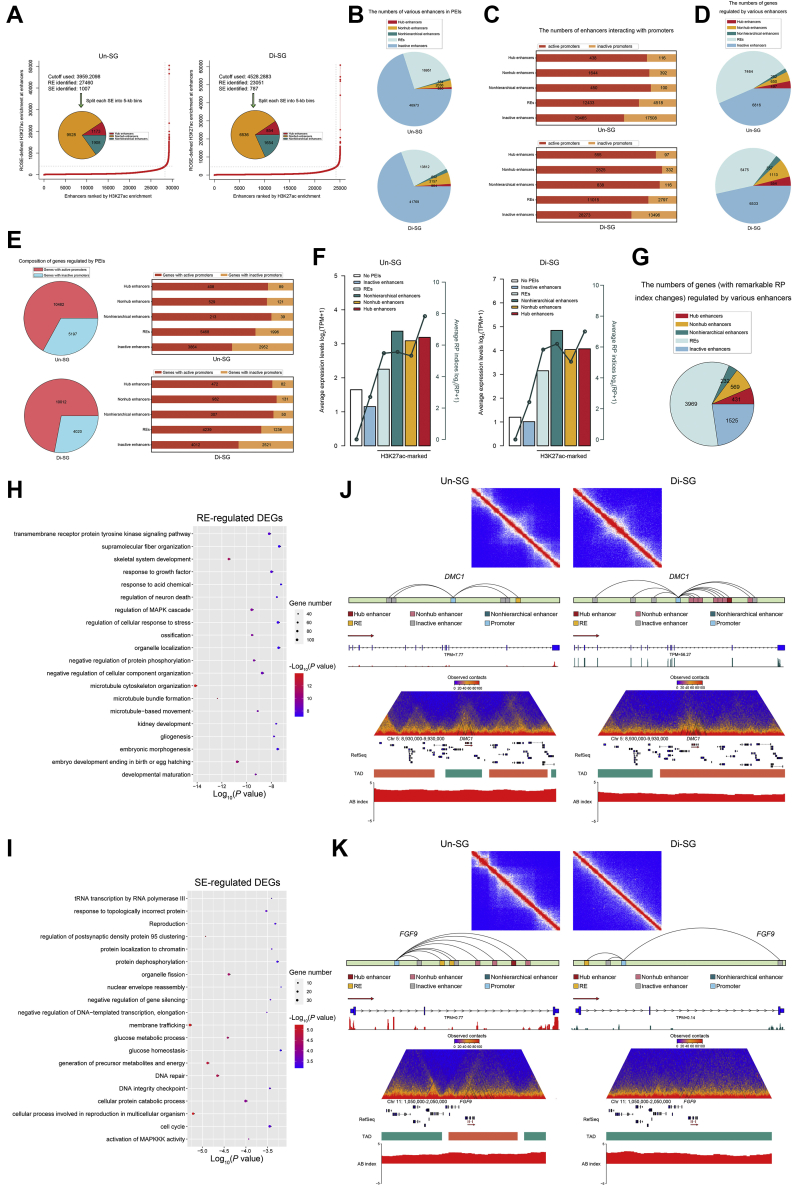
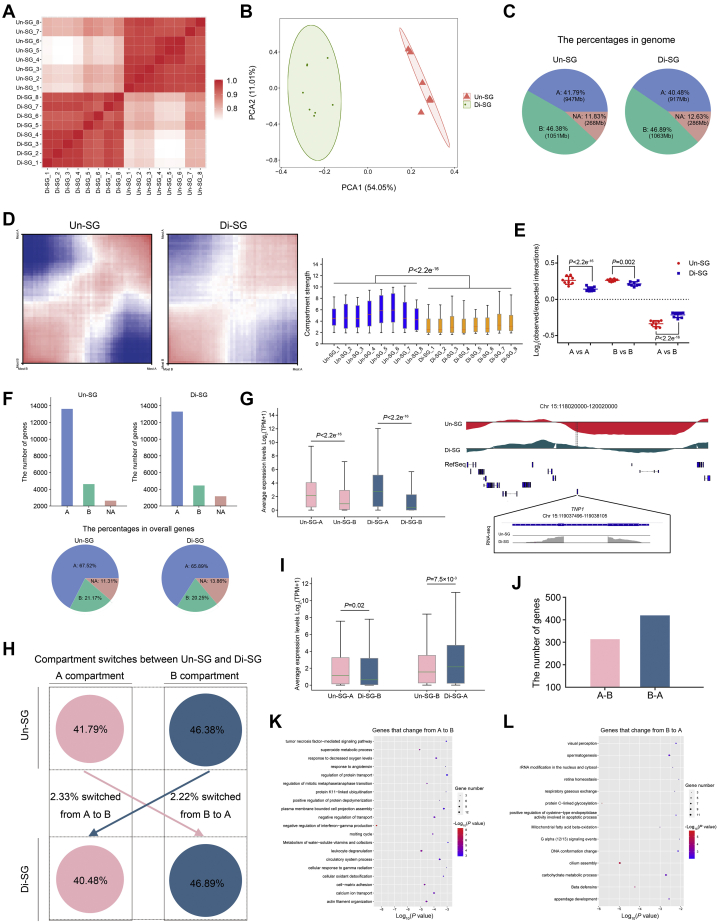
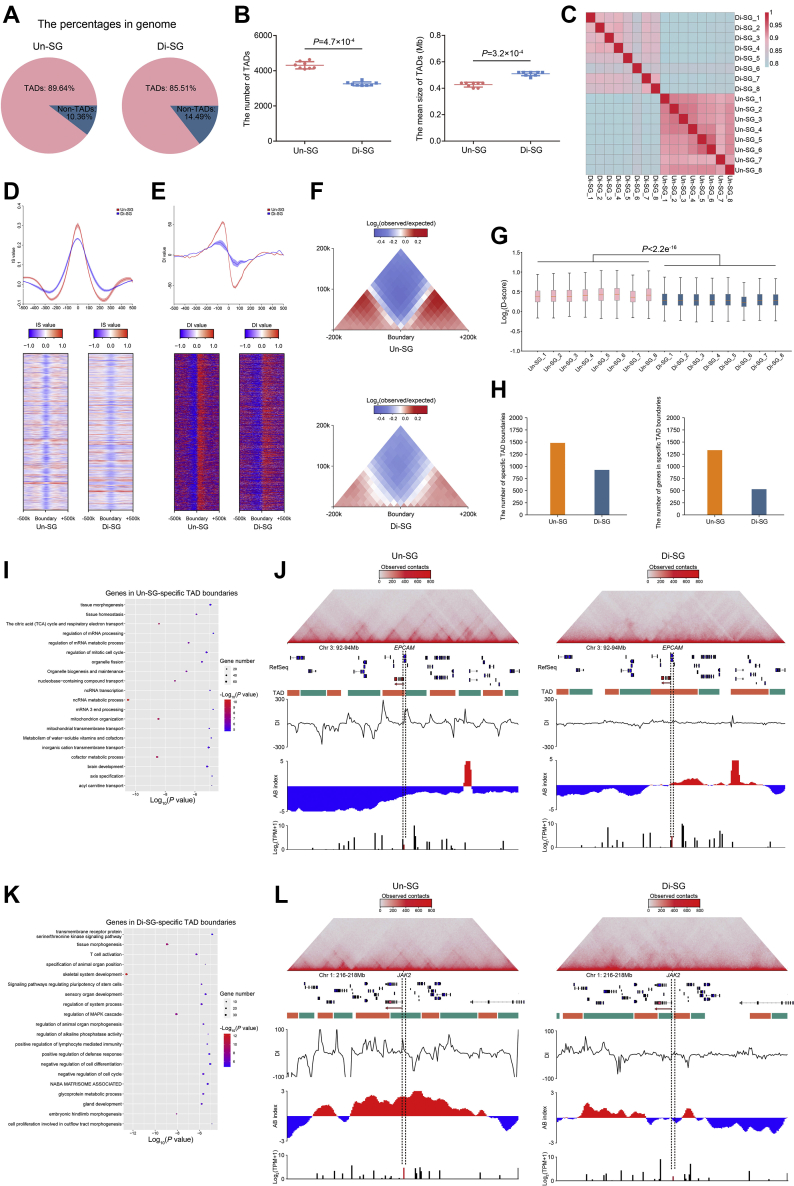
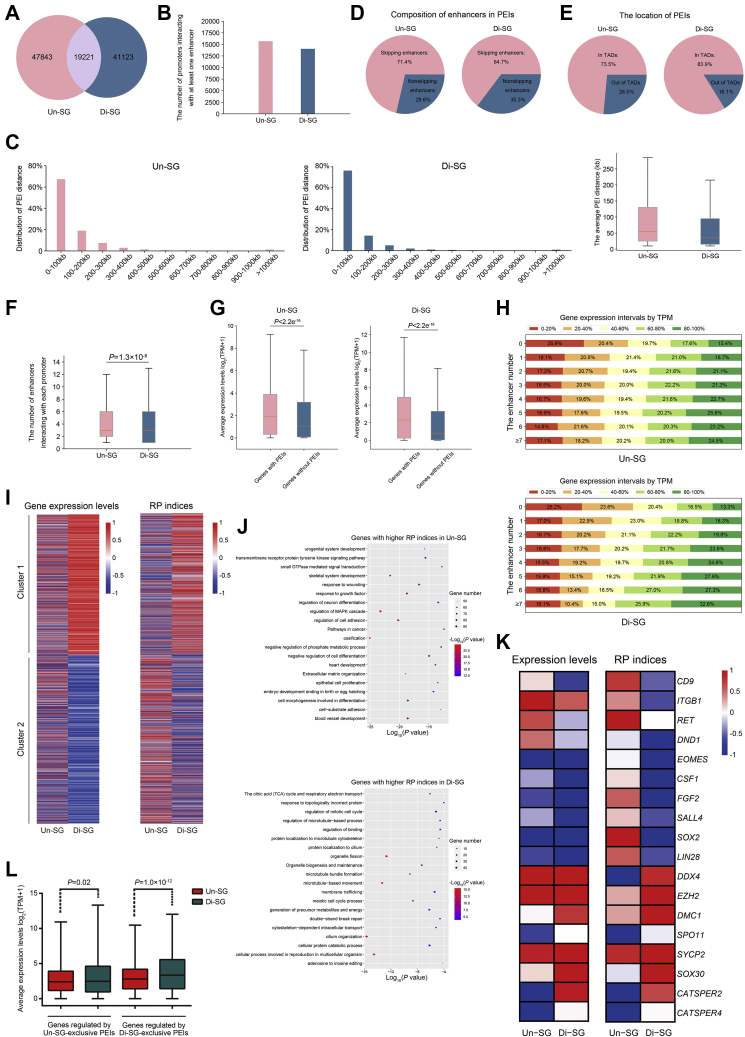
Spermatogonial stem cells (SSCs) are able to undergo both self-renewal and differentiation. Unlike self-renewal, which replenishes the SSC and progenitor pool, differentiation is an irreversible process committing cells to meiosis. Although the preparations for meiotic events in differentiating spermatogonia (Di-SG) are likely to be accompanied by alterations in chromatin structure, the three-dimensional chromatin architectural differences between SSCs and Di-SG, and the higher-order chromatin dynamics during spermatogonial differentiation, have not been systematically investigated. Here, we performed in situ high-throughput chromosome conformation capture, RNA-seq, and chromatin immunoprecipitation-sequencing analyses on porcine undifferentiated spermatogonia (which consist of SSCs and progenitors) and Di-SG. We identified that Di-SG exhibited less compact chromatin structural organization, weakened compartmentalization, and diminished topologically associating domains in comparison with undifferentiated spermatogonia, suggesting that diminished higher-order chromatin architecture in meiotic cells, as shown by recent reports, might be preprogrammed in Di-SG. Our data also revealed that A/B compartments, representing open or closed chromatin regions respectively, and topologically associating domains were related to dynamic gene expression during spermatogonial differentiation. Furthermore, we unraveled the contribution of promoter-enhancer interactions to premeiotic transcriptional regulation, which has not been accomplished in previous studies due to limited cell input and resolution. Together, our study uncovered the three-dimensional chromatin structure of SSCs/progenitors and Di-SG, as well as the interplay between higher-order chromatin architecture and dynamic gene expression during spermatogonial differentiation. These findings provide novel insights into the mechanisms for SSC self-renewal and differentiation and have implications for diagnosis and treatment of male sub-/infertility.
精原干细胞(SSC)能够进行自我更新和分化。与补充 SSC 和祖细胞池的自我更新不同,分化是一个不可逆的过程,使细胞进入减数分裂。尽管分化精原细胞(Di-SG)中减数分裂事件的准备可能伴随着染色质结构的改变,但 SSC 和 Di-SG 之间的三维染色质结构差异,以及精原细胞分化过程中的高级染色质动力学,尚未得到系统研究。在这里,我们对猪未分化精原细胞(由 SSC 和祖细胞组成)和 Di-SG 进行了原位高通量染色体构象捕获、RNA-seq 和染色质免疫沉淀测序分析。我们发现,与未分化精原细胞相比,Di-SG 表现出较少的染色质结构组织紧凑、隔室化减弱和拓扑关联域减少,这表明减数分裂细胞中较弱的高级染色质结构,如最近的报道所示,可能在 Di-SG 中预先编程。我们的数据还表明,A/B 隔室分别代表开放或关闭的染色质区域,以及拓扑关联域与精原细胞分化过程中的动态基因表达有关。此外,我们揭示了启动子-增强子相互作用对减数前转录调控的贡献,由于细胞输入和分辨率有限,以前的研究尚未完成这一贡献。总之,我们的研究揭示了 SSC/祖细胞和 Di-SG 的三维染色质结构,以及高级染色质结构和精原细胞分化过程中动态基因表达之间的相互作用。这些发现为 SSC 自我更新和分化的机制提供了新的见解,并对男性亚/不育症的诊断和治疗具有重要意义。