Center for Reproductive Medicine, Ren ji Hospital, School of Medicine, Shanghai Jiao Tong University, Shanghai, 200135, People's Republic of China.
Shanghai Key Laboratory for Assisted Reproduction and Reproductive Genetics, Shanghai, 200135, People's Republic of China.
Reprod Biol Endocrinol. 2022 Jan 3;20(1):4. doi: 10.1186/s12958-021-00873-3.
Insulin resistance (IR) contributes to ovarian dysfunctions in polycystic ovarian syndrome (PCOS) patients. Serum amyloid A1 (SAA1) is an acute phase protein produced primarily by the liver in response to inflammation. In addition to its role in inflammation, SAA1 may participate in IR development in peripheral tissues. Yet, expressional regulation of SAA1 in the ovary and its role in the pathogenesis of ovarian IR in PCOS remain elusive.
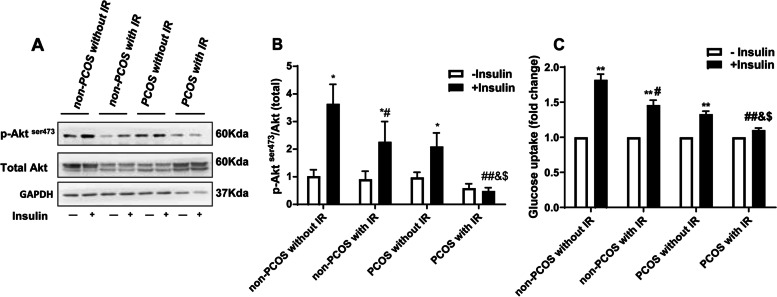
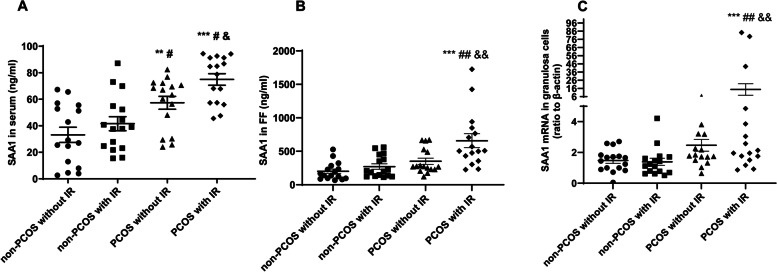
Follicular fluid, granulosa cells and peripheral venous blood were collected from PCOS and non-PCOS patients with and without IR to measure SAA1 abundance for analysis of its correlation with IR status. The effects of SAA1 on its own expression and insulin signaling pathway were investigated in cultured primary granulosa cells.
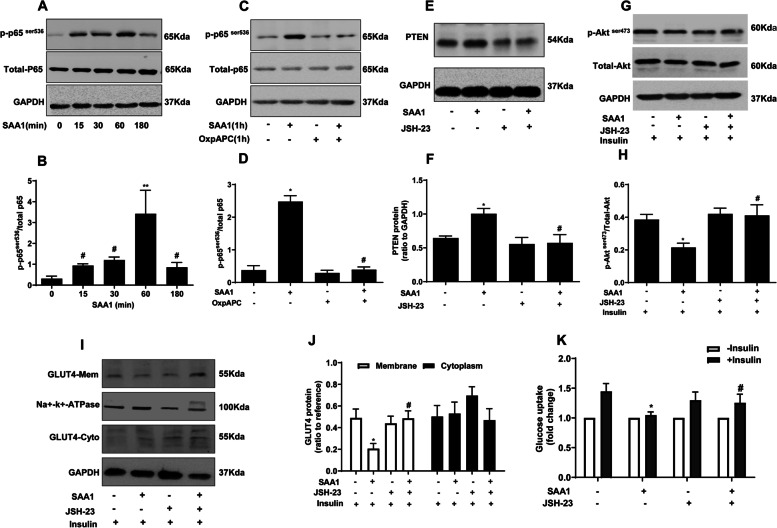
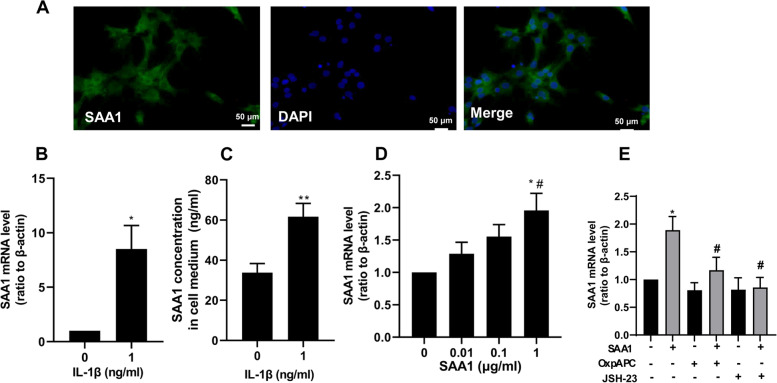
Ovarian granulosa cells were capable of producing SAA1, which could be induced by SAA1 per se. Moreover, the abundance of SAA1 significantly increased in granulosa cells and follicular fluid in PCOS patients with IR. SAA1 treatment significantly attenuated insulin-stimulated membrane translocation of glucose transporter 4 and glucose uptake in granulosa cells through induction of phosphatase and tensin homolog deleted on chromosome 10 (PTEN) expression with subsequent inhibition of Akt phosphorylation. These effects of SAA1 could be blocked by inhibitors for toll-like receptors 2/4 (TLR 2/4) and nuclear factor kappa light chain enhancer of activated B (NF-κB).
Human granulosa cells are capable of feedforward production of SAA1, which significantly increased in PCOS patients with IR. Excessive SAA1 reduces insulin sensitivity in granulosa cells via induction of PTEN and subsequent inhibition of Akt phosphorylation upon activation of TLR2/4 and NF-κB pathway. These findings highlight that elevation of SAA1 in the ovary promotes the development of IR in granulosa cells of PCOS patients.
胰岛素抵抗(IR)导致多囊卵巢综合征(PCOS)患者的卵巢功能障碍。血清淀粉样蛋白 A1(SAA1)是一种主要由肝脏在炎症反应中产生的急性期蛋白。除了在炎症中的作用外,SAA1 可能参与外周组织中 IR 的发展。然而,SAA1 在卵巢中的表达调控及其在 PCOS 患者卵巢 IR 发病机制中的作用仍不清楚。
收集 PCOS 和非 PCOS 患者有或无 IR 的卵泡液、颗粒细胞和外周静脉血,以测量 SAA1 的丰度,分析其与 IR 状态的相关性。在培养的原代颗粒细胞中研究 SAA1 对自身表达和胰岛素信号通路的影响。
卵巢颗粒细胞能够产生 SAA1,SAA1 本身可以诱导其产生。此外,IR 的 PCOS 患者的颗粒细胞和卵泡液中 SAA1 的丰度显著增加。SAA1 处理通过诱导磷酸酶和张力蛋白同源物缺失的染色体 10(PTEN)表达,随后抑制 Akt 磷酸化,显著减弱了胰岛素刺激的葡萄糖转运蛋白 4 膜转位和颗粒细胞中的葡萄糖摄取。SAA1 的这些作用可以通过 TLR2/4(TLR 2/4)和核因子 kappa 轻链增强子的激活 B(NF-κB)抑制剂来阻断。
人颗粒细胞能够进行 SAA1 的前馈产生,IR 的 PCOS 患者中 SAA1 的含量显著增加。过量的 SAA1 通过诱导 PTEN 和随后抑制 Akt 磷酸化,降低颗粒细胞中的胰岛素敏感性,当 TLR2/4 和 NF-κB 通路被激活时。这些发现强调了卵巢中 SAA1 的升高促进了 PCOS 患者颗粒细胞中 IR 的发展。