Nakayama Luis Filipe, Ribeiro Lucas Zago, Gonçalves Mariana Batista, Ferraz Daniel A, Dos Santos Helen Nazareth Veloso, Malerbi Fernando Korn, Morales Paulo Henrique, Maia Mauricio, Regatieri Caio Vinicius Saito, Mattos Rubens Belfort
Physician, Department of Ophthalmology, Universidade Federal de São Paulo - EPM, Botucatu Street, 821, Vila Clementino, São Paulo, SP, 04023-062, Brazil.
Instituto Paulista de Estudos e Pesquisas em Oftalmologia, IPEPO, Vision Institute, São Paulo, SP, Brazil.
Int J Retina Vitreous. 2022 Jan 3;8(1):1. doi: 10.1186/s40942-021-00352-2.
Artificial intelligence and automated technology were first reported more than 70 years ago and nowadays provide unprecedented diagnostic accuracy, screening capacity, risk stratification, and workflow optimization. Diabetic retinopathy is an important cause of preventable blindness worldwide, and artificial intelligence technology provides precocious diagnosis, monitoring, and guide treatment. High-quality exams are fundamental in supervised artificial intelligence algorithms, but the lack of ground truth standards in retinal exams datasets is a problem.
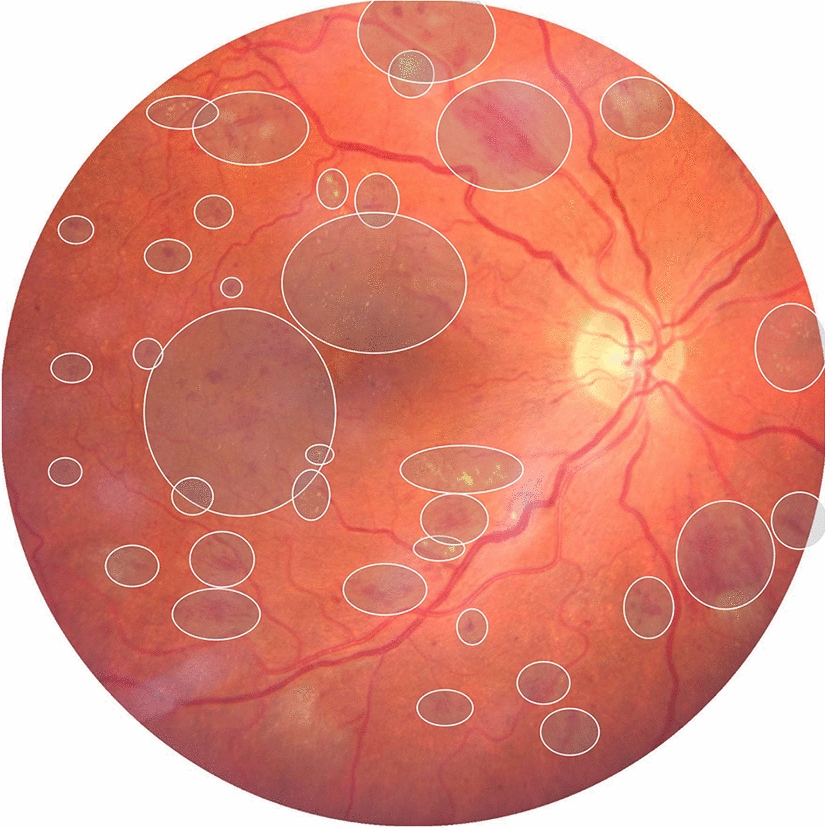
In this article, ETDRS, NHS, ICDR, SDGS diabetic retinopathy grading, and manual annotation are described and compared in publicly available datasets. The various DR labeling systems generate a fundamental problem for AI datasets. Possible solutions are standardization of DR classification and direct retinal-finding identifications.
Reliable labeling methods also need to be considered in datasets with more trustworthy labeling.
人工智能和自动化技术早在70多年前就有报道,如今能提供前所未有的诊断准确性、筛查能力、风险分层和工作流程优化。糖尿病视网膜病变是全球可预防性失明的重要原因,而人工智能技术可实现早熟诊断、监测并指导治疗。高质量检查是监督式人工智能算法的基础,但视网膜检查数据集缺乏地面真值标准是个问题。
本文对公开可用数据集中的ETDRS、NHS、ICDR、SDGS糖尿病视网膜病变分级和人工标注进行了描述和比较。各种糖尿病视网膜病变标记系统给人工智能数据集带来了一个基本问题。可能的解决方案是糖尿病视网膜病变分类的标准化和直接的视网膜发现识别。
在具有更可靠标注的数据集中,也需要考虑可靠的标注方法。