Division of Pharmacoengineering and Molecular Pharmaceutics, Eshelman School of Pharmacy, University of North Carolina, Chapel Hill, NC, 27599, USA.
Department of Liver Disease, Shuguang Hospital, Affiliated to Shanghai University of Traditional Chinese Medicine, Shanghai, 201203, China.
J Nanobiotechnology. 2022 Jan 4;20(1):9. doi: 10.1186/s12951-021-01205-8.
Hepatocellular carcinoma (HCC) developed in fibrotic liver does not respond well to immunotherapy, mainly due to the stromal microenvironment and the fibrosis-related immunosuppressive factors. The characteristic of liver sinusoidal endothelial cells (LSECs) in contributing to fibrosis and orchestrating immune response is responsible for the refractory to targeted therapy or immunotherapy of HCC. We aim to seek a new strategy for HCC treatment based on an old drug simvastatin which shows protecting effect on LSEC.
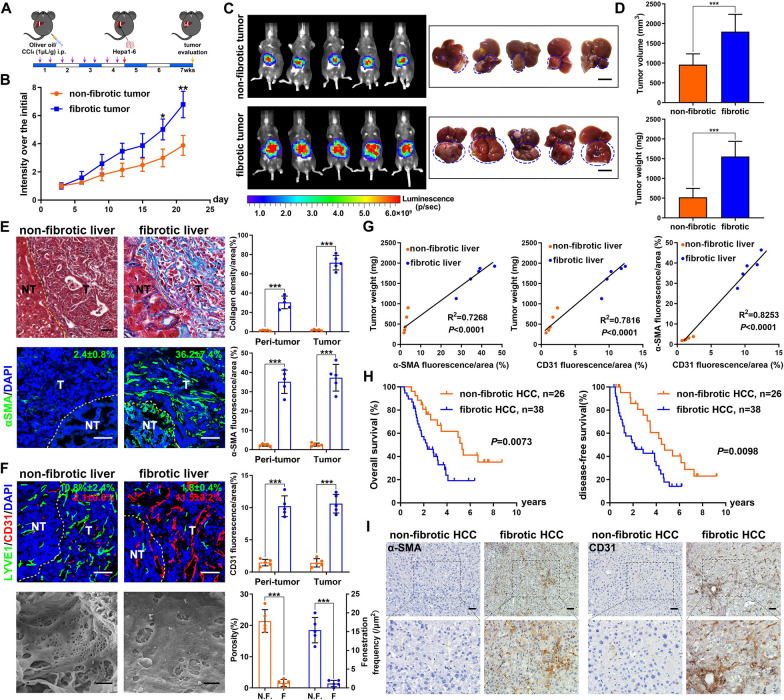
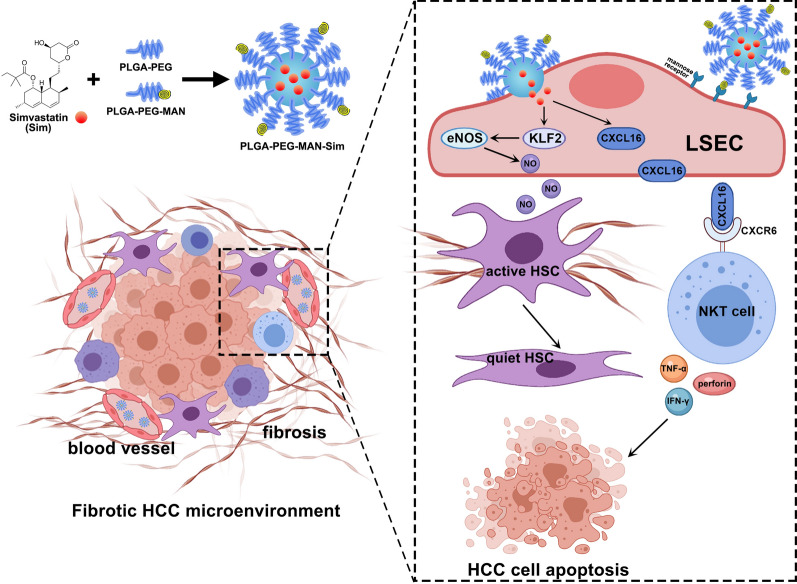
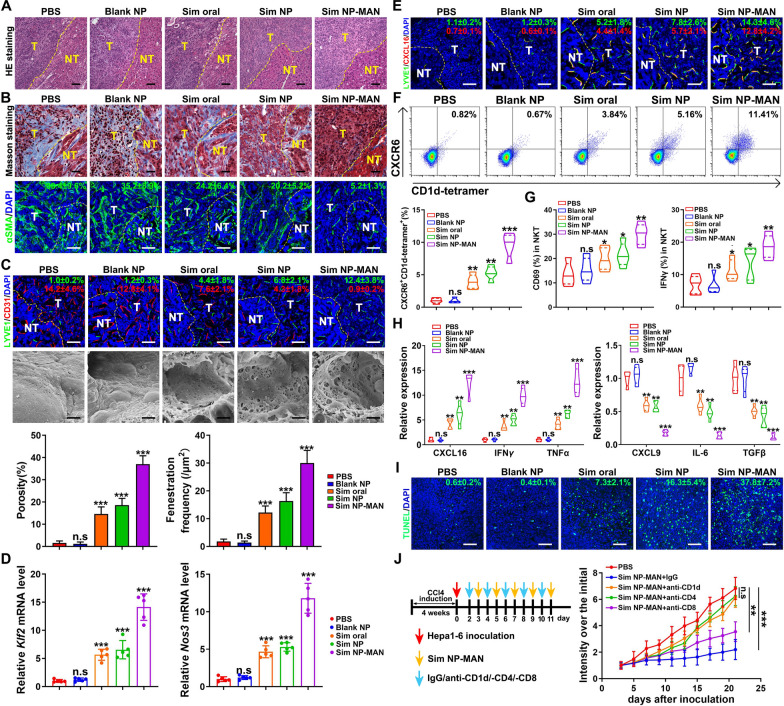
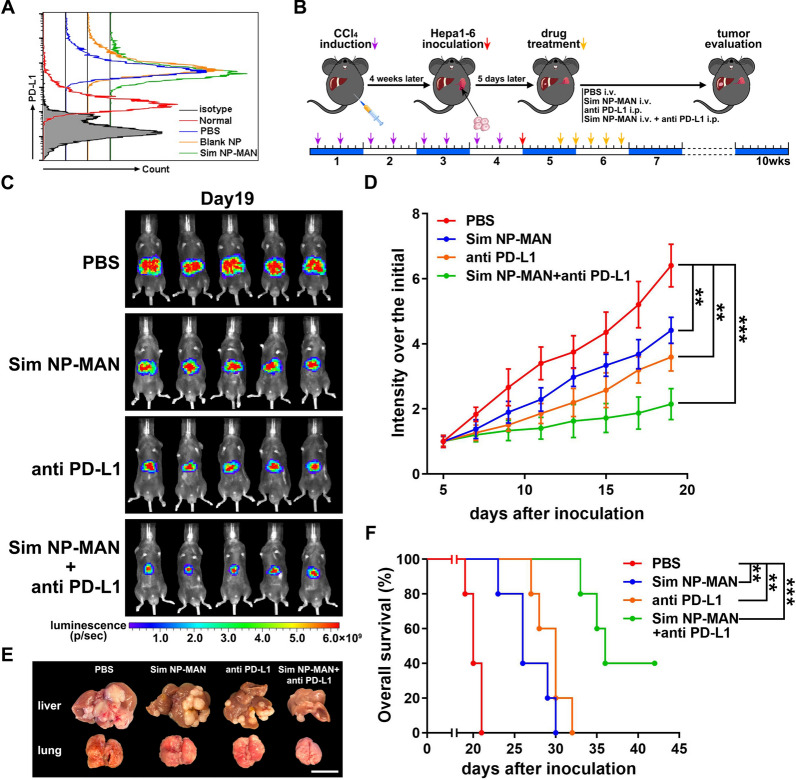
The features of LSECs in mouse fibrotic HCC model and human HCC patients were identified by immunofluorescence and scanning electron microscopy. The effect of simvastatin on LSECs and hepatic stellate cells (HSCs) was examined by immunoblotting, quantitative RT-PCR and RNA-seq. LSEC-targeted delivery of simvastatin was designed using nanotechnology. The anti-HCC effect and toxicity of the nano-drug was evaluated in both intra-hepatic and hemi-splenic inoculated mouse fibrotic HCC model.
LSEC capillarization is associated with fibrotic HCC progression and poor survival in both murine HCC model and HCC patients. We further found simvastatin restores the quiescence of activated hepatic stellate cells (aHSCs) via stimulation of KLF2-NO signaling in LSECs, and up-regulates the expression of CXCL16 in LSECs. In intrahepatic inoculated fibrotic HCC mouse model, LSEC-targeted nano-delivery of simvastatin not only alleviates LSEC capillarization to regress the stromal microenvironment, but also recruits natural killer T (NKT) cells through CXCL16 to suppress tumor progression. Together with anti-programmed death-1-ligand-1 (anti-PD-L1) antibody, targeted-delivery of simvastatin achieves an improved therapeutic effect in hemi-splenic inoculated advanced-stage HCC model.
These findings reveal an immune-based therapeutic mechanism of simvastatin for remodeling immunosuppressive tumor microenvironment, therefore providing a novel strategy in treating HCC.
在纤维化的肝脏中发展的肝细胞癌 (HCC) 对免疫疗法反应不佳,主要是由于基质微环境和纤维化相关的免疫抑制因子。肝窦内皮细胞 (LSEC) 促进纤维化和协调免疫反应的特征导致 HCC 对靶向治疗或免疫治疗产生耐药性。我们旨在基于具有保护 LSEC 作用的老药辛伐他汀寻找 HCC 治疗的新策略。
通过免疫荧光和扫描电子显微镜鉴定小鼠纤维化 HCC 模型和人类 HCC 患者中 LSEC 的特征。通过免疫印迹、定量 RT-PCR 和 RNA-seq 检查辛伐他汀对 LSEC 和肝星状细胞 (HSC) 的作用。使用纳米技术设计辛伐他汀靶向 LSEC 的递药。在肝内和半脾接种的小鼠纤维化 HCC 模型中评估纳米药物的抗 HCC 作用和毒性。
LSEC 毛细血管化与鼠 HCC 模型和 HCC 患者的纤维化 HCC 进展和不良生存相关。我们进一步发现,辛伐他汀通过刺激 LSEC 中的 KLF2-NO 信号恢复激活的肝星状细胞 (aHSCs) 的静止状态,并上调 LSEC 中 CXCL16 的表达。在肝内接种的纤维化 HCC 小鼠模型中,LSEC 靶向纳米递药辛伐他汀不仅减轻 LSEC 毛细血管化以逆转基质微环境,而且通过 CXCL16 招募自然杀伤 T (NKT) 细胞来抑制肿瘤进展。与抗程序性死亡配体-1 (anti-PD-L1) 抗体联合使用,靶向递送辛伐他汀在半脾接种的晚期 HCC 模型中实现了改善的治疗效果。
这些发现揭示了辛伐他汀重塑免疫抑制肿瘤微环境的免疫治疗机制,因此为治疗 HCC 提供了一种新策略。