College of Animal Science, South China Agricultural University, Guangdong Provincial Key Laboratory of Animal Nutrition Control, Guangzhou, Guangdong 510642, China.
Wen's Foodstuffs Group Co., Ltd., Yunfu, Guangdong, China.
Poult Sci. 2022 Mar;101(3):101644. doi: 10.1016/j.psj.2021.101644. Epub 2021 Dec 4.
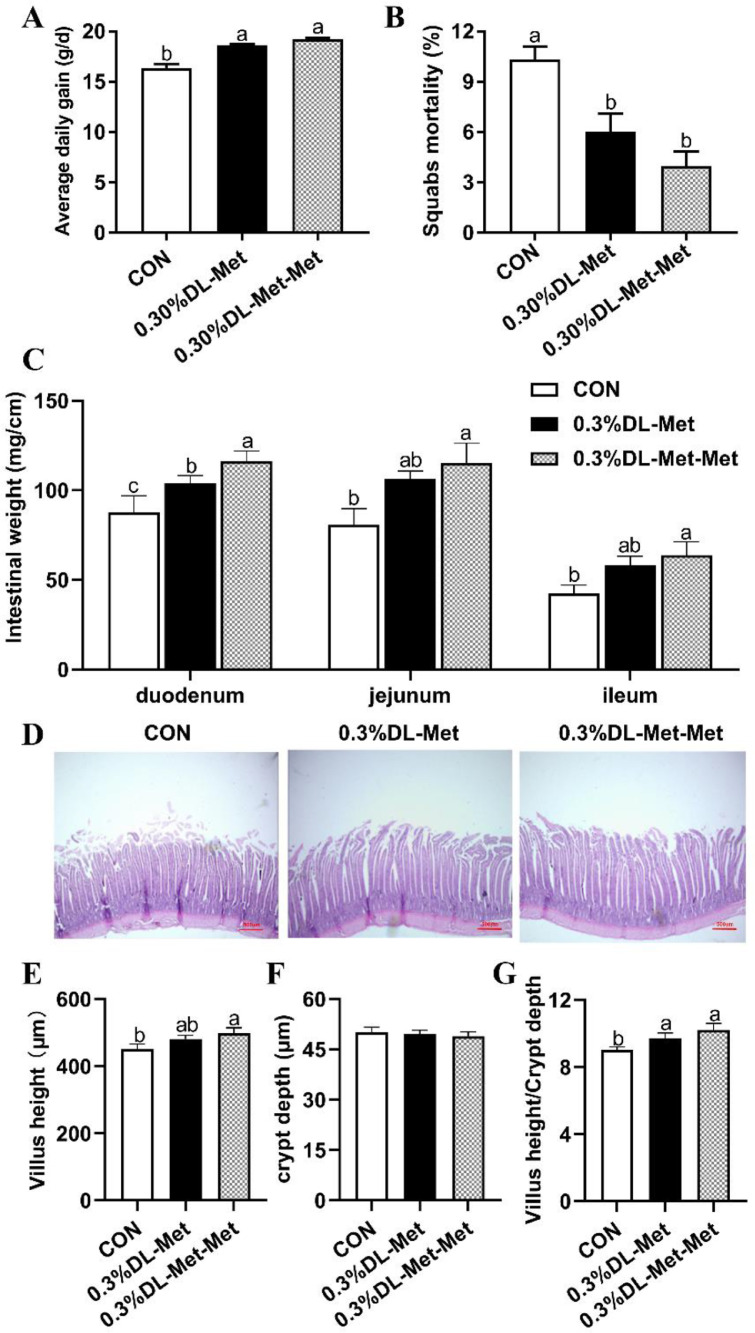
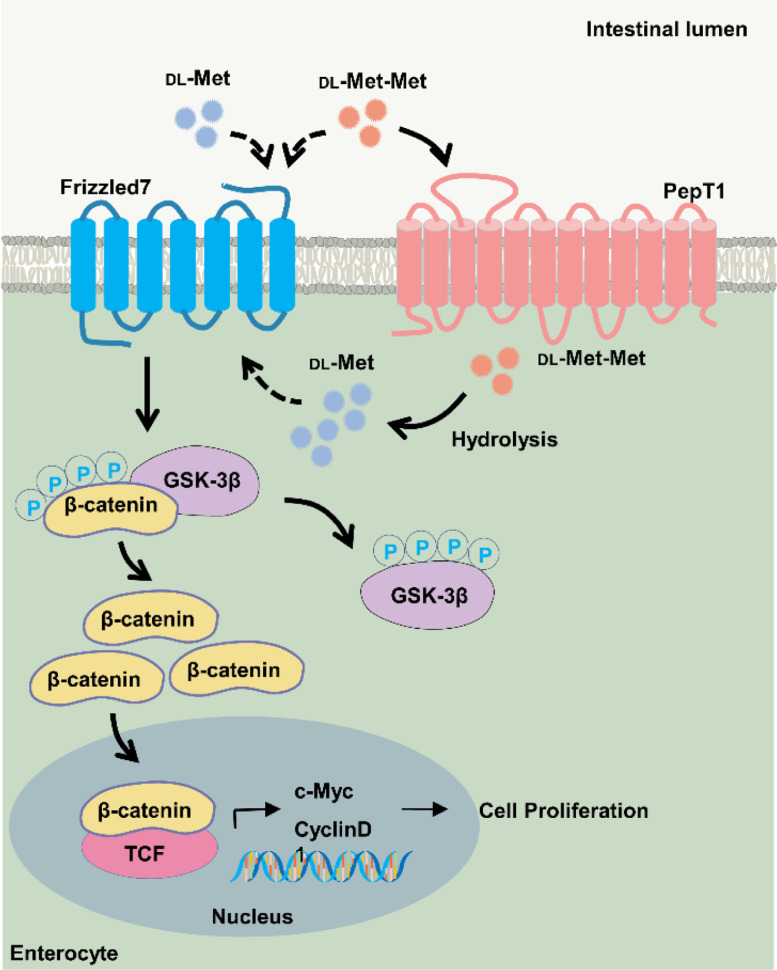
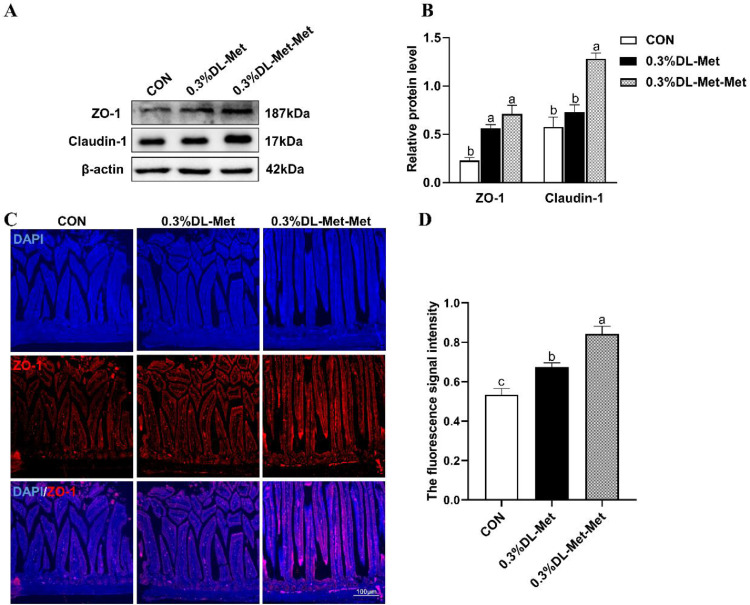
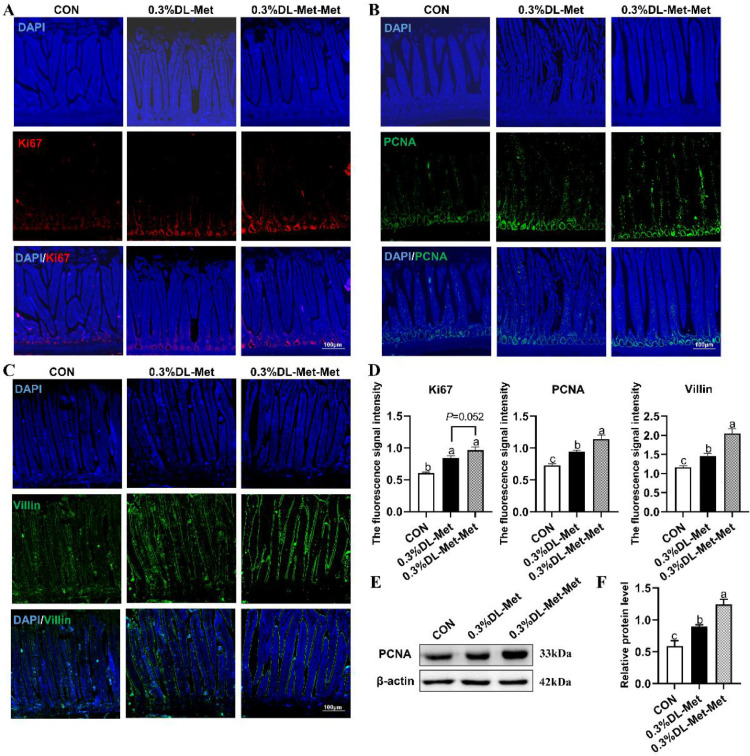
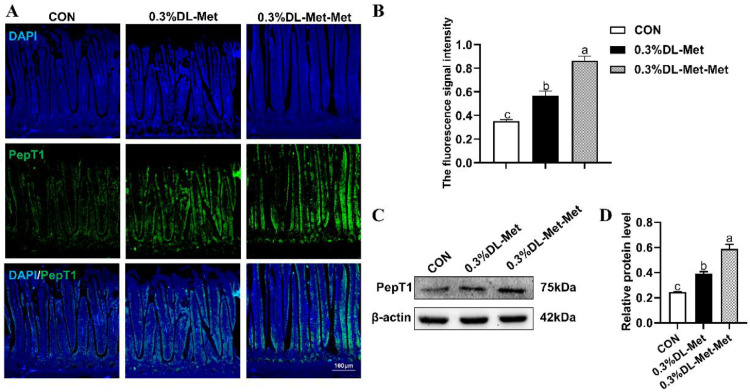
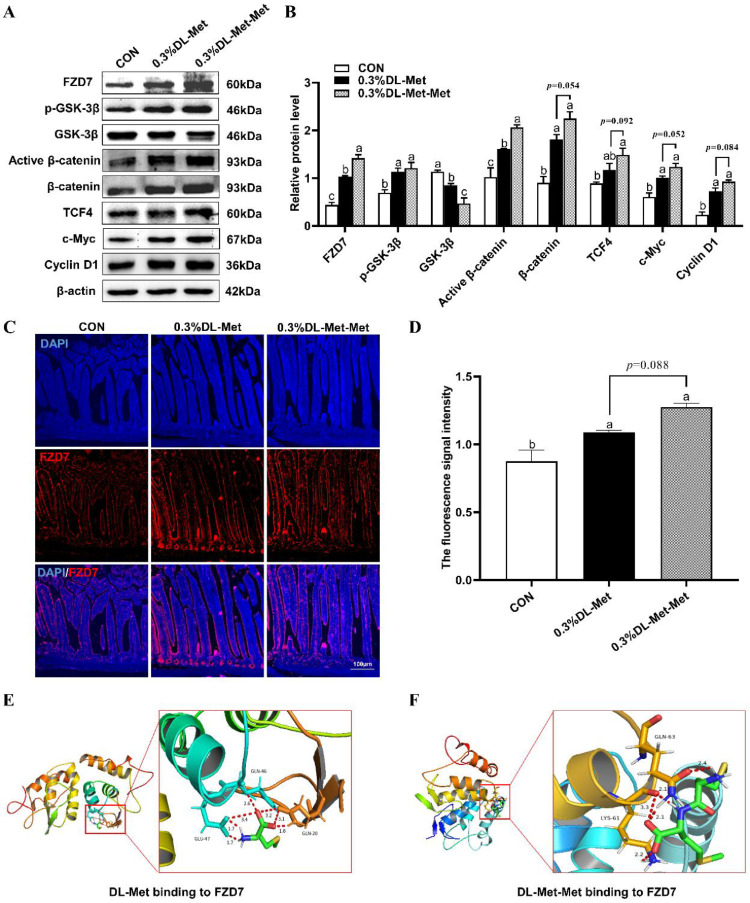
This experiment was undertaken to investigate the effects of parental dietary -methionine (-Met) and -methionyl--methionine (-Met-Met) supplementation on the intestinal development of young squabs. A total of 108 pairs of breeding pigeons and 432 one-day-old squabs were randomly divided into 3 groups: the control group (CON) was fed a basal diet (CP = 15%) and the experimental groups were fed a basal diet supplemented with 0.3% -Met or -Met-Met. Each pair of breeding pigeons nourished 4 young squabs, and 8 squabs from each treatment were randomly sampled at the end of the experiment. The results indicated that -Met and -Met-Met supplementation improved the intestinal morphology and structure in the squabs, as reflected by the increased relative intestinal weight of each small intestinal segment, villus height, and villus to crypt ratio. In addition, -Met and -Met-Met supplementation significantly increased the protein expression of cell proliferation markers (Ki67 and PCNA) and tight junction proteins (ZO-1 and Claudin-1) in the jejunum and strengthened the fluorescence signal intensity of Ki67, PCNA and Villin. Moreover, the expression of Wnt/β-catenin signaling pathway-related proteins (Frizzled 7 [FZD7], p-GSK-3β, Active β-catenin, β-catenin, TCF4, c-Myc, and Cyclin D1), and intestinal peptide transporter 1 (PepT1) in the jejunum was considerably higher in the treatment group than in the CON group (P < 0.05), with the -Met-Met group having the highest expression. Consistently, the molecular docking results predicted the possibility that -Met or -Met-Met binds to the membrane receptor FZD7, which mediates Wnt/β-catenin signaling. Collectively, the improvement of the intestinal development in squabs after parental dietary 0.3% -Met and -Met-Met supplementation could be through activation of Wnt/β-catenin signaling pathway, and -Met-Met is superior to -Met. Our findings may provide basic data for further optimizing the feeding formula of breeding pigeons and improving the growth and development of squabs.
本实验旨在研究亲代饮食蛋氨酸(Met)和蛋氨酰-蛋氨酸(Met-Met)补充对雏鸽肠道发育的影响。共 108 对种鸽和 432 只 1 日龄雏鸽被随机分为 3 组:对照组(CON)饲喂基础日粮(CP=15%),实验组分别饲喂基础日粮添加 0.3%Met 或 Met-Met。每对种鸽喂养 4 只雏鸽,每组 8 只雏鸽,在实验结束时随机取样。结果表明,Met 和 Met-Met 补充改善了雏鸽的肠道形态和结构,表现为各小肠段相对肠重、绒毛高度和绒毛与隐窝比增加。此外,Met 和 Met-Met 补充显著增加了空肠细胞增殖标志物(Ki67 和 PCNA)和紧密连接蛋白(ZO-1 和 Claudin-1)的蛋白表达,并增强了 Ki67、PCNA 和 Villin 的荧光信号强度。此外,空肠中 Wnt/β-连环蛋白信号通路相关蛋白(Frizzled 7 [FZD7]、p-GSK-3β、活性 β-连环蛋白、β-连环蛋白、TCF4、c-Myc 和 Cyclin D1)和肠道肽转运体 1(PepT1)的表达在处理组中明显高于 CON 组(P<0.05),Met-Met 组表达最高。同样,分子对接结果预测了 Met 或 Met-Met 与膜受体 FZD7 结合的可能性,FZD7 介导 Wnt/β-连环蛋白信号。总之,亲代饮食 0.3%Met 和 Met-Met 补充可通过激活 Wnt/β-连环蛋白信号通路改善雏鸽的肠道发育,Met-Met 优于 Met。我们的发现可为进一步优化种鸽的饲养配方和提高雏鸽的生长发育提供基础数据。