Coleman Sulamunn R M, Oliver Anthony C, Klemperer Elias M, DeSarno Michael J, Atwood Gary S, Higgins Stephen T
Vermont Center on Behavior and Health.
Department of Medical Biostatistics.
Personal Disord. 2022 May;13(3):210-220. doi: 10.1037/per0000528. Epub 2022 Jan 6.
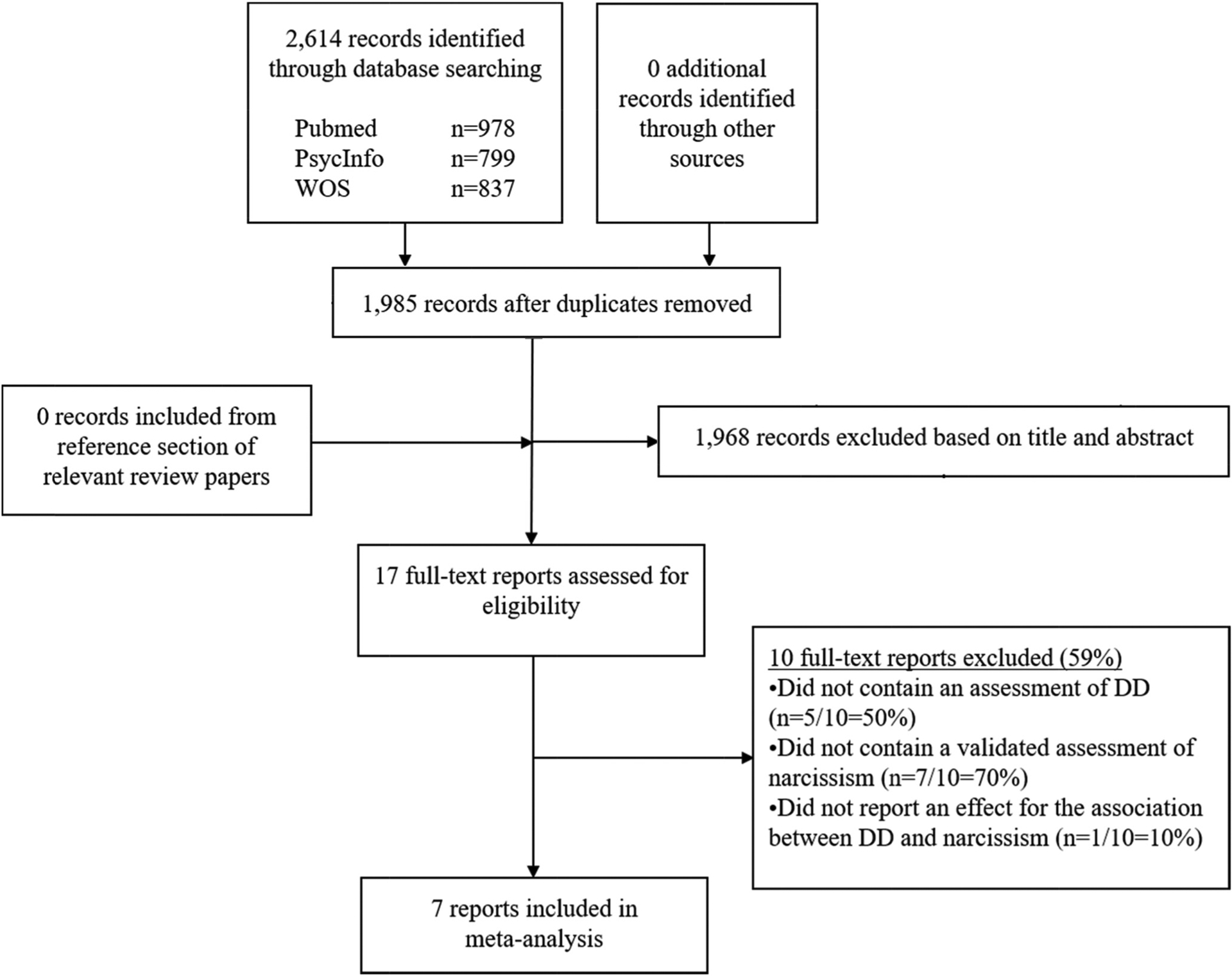
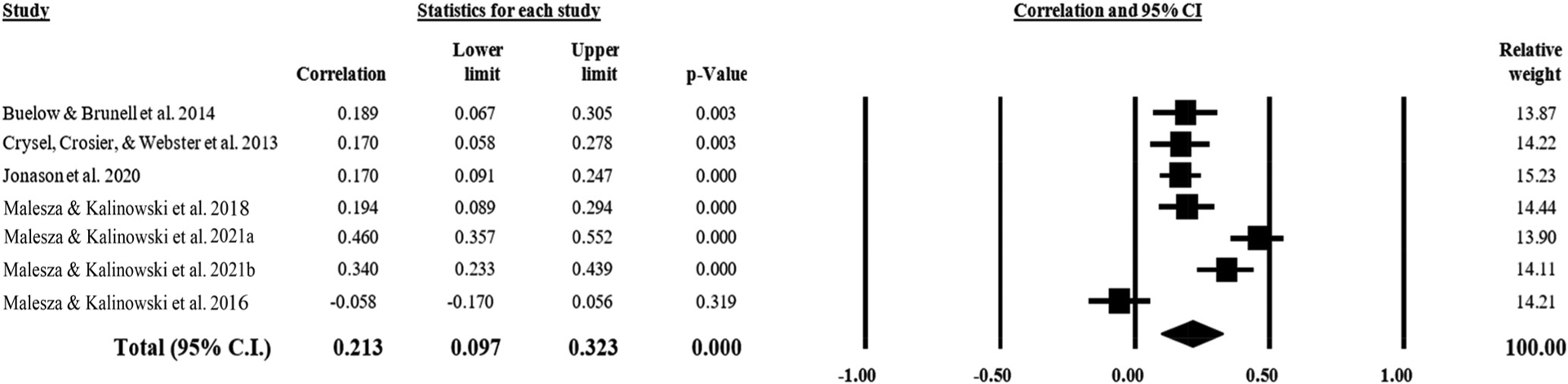
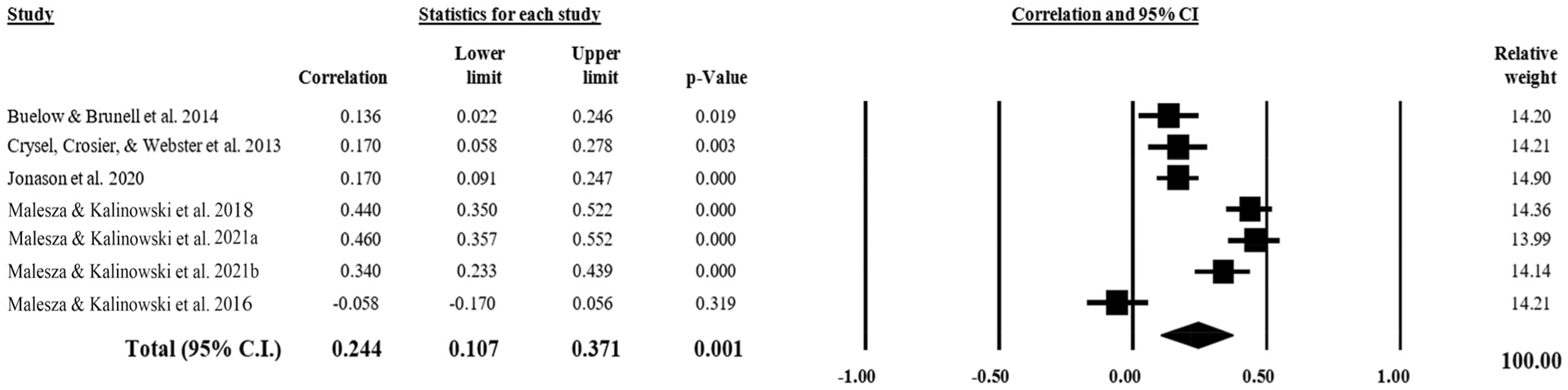
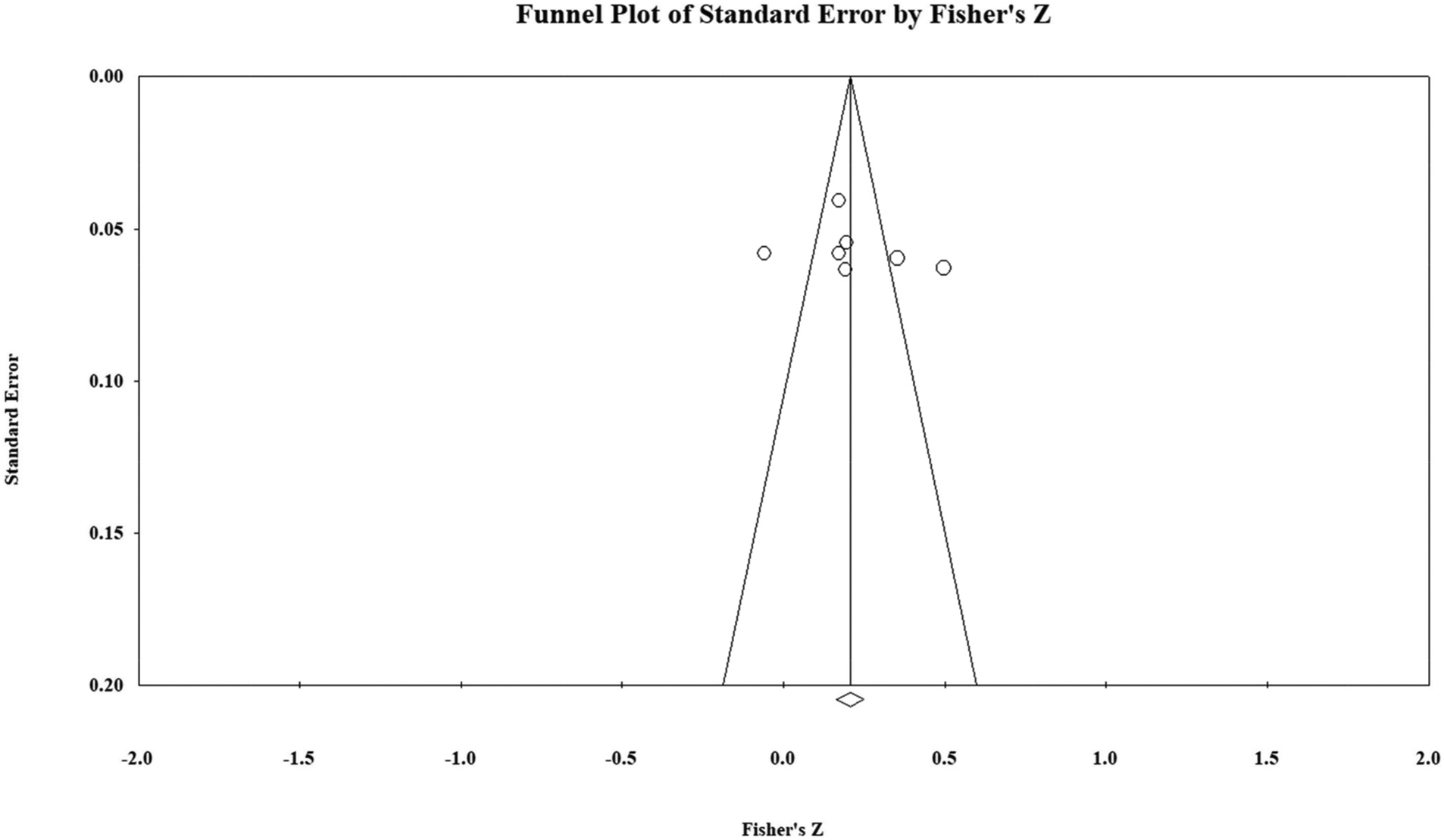
Several psychiatric conditions (e.g., substance use, mood, and personality disorders) are characterized, in part, by greater delay discounting (DD)-a decision-making bias in the direction of preferring smaller, more immediate over larger, delayed rewards. Narcissistic personality disorder (NPD) is highly comorbid with substance use, mood, and other personality disorders, suggesting that DD may be a process underpinning risk for NPD as well. This meta-analysis examined associations between DD and theoretically distinct, clinically relevant dimensions of narcissism (i.e., grandiosity, entitlement, and vulnerability). Literature searches were conducted and articles were included if they were written in English, published in a peer-reviewed journal, contained measures of DD and narcissism and reported their association, and used an adult sample. Narcissism measures had to be systematically categorized according to clinically relevant dimensions (Grijalva et al., 2015; Wright & Edershile, 2018). Seven studies met inclusion criteria ( = 2,705). DD was positively associated with narcissism ( = .21; 95% confidence interval [.10, .32]), with this association being largely attributable to measures of trait grandiosity that were used in each study ( = .24; 95% confidence interval [.11, .37]). No studies included diagnostic NPD assessments. These findings provide empirical evidence that DD is related to trait narcissism and perhaps risk for NPD (e.g., grandiosity listed in Criterion B of the Fifth Edition, alternative model of personality disorders). Considering the positive evidence from this review, and the dearth of research examining DD in individuals with NPD, investigators studying NPD may consider incorporating DD measures in future studies to potentially inform clinical theory and novel adjunctive treatment options. (PsycInfo Database Record (c) 2022 APA, all rights reserved).
几种精神疾病(如物质使用障碍、情绪障碍和人格障碍)部分特征在于更高的延迟折扣(DD)——一种决策偏差,倾向于选择较小的即时奖励而非较大的延迟奖励。自恋型人格障碍(NPD)与物质使用障碍、情绪障碍和其他人格障碍高度共病,这表明DD可能也是NPD风险的一个潜在过程。本荟萃分析研究了DD与理论上不同的、临床相关的自恋维度(即夸大、特权感和脆弱性)之间的关联。进行了文献检索,纳入的文章需满足用英文撰写、发表在同行评审期刊上、包含DD和自恋的测量并报告它们的关联,且使用成人样本。自恋测量必须根据临床相关维度进行系统分类(Grijalva等人,2015年;Wright和Edershile,2018年)。七项研究符合纳入标准(n = 2705)。DD与自恋呈正相关(r = 0.21;95%置信区间[0.10, 0.32]),这种关联很大程度上归因于每项研究中使用的特质夸大测量(r = 0.24;95%置信区间[0.11, 0.37])。没有研究纳入NPD的诊断评估。这些发现提供了实证证据,表明DD与特质自恋有关,可能也与NPD风险有关(例如,《精神障碍诊断与统计手册》第五版人格障碍替代模型中B标准列出的夸大)。考虑到本综述的积极证据,以及对NPD个体中DD研究的匮乏,研究NPD的调查人员可能会考虑在未来研究中纳入DD测量,以潜在地为临床理论和新型辅助治疗选择提供信息。(PsycInfo数据库记录(c)2022美国心理学会,保留所有权利)