Beijing Hospital of Traditional Chinese Medicine, Capital Medical University, Beijing, 100010, China; Beijing Institute of Chinese Medicine, Beijing, China; Beijing Key Laboratory of Basic Research with Traditional Chinese Medicine on Infectious Diseases, Beijing, China.
Beijing Hospital of Traditional Chinese Medicine, Capital Medical University, Beijing, 100010, China; Beijing Key Laboratory of Basic Research with Traditional Chinese Medicine on Infectious Diseases, Beijing, China.
J Ethnopharmacol. 2022 Apr 6;287:114965. doi: 10.1016/j.jep.2021.114965. Epub 2022 Jan 4.
Coronavirus and influenza virus infection seriously threaten human health. Cangma Huadu Granules (CMHD) is an in-hospital preparation composed of eight traditional Chinese medicines (TCM), which has been clinically used against COVID-19 in China and may be a promising candidate for the treatment of influenza. However, the role of its treatment urgently needs to be studied.
To evaluate the therapeutic effects of CMHD on pneumonia induced by coronavirus (HCoV-229E) and influenza A virus (H1N1/FM1) in mice and explore its mechanism of anti-infection.
Mice were infected with HCoV-229E or H1N1/FM1 virus through the nasal cavity. CMHD (12.1, 6.05 and 3.03 g/kg/d) or the positive control drugs were administered intragastrically. The lung index and histopathological changes were used to evaluate the therapeutic effect of CMHD. The expression of TNF-α, IL-1β, IL-6 and IL-4 in Serum and the proportion of CD4 and CD8 T lymphocytes in peripheral blood were detected to evaluate the anti-inflammatory and immune regulation effects of CMHD, respectively. Furthermore, the levels of p-NF-κBp65/ NF-κB p65, which was the key targets of the NF-κB pathway was analyzed.
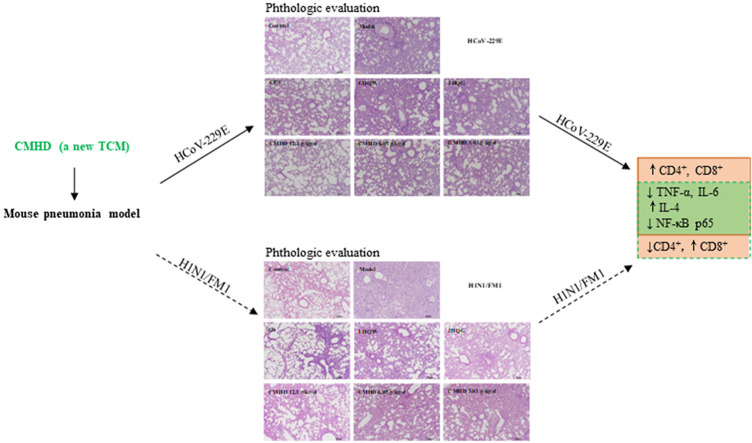
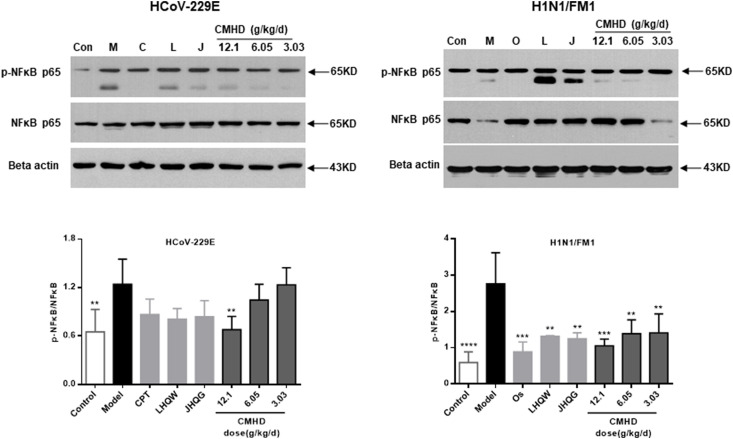
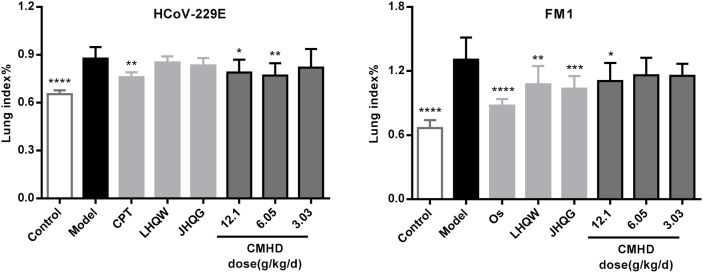
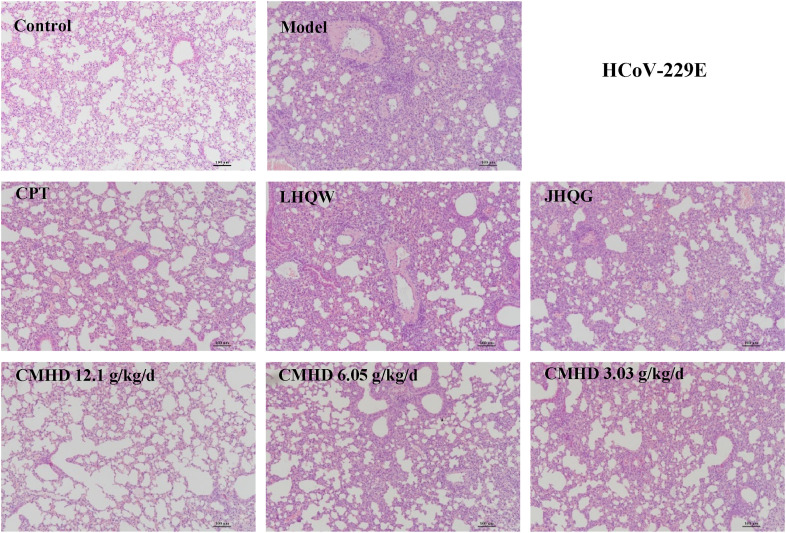
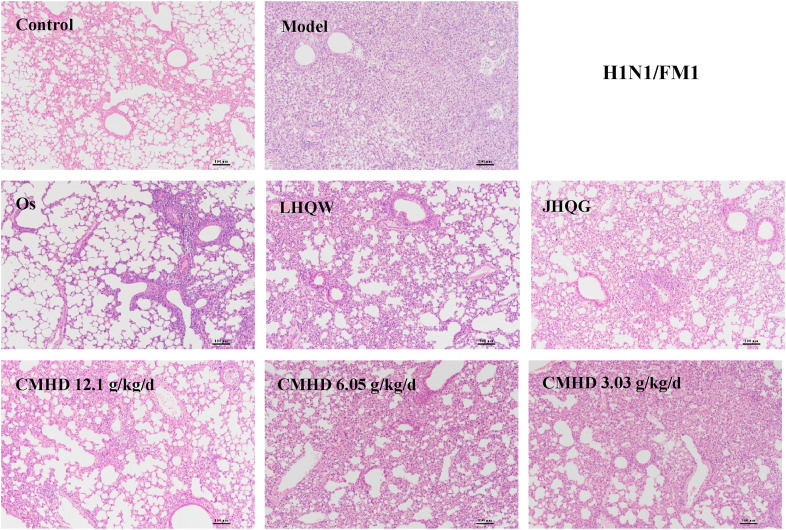
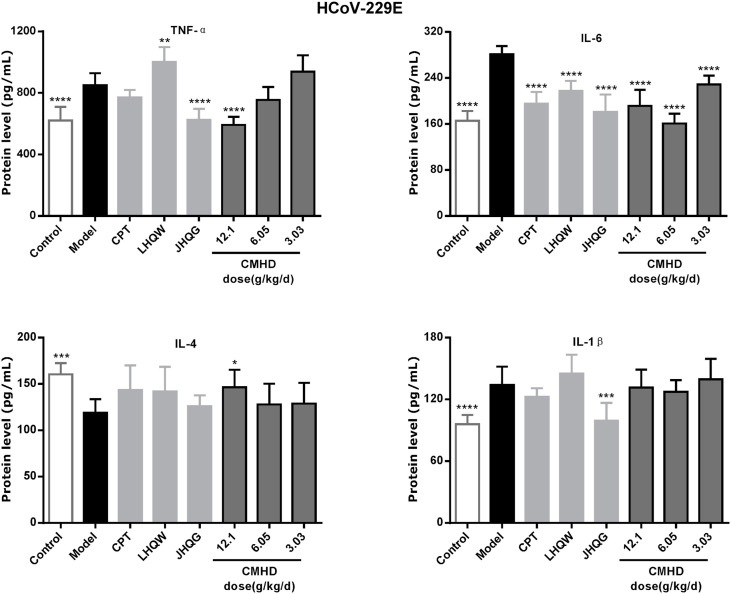
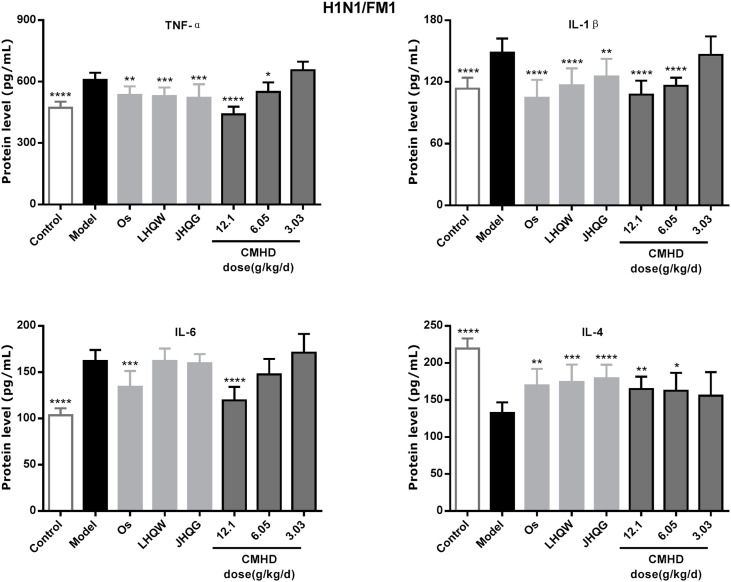
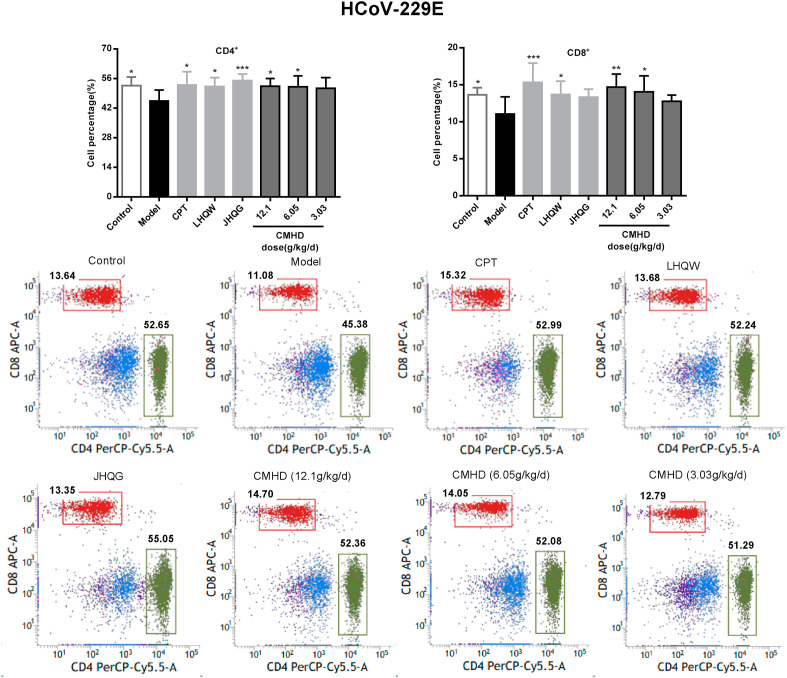
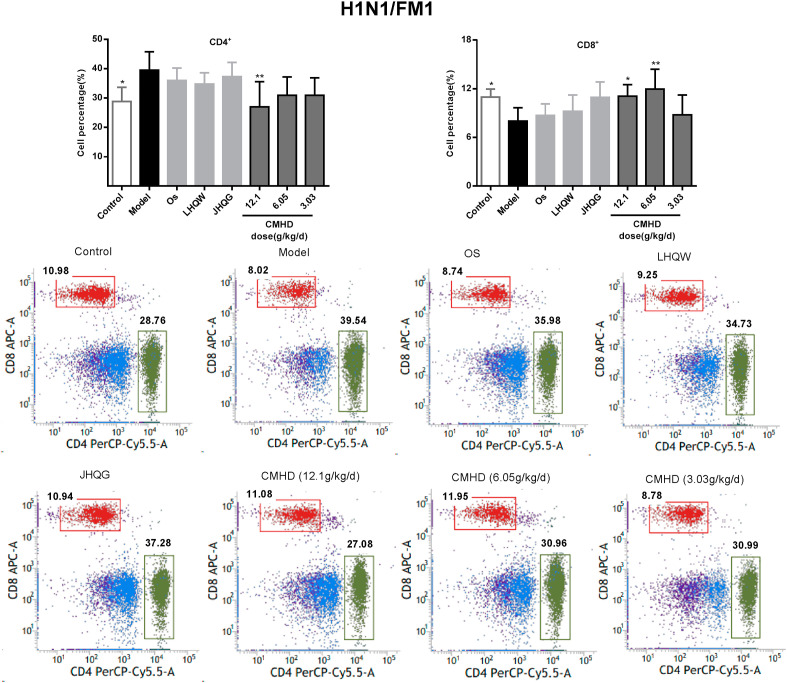
In HCoV-229E-induced pneumonia, the lung index was markedly reduced, and lung pathology was improved in mice that treated with CMHD (12.1, 6.05 g/kg/d). Meanwhile, the expression of TNF-α, IL-6 were obviously inhibited, but the expression of IL-4 was significantly increased in CMHD groups. Compared with the model group, CMHD could also markedly upregulate the level of CD4 and CD8. Furthermore, CMHD has a markedly effect on inhibit the expression of p-NF-κB p65/NF-κB p65 in the lung. In H1N1-induced pneumonia, the lung index of mice in the CMHD (12.1 g/kg/d) treatment group was lower than that in the model group, and less inflammatory infiltration could be seen in the lung pathological. Moreover, CMHD could also obviously decrease the expression of TNF-α, IL-1β, IL-6, but significantly increase the expression of IL-4. Except for that, CMHD could also markedly downregulate the level of CD4 and upregulate the level of CD8 compared with the model group. In addition, CMHD has a markedly effect on inhibit the expression of p-NF-κB p65/NF-κB p65 in the lung.
CMHD can significantly combats viral infections caused by HCoV-229E and H1N1, and the mechanism may be related to its multiple functions of anti-inflammatory, immunity regulating and inhibiting NF-κB signal transduction pathway.
冠状病毒和流感病毒感染严重威胁着人类的健康。苍麻厚扑颗粒(CMHD)是一种院内制剂,由 8 种中药组成,已在中国临床上用于治疗 COVID-19,可能是治疗流感的有希望的候选药物。然而,其治疗作用亟待研究。
评估 CMHD 对冠状病毒(HCoV-229E)和甲型流感病毒(H1N1/FM1)诱导的肺炎小鼠的治疗作用,并探讨其抗感染机制。
通过鼻腔感染 HCoV-229E 或 H1N1/FM1 病毒,给予 CMHD(12.1、6.05 和 3.03 g/kg/d)或阳性对照药物进行灌胃。通过肺指数和组织病理学变化来评估 CMHD 的治疗效果。检测血清中 TNF-α、IL-1β、IL-6 和 IL-4 的表达,以及外周血中 CD4 和 CD8 T 淋巴细胞的比例,分别评估 CMHD 的抗炎和免疫调节作用。此外,还分析了 NF-κB 通路关键靶点 p-NF-κBp65/NF-κB p65 的水平。
在 HCoV-229E 诱导的肺炎中,CMHD(12.1、6.05 g/kg/d)治疗组的肺指数明显降低,肺组织病理学得到改善。同时,CMHD 组 TNF-α和 IL-6 的表达明显受到抑制,而 IL-4 的表达明显增加。与模型组相比,CMHD 还能显著上调 CD4 和 CD8 的水平。此外,CMHD 对抑制肺中 p-NF-κB p65/NF-κB p65 的表达有显著作用。在 H1N1 诱导的肺炎中,CMHD(12.1 g/kg/d)治疗组的肺指数低于模型组,肺组织病理学中炎性浸润也明显减少。此外,CMHD 还能明显降低 TNF-α、IL-1β、IL-6 的表达,显著增加 IL-4 的表达。此外,与模型组相比,CMHD 还能显著下调 CD4 水平,上调 CD8 水平。此外,CMHD 对抑制肺中 p-NF-κB p65/NF-κB p65 的表达有显著作用。
CMHD 能显著对抗 HCoV-229E 和 H1N1 引起的病毒感染,其机制可能与其抗炎、免疫调节和抑制 NF-κB 信号转导通路的多种功能有关。