Pittsburgh Institute for Neurodegenerative Diseases and Department of Neurology, University of Pittsburgh School of Medicine, Pittsburgh, PA, USA.
Pittsburgh Institute for Neurodegenerative Diseases and Department of Neurology, University of Pittsburgh School of Medicine, Pittsburgh, PA, USA; Molecular Pharmacology Graduate Program, University of Pittsburgh, Pittsburgh, PA, USA.
Trends Neurosci. 2022 Mar;45(3):224-236. doi: 10.1016/j.tins.2021.12.002. Epub 2022 Jan 4.
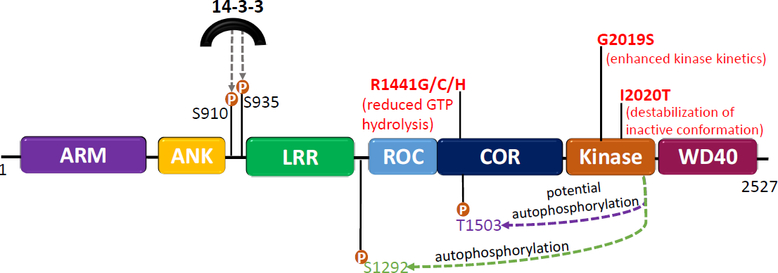
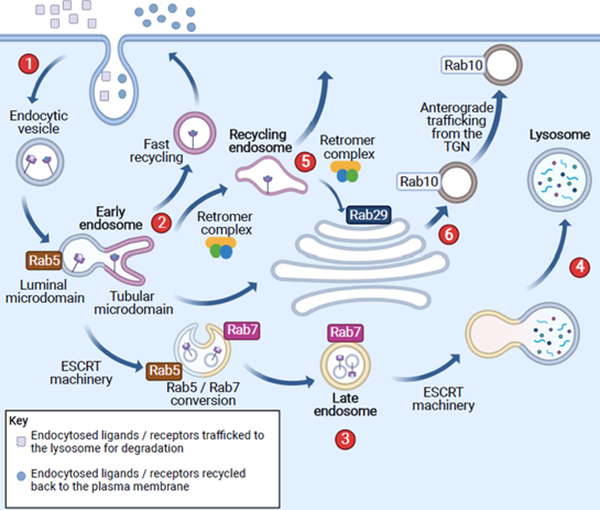
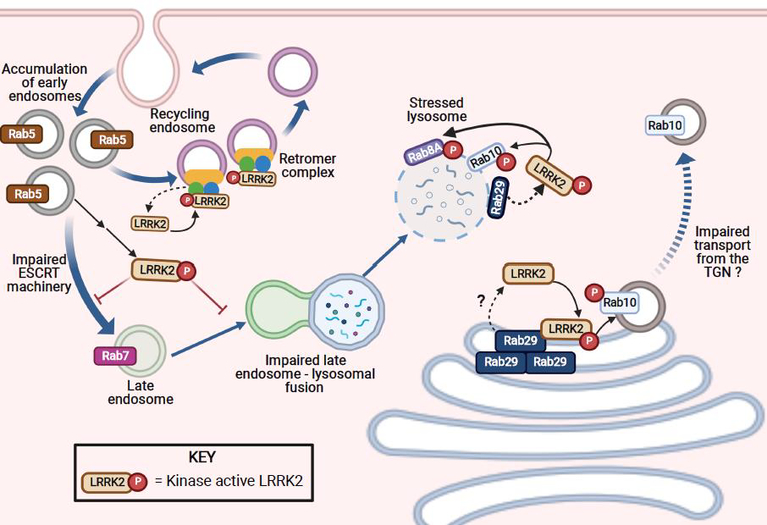
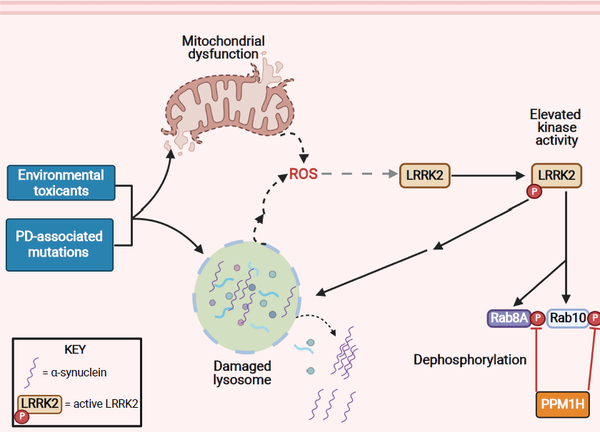
The etiology of idiopathic Parkinson's disease (iPD) is multifactorial, and both genetics and environmental exposures are risk factors. While mutations in leucine-rich repeat kinase-2 (LRRK2) that are associated with increased kinase activity are the most common cause of autosomal dominant PD, the role of LRRK2 in iPD, independent of mutations, remains uncertain. In this review, we discuss how the architecture of LRRK2 influences kinase activation and how enhanced LRRK2 substrate phosphorylation might contribute to pathogenesis. We describe how oxidative stress and endolysosomal dysfunction, both of which occur in iPD, can activate non-mutated LRRK2 to a similar degree as pathogenic mutations. Similarly, environmental toxicants that are linked epidemiologically to iPD risk can also activate LRRK2. In aggregate, current evidence suggests an important role for LRRK2 in iPD.
特发性帕金森病(iPD)的病因是多因素的,遗传和环境暴露都是危险因素。虽然富含亮氨酸重复激酶 2(LRRK2)的突变与激酶活性的增加有关,是常染色体显性 PD 的最常见原因,但 LRRK2 在 iPD 中的作用,独立于突变,仍然不确定。在这篇综述中,我们讨论了 LRRK2 的结构如何影响激酶的激活,以及增强的 LRRK2 底物磷酸化如何有助于发病机制。我们描述了氧化应激和内溶酶体功能障碍,这两者都发生在 iPD 中,如何能以类似于致病性突变的程度激活非突变的 LRRK2。同样,流行病学上与 iPD 风险相关的环境毒物也可以激活 LRRK2。总的来说,目前的证据表明 LRRK2 在 iPD 中起着重要作用。