Department of Gastroenterology and Hepatology , Osaka University Graduate School of Medicine , Suita, Osaka , Japan.
Department of Gastroenterology and Hepatology , National Hospital Organization , Osaka National Hospital , Osaka , Japan.
Hepatology. 2023 Feb 1;77(2):395-410. doi: 10.1002/hep.32317. Epub 2022 Feb 1.
Intrahepatic cholangiocarcinoma (ICC) is a deadly but poorly understood disease, and its treatment options are very limited. The aim of this study was to identify the molecular drivers of ICC and search for therapeutic targets.
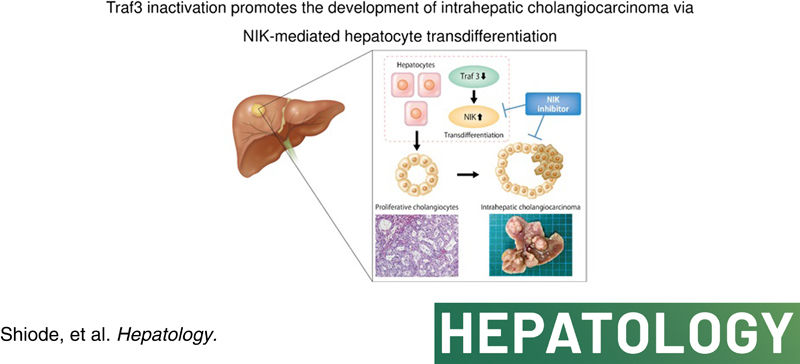
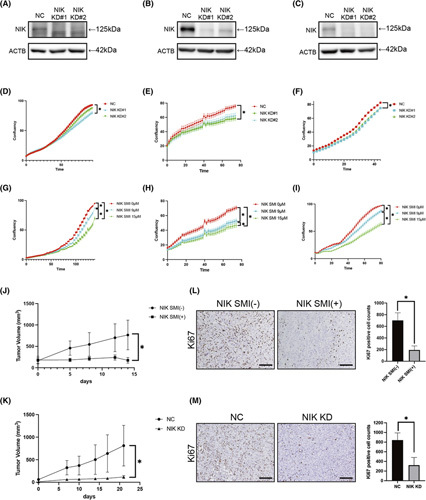
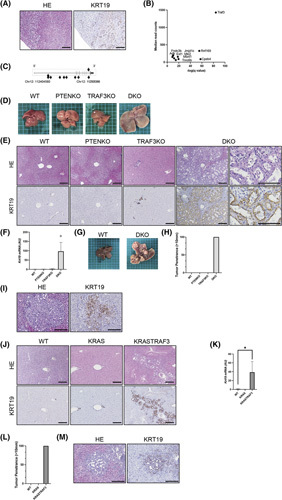
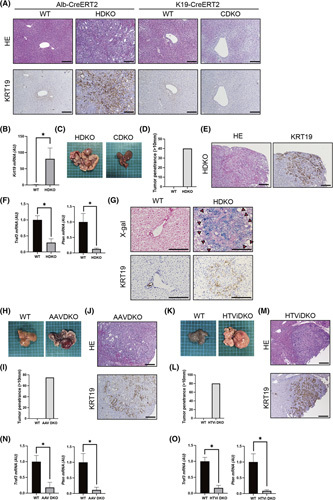
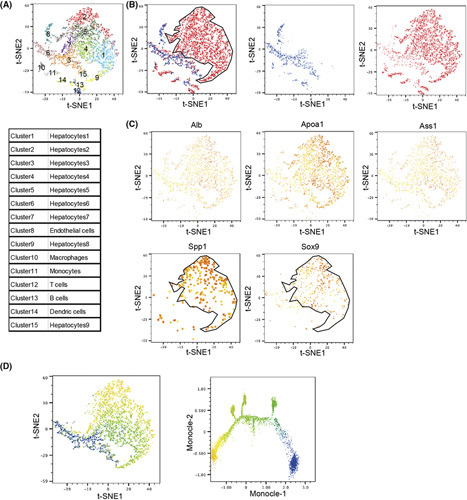
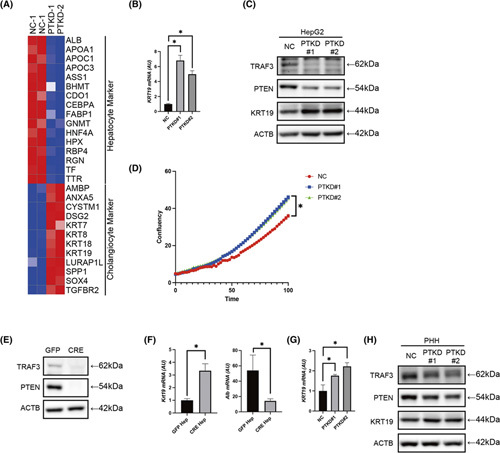
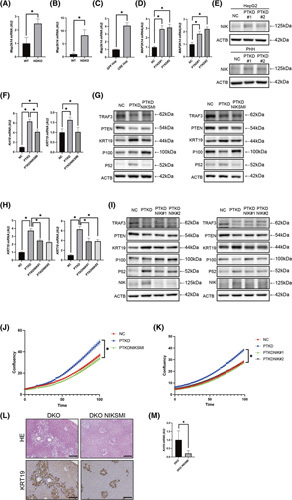
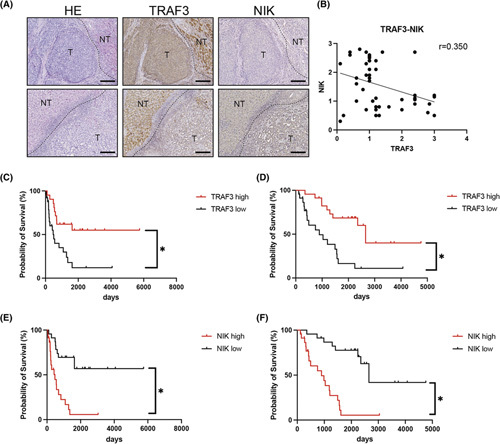
We performed a Sleeping Beauty transposon-based in vivo insertional mutagenesis screen in liver-specific Pten -deficient mice and identified TNF receptor-related factor 3 ( Traf3 ) as the most significantly mutated gene in murine ICCs in a loss-of-function manner. Liver-specific Traf3 deletion caused marked cholangiocyte overgrowth and spontaneous development of ICC in Pten knockout and KrasG12D mutant mice. Hepatocyte-specific, but not cholangiocyte-specific, Traf3 -deficient and Pten -deficient mice recapitulated these phenotypes. Lineage tracing and single-cell RNA sequencing suggested that these ICCs were derived from hepatocytes through transdifferentiation. TRAF3 and PTEN inhibition induced a transdifferentiation-like phenotype of hepatocyte-lineage cells into proliferative cholangiocytes through NF-κB-inducing kinase (NIK) up-regulation in vitro. Intrahepatic NIK levels were elevated in liver-specific Traf3 -deficient and Pten -deficient mice, and NIK inhibition alleviated cholangiocyte overgrowth. In human ICCs, we identified an inverse correlation between TRAF3 and NIK expression, with low TRAF3 or high NIK expression associated with poor prognosis. Finally, we showed that NIK inhibition by a small molecule inhibitor or gene silencing suppressed the growth of multiple human ICC cells in vitro and ICC xenografts in vivo.
TRAF3 inactivation promotes ICC development through NIK-mediated hepatocyte transdifferentiation. The oncogenic TRAF3-NIK axis may be a potential therapeutic target for ICC.
肝内胆管癌(ICC)是一种致命但了解甚少的疾病,其治疗选择非常有限。本研究旨在确定 ICC 的分子驱动因素并寻找治疗靶点。
我们在肝特异性 Pten 缺陷小鼠中进行了基于 Sleeping Beauty 转座子的体内插入突变筛选,发现 TNF 受体相关因子 3(Traf3)是小鼠 ICC 中以失活方式突变最显著的基因。肝特异性 Traf3 缺失导致 Pten 敲除和 KrasG12D 突变小鼠的胆管细胞过度生长和自发性 ICC 发展。肝特异性而非胆管细胞特异性 Traf3 缺失和 Pten 缺失小鼠重现了这些表型。谱系追踪和单细胞 RNA 测序表明,这些 ICC 是通过肝祖细胞的转分化而来的。体外实验表明,TRAF3 和 PTEN 抑制通过上调 NF-κB 诱导激酶(NIK)诱导肝源性细胞向增殖性胆管细胞的转化样表型。在肝特异性 Traf3 缺失和 Pten 缺失小鼠中,肝内 NIK 水平升高,NIK 抑制减轻胆管细胞过度生长。在人 ICC 中,我们发现 TRAF3 和 NIK 表达呈负相关,低 TRAF3 或高 NIK 表达与预后不良相关。最后,我们表明,小分子抑制剂或基因沉默抑制 NIK 可抑制体外多种人 ICC 细胞和体内 ICC 异种移植物的生长。
TRAF3 失活通过 NIK 介导的肝祖细胞转分化促进 ICC 的发展。致癌的 TRAF3-NIK 轴可能是 ICC 的潜在治疗靶点。