College of Chinese Medicine, Zhejiang Pharmaceutical College, Ningbo, 315100, China.
College of Pharmacy, Nanjing University of Chinese Medicine, Nanjing, 210046, China.
BMC Complement Med Ther. 2022 Jan 7;22(1):9. doi: 10.1186/s12906-021-03492-y.
Bletilla striata is the main medicine of many skin whitening classic formulas in traditional Chinese medicine (TCM) and is widely used in cosmetic industry recently. However, its active ingredients are still unclear and its fibrous roots are not used effectively. The aim of the present study is to discover and identify its potential anti-melanogenic active constituents by zebrafish model and molecular docking.
The antioxidant activities were evaluated by 2,2-diphenyl-1-picrylhydrazyl (DPPH) radical scavenging activity, 2,2'-azino-bis-(3-ethylbenthiazoline-6-sulphonic acid) (ABTS) radical scavenging activity and ferric reducing antioxidant power (FRAP) assay. The anti-melanogenic activity was assessed by tyrosinase inhibitory activity in vitro and melanin inhibitory in zebrafish. The chemical profiles were performed by ultra-high-performance liquid chromatography combined with quadrupole time-of-flight tandem mass spectrometry (UPLC-Q-TOF-MS/MS). Meanwhile, the potential anti-melanogenic active constituents were temporary identified by molecular docking.
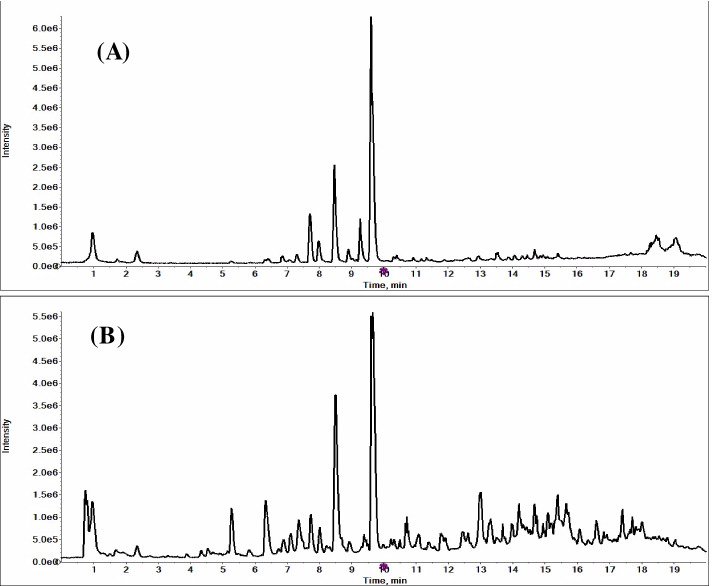
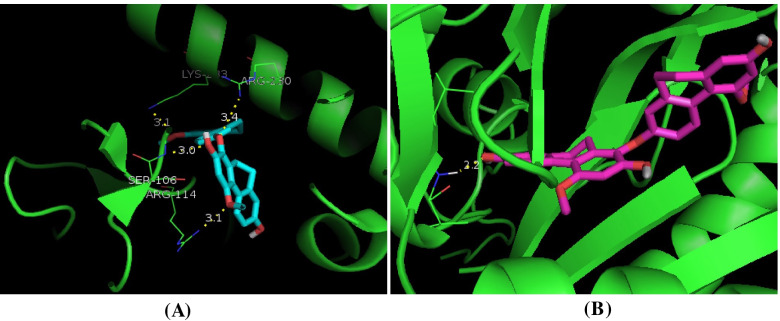
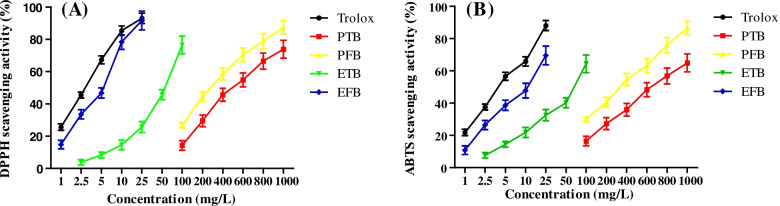
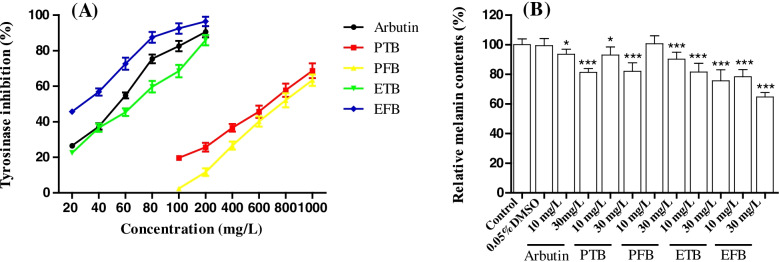
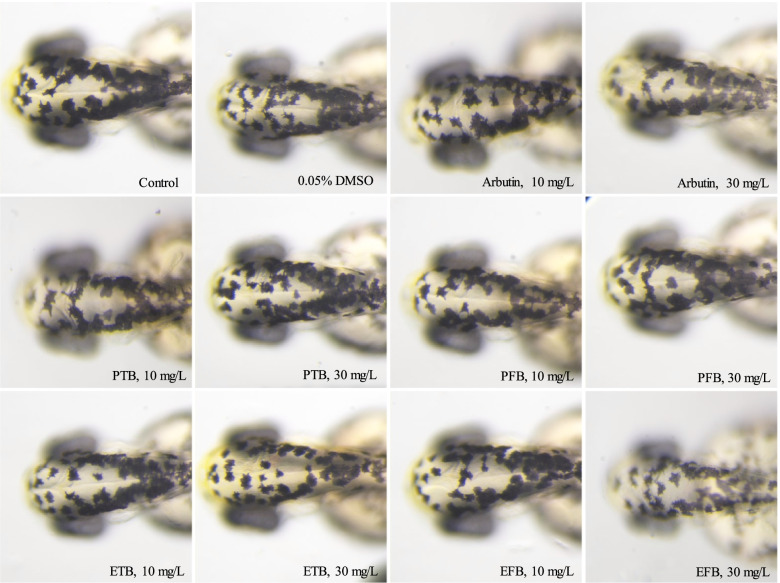
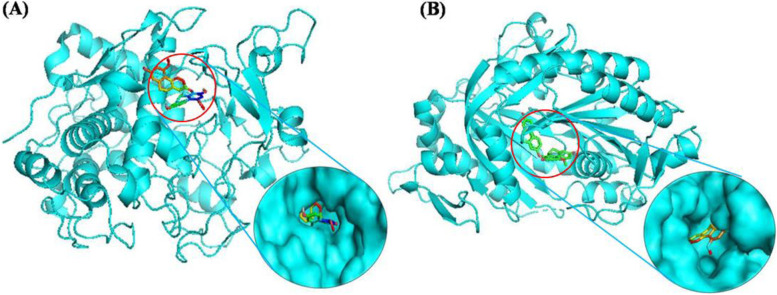
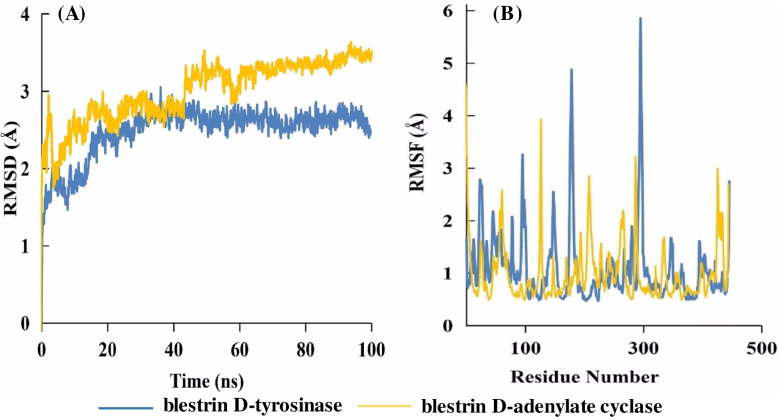
The 95% ethanol extract of B. striata fibrous roots (EFB) possessed the strongest DPPH, ABTS, FRAP and tyrosinase inhibitory activities, with IC 5.94 mg/L, 11.69 mg/L, 6.92 mmol FeSO/g, and 58.92 mg/L, respectively. In addition, EFB and 95% ethanol extract of B. striata tuber (ETB) significantly reduced the melanin synthesis of zebrafish embryos in a dose-dependent manner. 39 chemical compositions, including 24 stilbenoids were tentatively identified from EFB and ETB. Molecular docking indicated that there were 83 (including 60 stilbenoids) and 85 (including 70 stilbenoids) compounds exhibited stronger binding affinities toward tyrosinase and adenylate cyclase.
The present findings supported the rationale for the use of EFB and ETB as natural skin-whitening agents in pharmaceutical and cosmetic industries.
白及是许多中药美白经典方剂的主要药材,最近在化妆品行业广泛应用。然而,其活性成分仍不清楚,纤维根也未得到有效利用。本研究旨在通过斑马鱼模型和分子对接发现和鉴定其潜在的抗黑色素生成活性成分。
通过 2,2-二苯基-1-苦基肼(DPPH)自由基清除活性、2,2'-联氮-双-(3-乙基苯并噻唑啉-6-磺酸)(ABTS)自由基清除活性和铁还原抗氧化能力(FRAP)测定评估抗氧化活性。通过体外酪氨酸酶抑制活性和斑马鱼黑色素抑制评估抗黑色素生成活性。通过超高效液相色谱与四极杆飞行时间串联质谱(UPLC-Q-TOF-MS/MS)进行化学特征分析。同时,通过分子对接暂时鉴定潜在的抗黑色素生成活性成分。
白及纤维根的 95%乙醇提取物(EFB)具有最强的 DPPH、ABTS、FRAP 和酪氨酸酶抑制活性,IC50.94mg/L、11.69mg/L、6.92mmol FeSO4/g 和 58.92mg/L 分别。此外,EFB 和白及块茎的 95%乙醇提取物(ETB)在一定剂量范围内显著降低斑马鱼胚胎的黑色素合成。从 EFB 和 ETB 中初步鉴定出 39 种化学成分,包括 24 种芪类化合物。分子对接表明,有 83 种(包括 60 种芪类化合物)和 85 种(包括 70 种芪类化合物)化合物对酪氨酸酶和腺苷酸环化酶表现出更强的结合亲和力。
本研究结果支持将 EFB 和 ETB 作为天然美白剂应用于制药和化妆品行业的合理性。