Bidolegui Fernando, Pereira Sebastián, Irigoyen Cristina, Pires Robinson Esteves
Servicio de Ortopedia Y Traumatología, Hospital Sirio-Libanes, ECICARO, Ciudad Autónoma de Buenos Aires, Argentina.
Departamento Do Aparelho Locomotor, Universidade Federal de Minas Gerais, Belo Horizonte, MG, Brazil.
Patient Saf Surg. 2022 Jan 7;16(1):2. doi: 10.1186/s13037-021-00315-4.
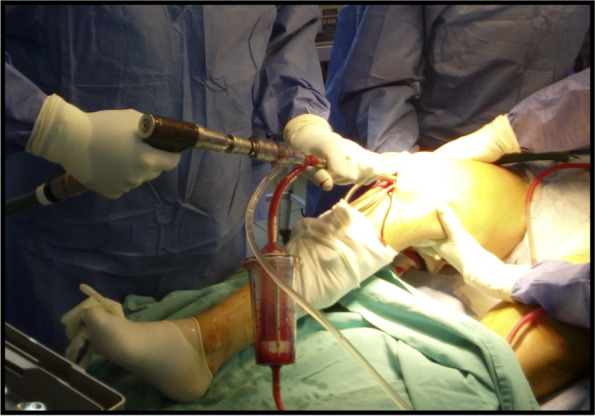
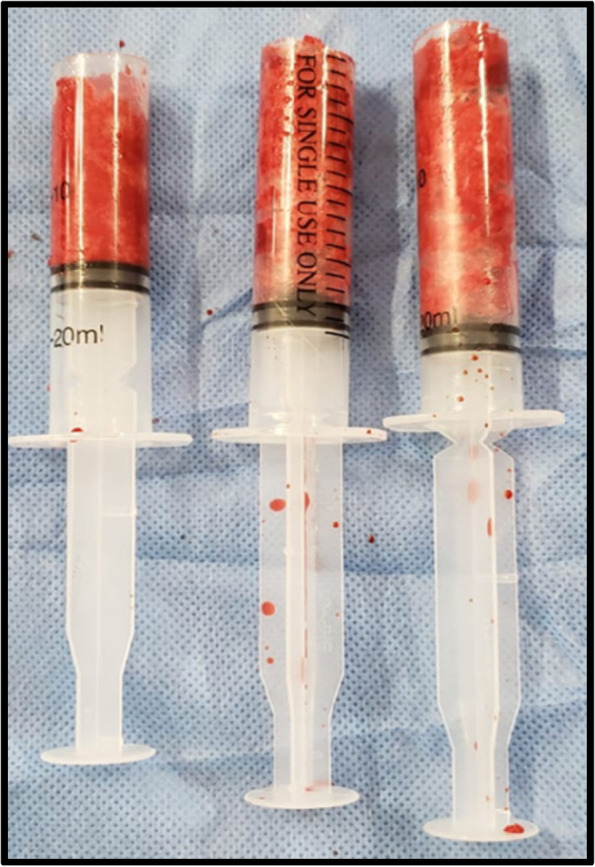
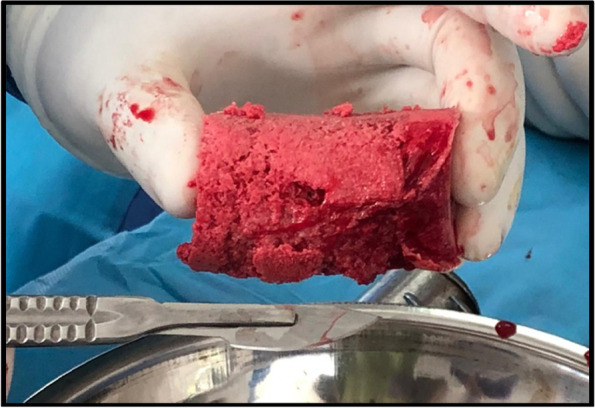
The Reamer-Irrigator-Aspirator system was initially developed to reduce fat embolism and thermic necrosis during reamed intramedullary nail fixation of femoral shaft fractures. Currently, this system is used in extended applications including accessing large volume of autologous bone graft, as alternative for iliac crest harvesting. Antegrade femoral bone graft harvesting using the Reamer-Irrigator-Aspirator system is considered the standard technique. The aim of our study is to evaluate the efficacy (bone graft volume) and the complications (blood loss, postoperative pain, and incidence of iatrogenic fractures) of the Reamer-Irrigator-Aspirator system through the retrograde femoral route in a series of patients with post-traumatic bone defects or nonunions.
A non-controlled single center retrospective observational cohort study was conducted in a level1 trauma center to evaluate all patients who were treated using the RIA system. Between November 2015 and May 2019, 24 patients (8 women and 16 men; mean age: 41 years [range 27-55 years]) with bone defects or nonunions underwent bone graft harvesting using the Reamer-Irrigator-Aspirator system through retrograde femoral route. Postoperative pain, complications, and bone graft volume were analyzed. Inclusion criteria was patients older than 18 years with a diagnosis of post-traumatic bone defect or associated tibial or femoral nonunion, with minimum 6-months follow, treated using the RIA. We hypothesized that the retrograde route of the RIA system is a safe and efficacious method for bone harvesting.
The average volume of collected graft was 45 cc (range 30-60 cc). In 83% of the cases, bone grafting was sufficient, while in 17% it was necessary to add iliac crest bone graft to completely fill the bone defect. A mean drop in postoperative hemoglobin of 4.1 g / dL (range 0.5-6.0 g / dL) was evidenced. In 4 cases (33%), a unit of packed red blood cells was required. Regarding postoperative pain, visual analogue scale after 3 months postoperatively was 1.6 in average. After 6 months, the value has decreased to 0.4. There were no perioperative or postoperative complications at 6-month follow-up.
In this limited case series, large volumes of bone graft were harvested using the retrograde route of the RIA system and there were no intra-/ postoperative complications observed at 6-month follow-up. Therefore this novel technique appears safe and efficacious. However, it's important to highlight that future prospective controlled studies are necessary to validate the insights from this pilot study.
扩髓-冲洗-吸引系统最初是为减少股骨干骨折扩髓髓内钉固定过程中的脂肪栓塞和热坏死而研发的。目前,该系统被广泛应用,包括获取大量自体骨移植材料,以替代髂嵴取骨。使用扩髓-冲洗-吸引系统顺行获取股骨骨移植材料被视为标准技术。本研究的目的是通过逆行股骨入路,对一系列创伤后骨缺损或骨不连患者,评估扩髓-冲洗-吸引系统的有效性(骨移植量)和并发症(失血、术后疼痛及医源性骨折发生率)。
在一家一级创伤中心进行了一项非对照单中心回顾性观察队列研究,以评估所有使用RIA系统治疗的患者。2015年11月至2019年5月期间,24例(8例女性和16例男性;平均年龄:41岁[范围27 - 55岁])有骨缺损或骨不连的患者通过逆行股骨入路,使用扩髓-冲洗-吸引系统进行了骨移植材料获取。分析了术后疼痛、并发症及骨移植量。纳入标准为年龄大于18岁,诊断为创伤后骨缺损或相关胫骨或股骨骨不连,随访至少6个月,且使用RIA系统治疗。我们假设RIA系统的逆行入路是一种安全有效的骨获取方法。
采集的移植骨平均体积为45立方厘米(范围30 - 60立方厘米)。在83%的病例中,骨移植充足,而在17%的病例中,需要添加髂嵴骨移植以完全填充骨缺损。术后血红蛋白平均下降4.1克/分升(范围0.5 - 6.0克/分升)。4例(33%)患者需要输注一个单位的浓缩红细胞。关于术后疼痛,术后3个月视觉模拟评分平均为1.6。6个月后,该值降至0.4。在6个月随访时未发现围手术期或术后并发症。
在这个有限的病例系列中,使用RIA系统的逆行入路获取了大量骨移植材料,且在6个月随访时未观察到术中和术后并发症。因此,这种新技术似乎是安全有效的。然而,必须强调的是,未来需要进行前瞻性对照研究以验证本初步研究的结果。