Graduate Institute of Biomedical Informatics, Taipei Medical University, Taipei, Taiwan; Internet of Things Laboratory, Chunghwa Telecom Laboratories, Tao Yuen, Taiwan.
National Institute of Cancer Research, National Health Research Institutes, Tainan, Taiwan; Standards and Interoperability Lab, Smart Healthcare Center of Excellence, Taipei, Taiwan; Department of Information Management, National Taipei University of Nursing and Health Sciences, Taipei, Taiwan.
Comput Methods Programs Biomed. 2022 Mar;215:106595. doi: 10.1016/j.cmpb.2021.106595. Epub 2021 Dec 29.
COVID-19, a serious infectious disease outbreak started in the end of 2019, has caused a strong impact on the overall medical system, which reflects the gap in the volume and capacity of medical services and highlights the importance of clinical data ex-change and application. The most important concerns of medical records in the medical field include data privacy, data correctness, and data security. By realizing these three goals, medical records can be made available to different hospital information systems to achieve the most complete medical care services. The privacy and protection of health data require detailed specification and usage requirements, which is particularly important for cross-agency data exchange.
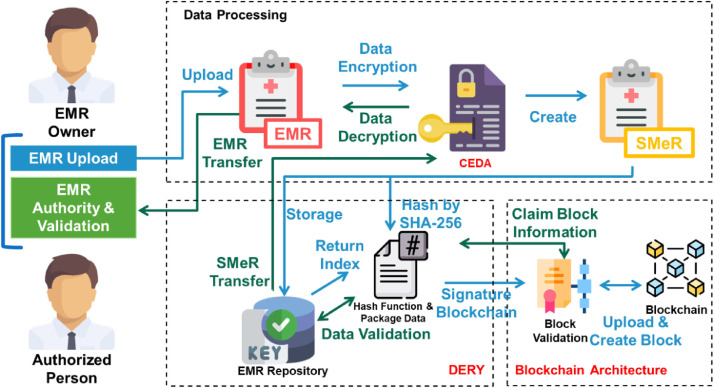
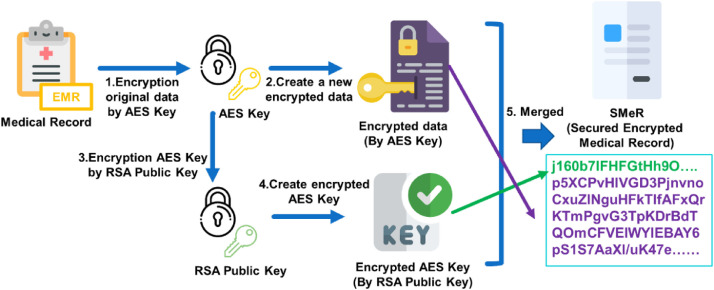
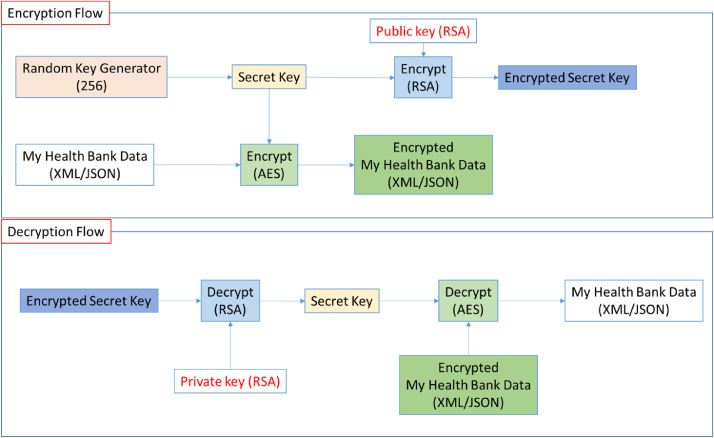
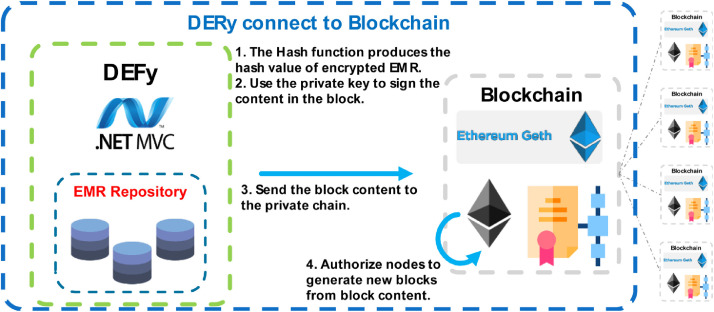
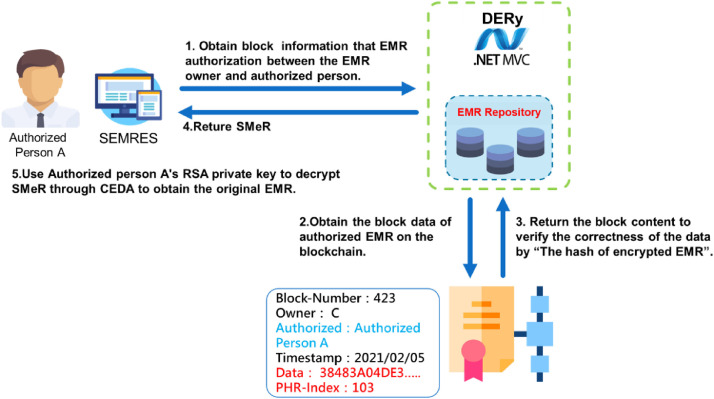
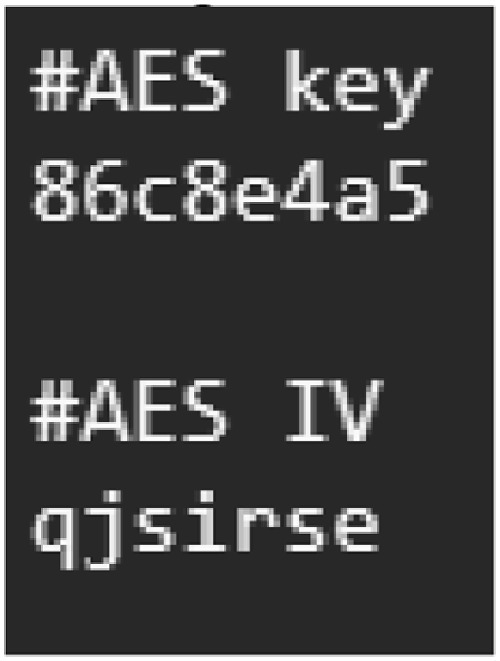
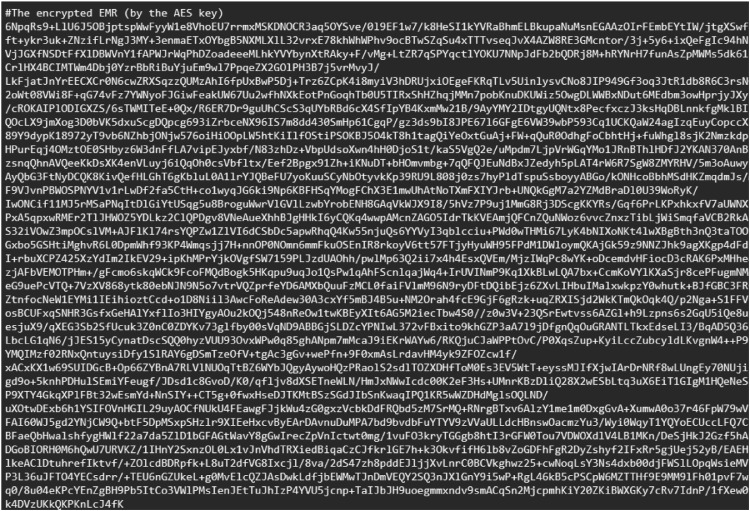
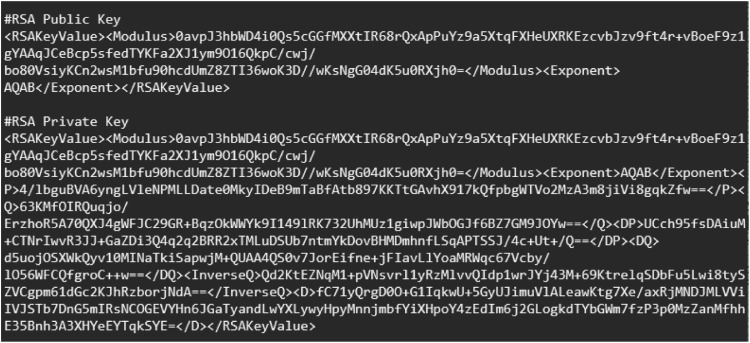
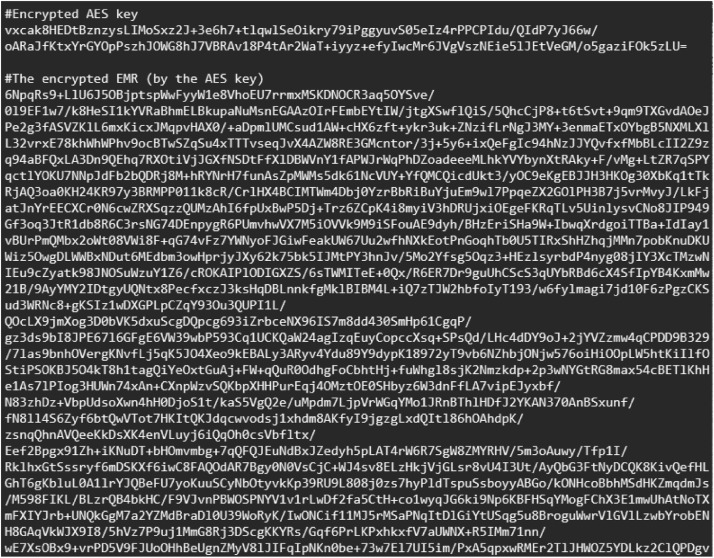
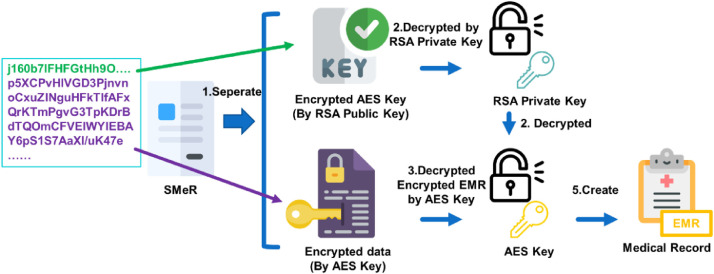
This research is composed of three main modules. "Combined Encryption and Decryption Architecture", which includes the hybrid double encryption mechanism of AES and RSA, and encrypts medical records to produce "Secured Encrypted Medical Record". "Decentralize EMR Repository", which includes data decryption and an exchange mechanism. After a data transmission is completed, the content verification and data decryption process will be launched to confirm the correctness of the data and obtain the data. A blockchain architecture is used to store the hash value of the encrypted EMR, and completes the correctness verification of the EMR after transmission through the hash value.
The results of this study provide an efficient triple encryption mechanism for electronic medical records. SEMRES ensures the correctness of data through the non-repudiation feature of a blockchain open ledger, and complete integrated information security protection and data verification architecture, in order that medical data can be exchanged, verified, and applied in different locations. After the patient receives medical services, the medical record is re-encrypted and verified and stored in the patient's medical record. The blockchain architecture is used to ensure the verification of non-repudiation of medical service, and finally to complete the payment for medical services.
The main aim of this study was to complete a security architecture for medical data, and develop a triple encryption authentication architecture to help data owners easily and securely share personal medical records with medical service personnel.
COVID-19 是一种严重的传染病,于 2019 年底爆发,对整体医疗系统造成了强烈冲击,反映出医疗服务量和容量的差距,凸显了临床数据交换和应用的重要性。医疗领域中病历最关注的三个方面包括数据隐私、数据正确性和数据安全性。通过实现这三个目标,可以将病历提供给不同的医院信息系统,以实现最完整的医疗服务。隐私和保护健康数据需要详细的规范和使用要求,这对于跨机构数据交换尤为重要。
本研究由三个主要模块组成。“混合加密和解密架构”,包括 AES 和 RSA 的混合双加密机制,对病历进行加密,生成“安全加密病历”。“去中心化 EMR 存储库”,包括数据解密和交换机制。数据传输完成后,将启动内容验证和数据解密过程,以确认数据的正确性并获取数据。使用区块链架构存储加密 EMR 的哈希值,并通过哈希值完成传输后 EMR 的正确性验证。
本研究的结果为电子病历提供了高效的三重加密机制。SEMRRES 通过区块链开放分类账的不可抵赖性特征确保数据的正确性,并完成完整的综合信息安全保护和数据验证架构,以便在不同地点交换、验证和应用医疗数据。患者接受医疗服务后,重新对病历进行加密和验证,并存储在患者的病历中。使用区块链架构确保医疗服务的不可抵赖性验证,最终完成医疗服务的支付。
本研究的主要目的是完成医疗数据的安全架构,并开发三重加密认证架构,帮助数据所有者轻松安全地与医疗服务人员共享个人医疗记录。