Yang Changwei, Wang Wuqiong, Deng Pengxi, Li Chen, Zhao Liangcai, Gao Hongchang
School of Pharmaceutical Science, Institute of Metabonomics & Medical NMR, Wenzhou Medical University, Wenzhou, China.
School of Public Health, Fujian Medical University, Fuzhou, China.
Front Aging Neurosci. 2021 Dec 22;13:778527. doi: 10.3389/fnagi.2021.778527. eCollection 2021.
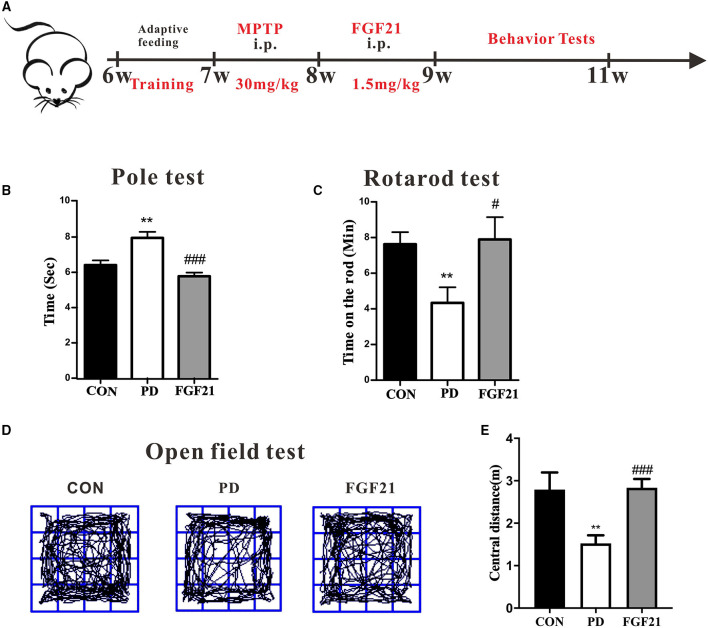
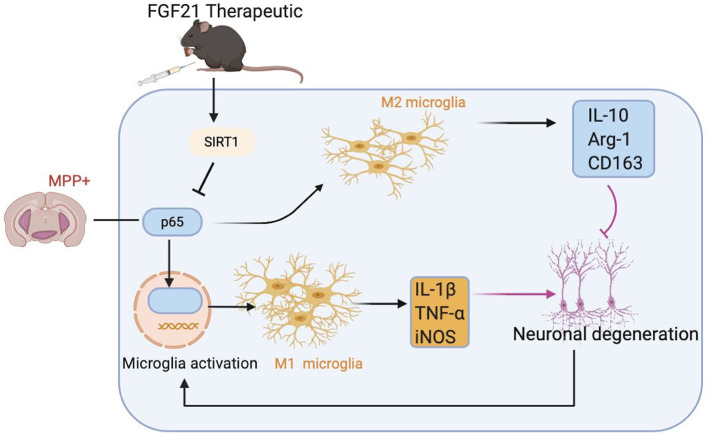
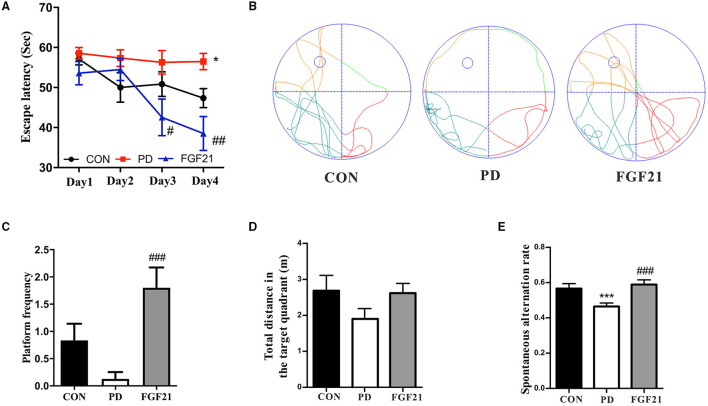
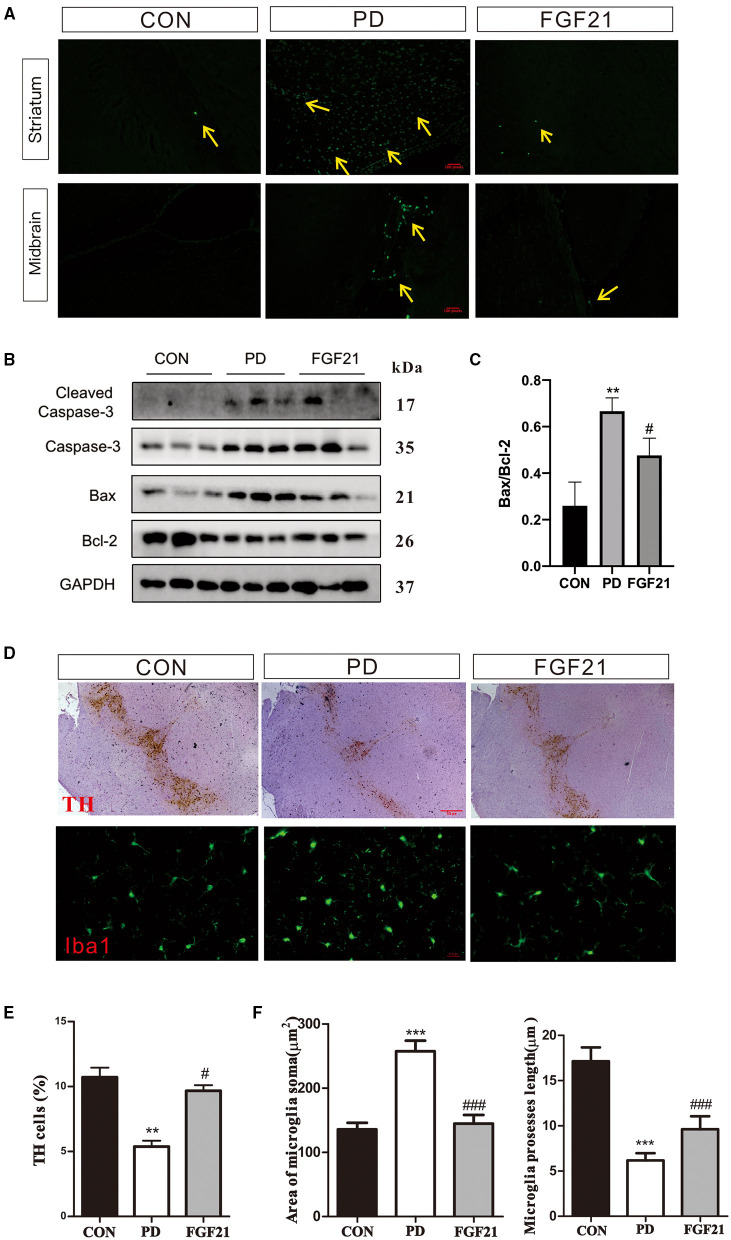
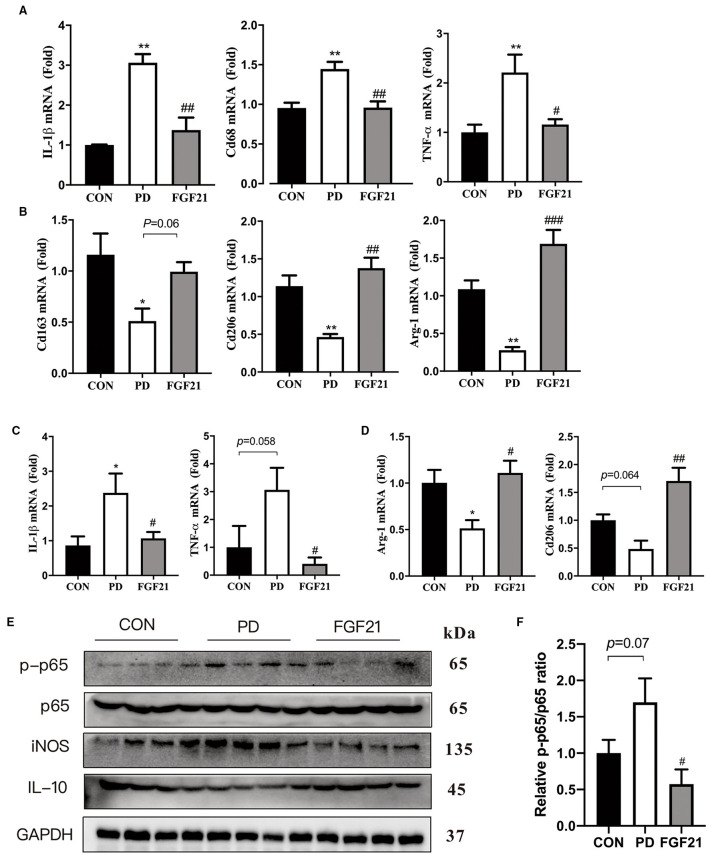
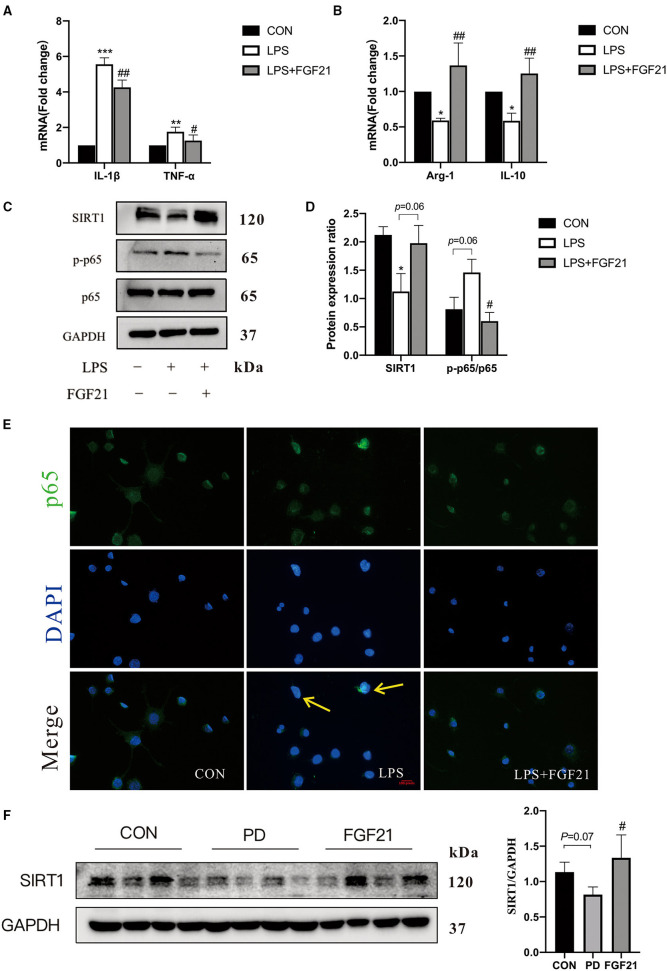
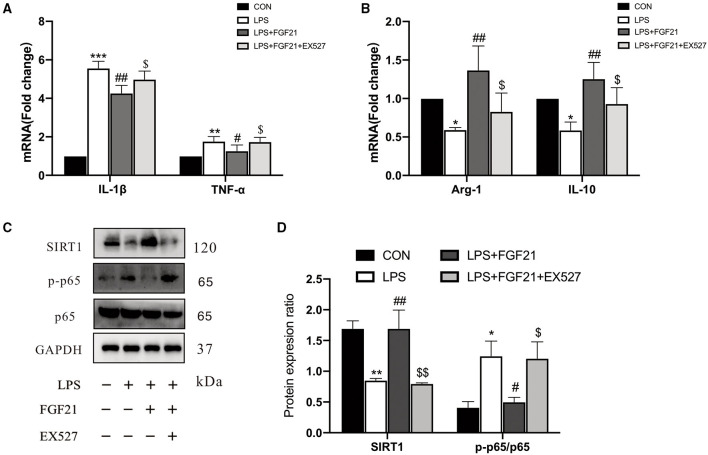
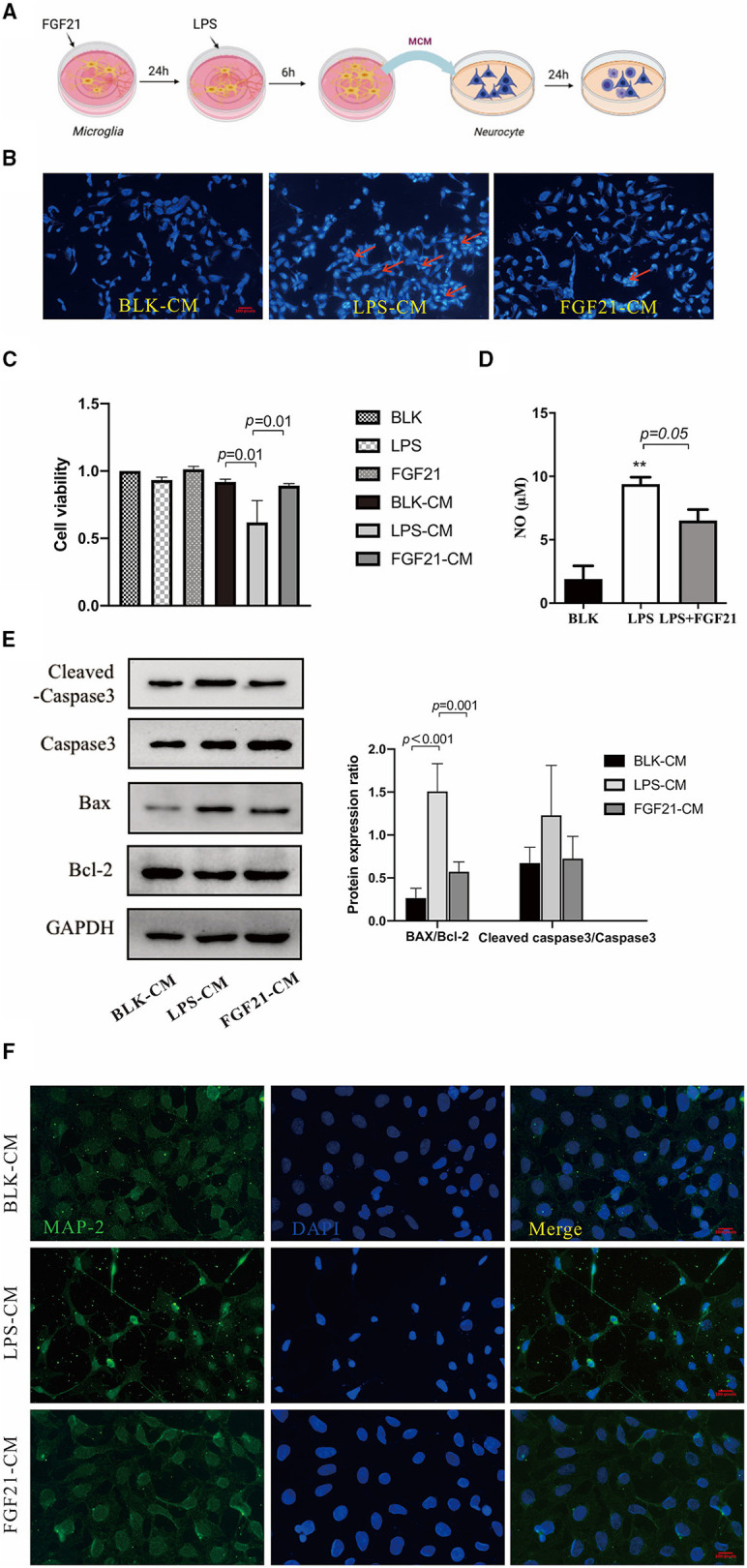
Microglial polarization and the subsequent neuroinflammatory response were identified as key contributors to the progress of Parkinson's disease (PD). Researchers have shown that fibroblast growth factor 21 (FGF21) plays multiple biological functions, including anti-inflammation and neuroprotection. However, the knowledge of FGF21 on microglial polarization in PD is far from completion. In this study, both and models were used to investigate whether FGF21 enhances the brain function by modulating microglial polarization in PD. The protective effects of FGF21 were conducted using 1-methyl-4-phenyl-1,2,3,6-tetrahydropyridine-induced PD mice model alongside intraperitoneally received FGF21. A behavioral test battery and tyrosine hydroxylase (TH) immunohistochemistry were conducted to evaluate the neuronal function and nigrostriatal tract integrity. Immunofluorescence assay and Western blot were used to examine M1/M2 microglial polarization. Then, a microglia-neuron co-culture system was adopted to identify the underlying molecular mechanisms of FGF21. The results showed that FGF21 significantly alleviated motor and cognitive impairment in mice with PD. FGF21 also protected TH-positive neuron cells in the striatum and midbrain. Mechanistically, FGF21 suppressed M1 microglial polarization and the subsequent mRNA expression of pro-inflammatory factors while promoting M2 microglial polarization with increasing anti-inflammatory factors in mice with PD. Furthermore, sirtuin 1 (SIRT1) and the nuclear factor-kappa B (NF-κB) pathway were involved in the FGF21-induced M2 microglial polarization. Conversely, SIRT1 inhibitor EX527 significantly prevented both the FGF21-induced SIRT1 expression and M2 microglial polarization. Moreover, FGF21 pretreatment of microglia significantly prevented neuronal cell apoptosis in a microglia-neuron co-culture system. In conclusion, our data demonstrate that FGF21 exerted its protective effects in the pathology of PD through SIRT1/NF-κB pathway-mediated microglial polarization. Given the safety record of human clinical trials, FGF21 could be a promising therapy for clinical trials to ameliorate motor and nonmotor deficits in patients with PD.
小胶质细胞极化及随后的神经炎症反应被确定为帕金森病(PD)进展的关键因素。研究人员表明,成纤维细胞生长因子21(FGF21)具有多种生物学功能,包括抗炎和神经保护作用。然而,关于FGF21对PD中小胶质细胞极化的了解还远远不够。在本研究中,使用了细胞和动物模型来研究FGF21是否通过调节PD中的小胶质细胞极化来增强脑功能。利用1-甲基-4-苯基-1,2,3,6-四氢吡啶诱导的PD小鼠模型并腹腔注射FGF21,来进行FGF21的保护作用实验。进行行为测试组和酪氨酸羟化酶(TH)免疫组织化学分析以评估神经元功能和黑质纹状体束的完整性。采用免疫荧光分析和蛋白质印迹法检测M1/M2小胶质细胞极化情况。然后,采用小胶质细胞-神经元共培养系统来确定FGF21的潜在分子机制。结果表明,FGF21显著减轻了PD小鼠的运动和认知障碍。FGF21还保护了纹状体和中脑中的TH阳性神经元细胞。机制上,FGF21抑制了PD小鼠中M1小胶质细胞极化以及促炎因子的mRNA表达,同时促进了M2小胶质细胞极化并增加了抗炎因子。此外,沉默调节蛋白1(SIRT1)和核因子-κB(NF-κB)信号通路参与了FGF21诱导的M2小胶质细胞极化。相反,SIRT1抑制剂EX527显著抑制了FGF21诱导的SIRT1表达和M2小胶质细胞极化。此外,FGF21对小胶质细胞的预处理显著预防了小胶质细胞-神经元共培养系统中的神经元细胞凋亡。总之,我们的数据表明,FGF21通过SIRT1/NF-κB信号通路介导的小胶质细胞极化在PD病理过程中发挥其保护作用。鉴于人类临床试验的安全记录,FGF21可能是改善PD患者运动和非运动功能障碍的临床试验中有前景的治疗方法。