Ballantyne Elena C, King Jelena P, Green Sheryl M
Department of Psychiatry and Behavioural Neurosciences, McMaster University, Hamilton, ON, Canada.
St. Joseph's Healthcare Hamilton, Hamilton, ON, Canada.
Front Glob Womens Health. 2021 Dec 23;2:741539. doi: 10.3389/fgwh.2021.741539. eCollection 2021.
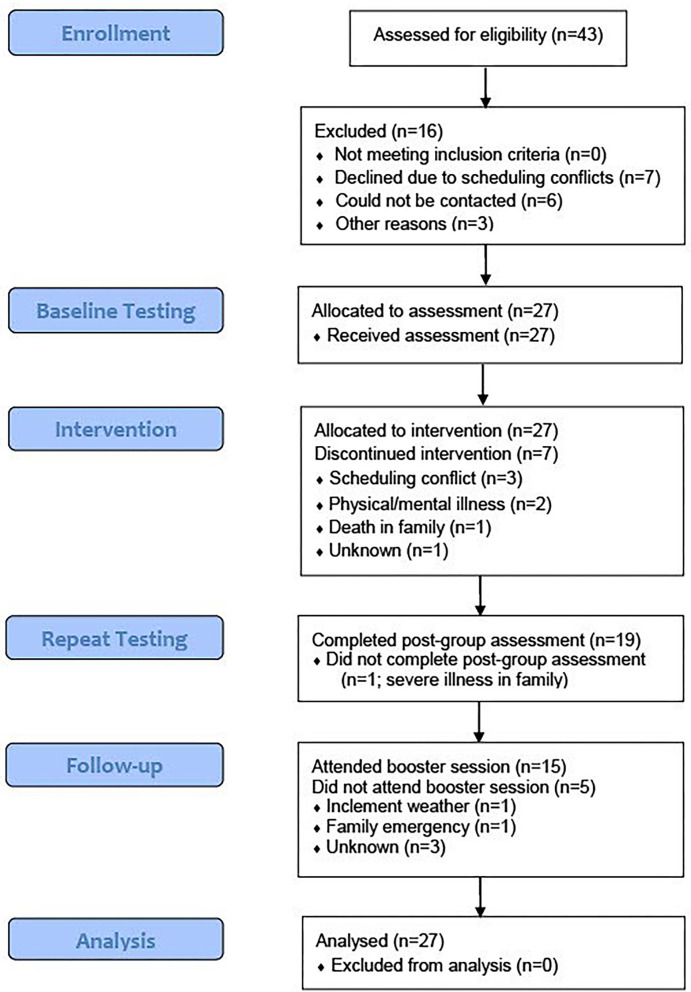
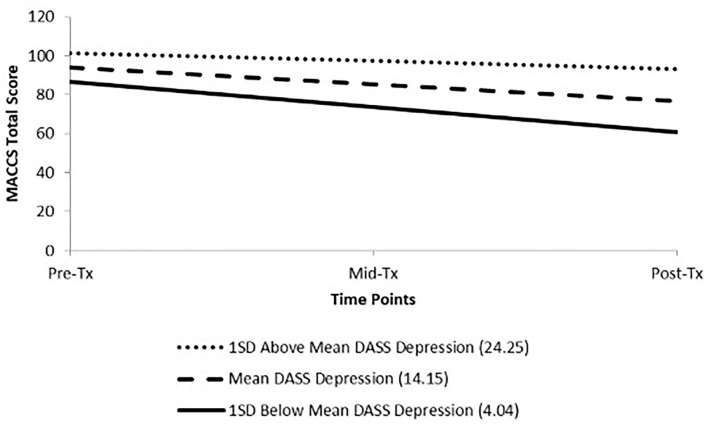
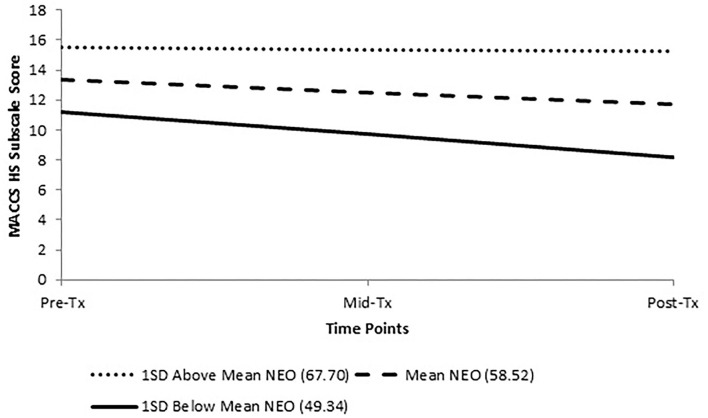
Menopause is associated with physical and emotional symptoms, and subjective cognitive concerns that are generally not borne out on objective cognitive measures. This discrepancy suggests that a psychological rather than biological mechanism likely mediates the cognitive concerns of women in menopause. The current study assessed the feasibility and effectiveness of a cognitive remediation intervention with the goal of reducing subjective perceptions of cognitive difficulty during the menopause. Twenty-seven menopausal women (M age = 53.74, SD = 4.14) completed a 5-week group-based intervention (with a post-group booster) consisting of 2-h weekly sessions. Participants completed pre- and post-intervention measures capturing subjective cognitive ability, mood, anxiety, stress, personality, and objective cognitive tests. The primary variable of interest was self-reported cognitive confidence measured by the Memory and Cognitive Confidence Scale (MACCS). All but one MACCS subscale significantly decreased over the course of treatment (with lower scores associated with higher confidence) and effect sizes ranged from small to large (d = -0.39 to -0.91) with gains maintained at 1-month follow-up. Interestingly, no change in objective cognitive test performance was observed, indicating increases in subjective cognitive confidence in the absence of objective cognitive improvement. There was no change in mood, anxiety, or stress scores. Two-level HLM analyses revealed that those with higher baseline neuroticism, as measured by the NEO Personality Inventory, had smaller decreases in post-group MACCS High Standards subscale relative to those with lower baseline neuroticism ( = 0.027, d = -0.45). Those with higher baseline depression scores on the Depression Anxiety Stress Scale (DASS-21) had a smaller decrease in post-intervention MACCS Total Score relative to those with lower depression ratings. To our knowledge, this is the first feasibility study of its kind targeting perceptions of cognitive impairment during menopause. Although generally well-tolerated, recruitment and scheduling difficulties were flagged as challenges to engagement while a small sample size and lack of control group limit conclusions about efficacy. Providing current results could be replicated with enhanced methods, these results provide support that cognitive remediation is a feasible and credible treatment, and may improve quality of life for women in menopause. www.ClinicalTrials.gov, identifier: NCT03311880.
更年期与身体和情绪症状以及主观认知问题相关,而这些问题在客观认知测量中通常并未得到证实。这种差异表明,心理机制而非生物学机制可能介导了更年期女性的认知问题。本研究评估了一种认知康复干预措施的可行性和有效性,其目的是减少更年期期间对认知困难的主观感受。27名更年期女性(平均年龄=53.74,标准差=4.14)完成了一项为期5周的基于小组的干预(小组后有强化干预),每周进行2小时的课程。参与者完成了干预前后的测量,包括主观认知能力、情绪、焦虑、压力、人格以及客观认知测试。主要关注变量是通过记忆与认知信心量表(MACCS)测量的自我报告的认知信心。除一个MACCS子量表外,所有子量表在治疗过程中均显著下降(得分越低表明信心越高),效应大小从小到大都有(d=-0.39至-0.91),且在1个月随访时仍保持改善。有趣的是,未观察到客观认知测试表现有变化,这表明在客观认知未改善的情况下主观认知信心有所提高。情绪、焦虑或压力得分没有变化。两级分层线性模型分析显示,根据大五人格量表测量,基线神经质得分较高的人相对于基线神经质得分较低的人,小组后MACCS高标准子量表的下降幅度较小(p=0.027,d=-0.45)。在抑郁焦虑压力量表(DASS-21)上基线抑郁得分较高的人相对于抑郁评分较低的人,干预后MACCS总分的下降幅度较小。据我们所知,这是同类针对更年期认知障碍认知的首次可行性研究。尽管总体耐受性良好,但招募和安排困难被视为参与的挑战,而样本量小和缺乏对照组限制了关于疗效的结论。如果当前结果能够通过改进方法得以复制,这些结果支持认知康复是一种可行且可靠的治疗方法,并且可能改善更年期女性的生活质量。www.ClinicalTrials.gov,标识符:NCT03311880。