Department of Hypertension, The First Affiliated Hospital of Guangxi Medical University, Nanning, China.
Department of Molecular Microbiology and Immunology, University of Southern California, Los Angeles, CA, U.S.A.
Biosci Rep. 2022 Jan 28;42(1). doi: 10.1042/BSR20212062.
Our previous data indicated that miR-24-3p is involved in the regulation of vascular endothelial cell (EC) proliferation and migration/invasion. However, whether IL-1β affects hypoxic HUVECs by miR-24-3p is still unclear. Therefore, the present study aimed to investigate the role and underlying mechanism of interleukin 1β (IL-1β) in hypoxic HUVECs.
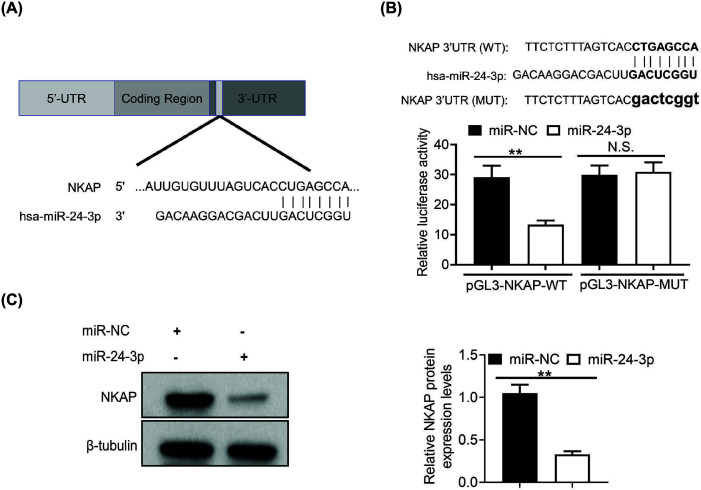
We assessed the mRNA expression levels of miR-24-3p, hypoxia-inducible factor-1α (HIF1A) and NF-κB-activating protein (NKAP) by quantitative real-time polymerase chain reaction (RT-qPCR). ELISA measured the expression level of IL-1β. Cell counting kit-8 (CCK-8) assays evaluated the effect of miR-24-3p or si-NKAP+miR-24 on cell proliferation (with or without IL-1β). Transwell migration and invasion assays were used to examine the effects of miR-24-3p or si-NKAP+miR-24-3p on cell migration and invasion (with or without IL-1β). Luciferase reporter assays were used to identify the target of miR-24-3p.
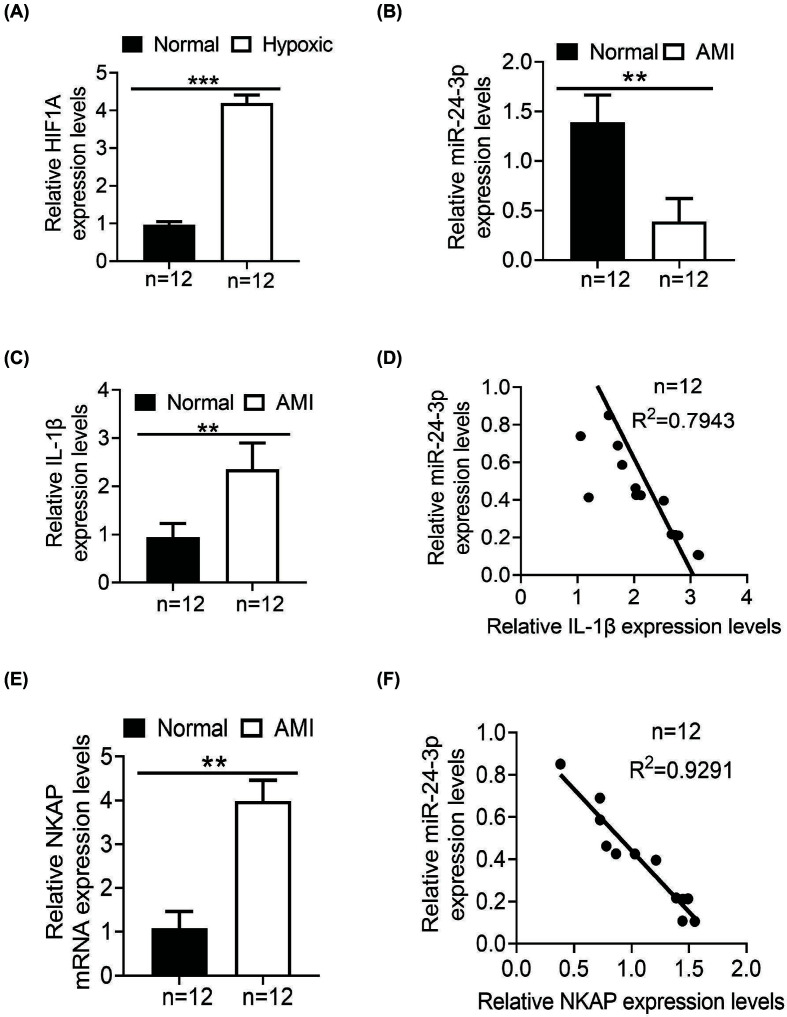
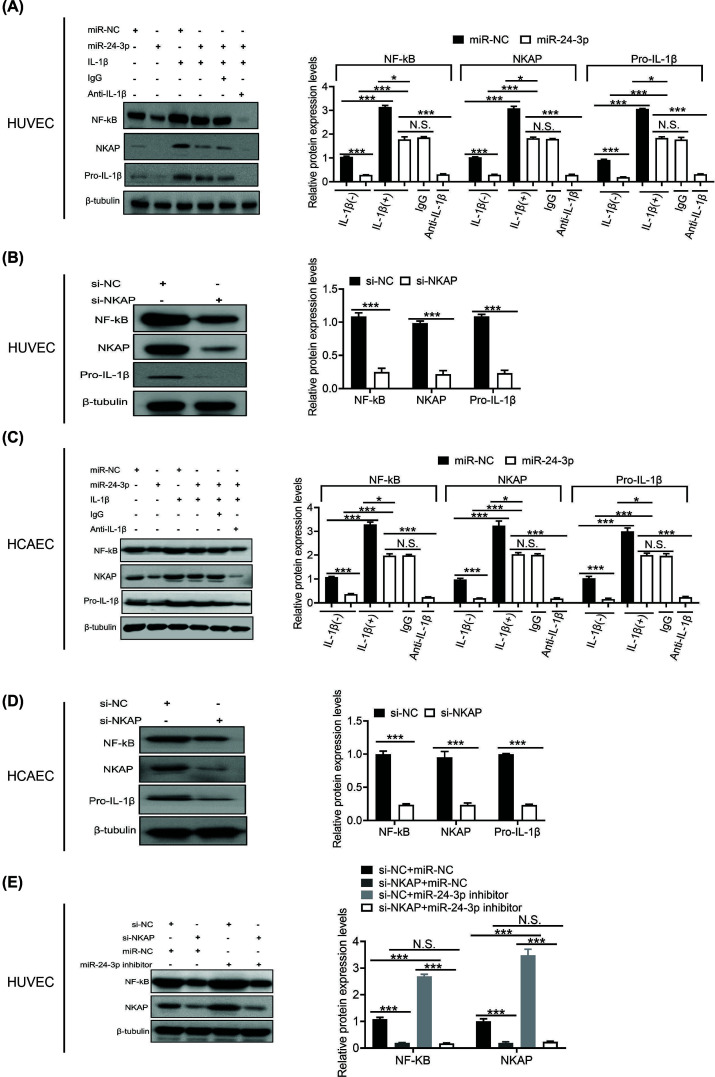
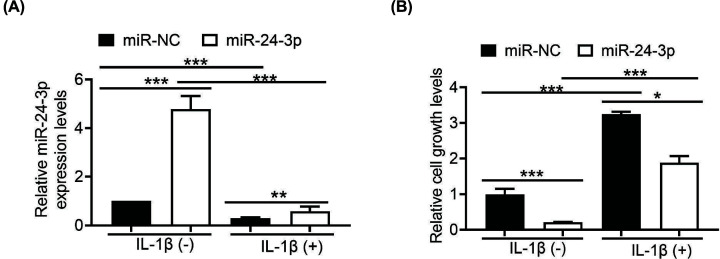
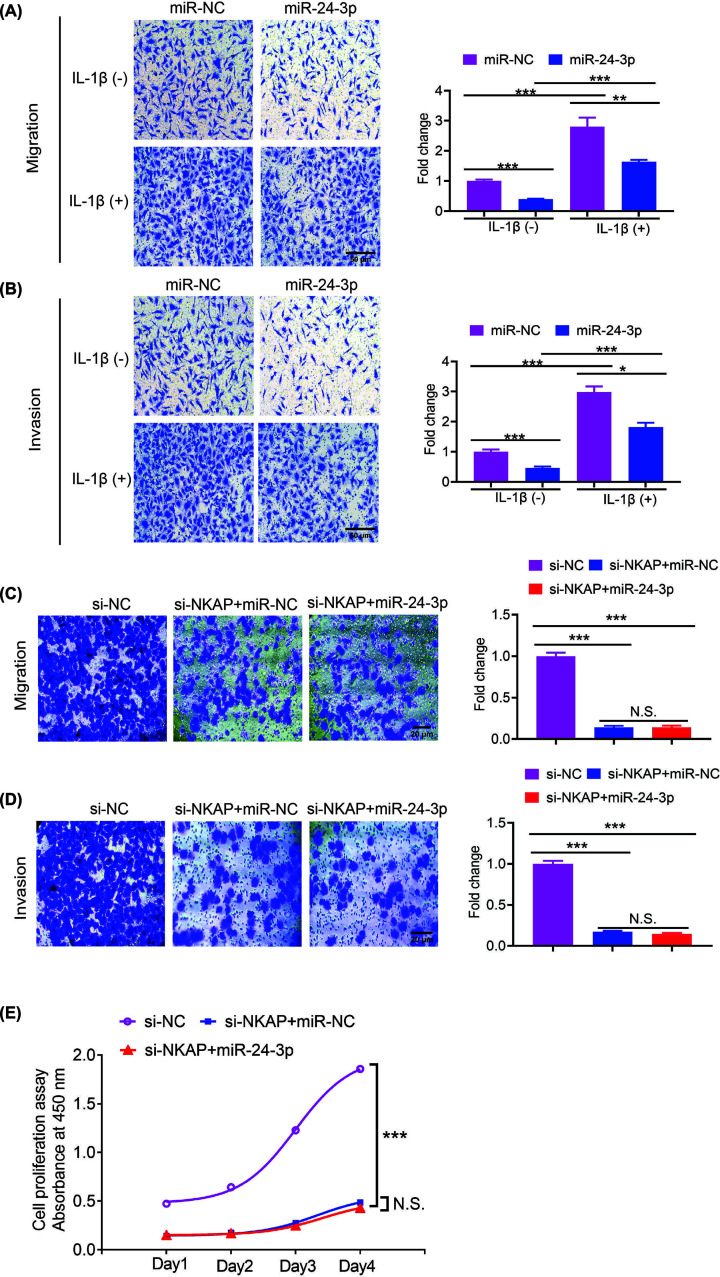
We demonstrated that in acute myocardial infarction (AMI) patient blood samples, the expression of miR-24-3p is down-regulated, the expression of IL-1β or NKAP is up-regulated, and IL-1β or NKAP is negatively correlated with miR-24-3p. Furthermore, IL-1β promotes hypoxic HUVECs proliferation by down-regulating miR-24-3p. In addition, IL-1β also significantly promotes the migration and invasion of hypoxic HUVECs; overexpression of miR-24-3p can partially rescue hypoxic HUVECs migration and invasion. Furthermore, we discovered that NKAP is a novel target of miR-24-3p in hypoxic HUVECs. Moreover, both the overexpression of miR-24-3p and the suppression of NKAP can inhibit the NF-κB/pro-IL-1β signaling pathway. However, IL-1β mediates suppression of miR-24-3p activity, leading to activation of the NKAP/NF-κB pathway. In conclusion, our results reveal a new function of IL-1β in suppressing miR-24-3p up-regulation of the NKAP/NF-κB pathway.
我们之前的数据表明,miR-24-3p 参与了血管内皮细胞(EC)增殖、迁移和侵袭的调节。然而,IL-1β 是否通过 miR-24-3p 影响低氧 HUVEC 尚不清楚。因此,本研究旨在探讨白细胞介素 1β(IL-1β)在低氧 HUVEC 中的作用及其潜在机制。
采用实时定量聚合酶链反应(RT-qPCR)评估 miR-24-3p、缺氧诱导因子-1α(HIF1A)和 NF-κB 激活蛋白(NKAP)的 mRNA 表达水平。酶联免疫吸附试验(ELISA)测定 IL-1β 的表达水平。细胞计数试剂盒-8(CCK-8)检测 miR-24-3p 或 si-NKAP+miR-24 对细胞增殖(有无 IL-1β)的影响。Transwell 迁移和侵袭实验用于检测 miR-24-3p 或 si-NKAP+miR-24-3p 对细胞迁移和侵袭(有无 IL-1β)的影响。荧光素酶报告基因实验用于鉴定 miR-24-3p 的靶标。
我们发现,在急性心肌梗死(AMI)患者的血液样本中,miR-24-3p 的表达下调,IL-1β 或 NKAP 的表达上调,IL-1β 或 NKAP 与 miR-24-3p 呈负相关。此外,IL-1β 通过下调 miR-24-3p 促进低氧 HUVEC 增殖。此外,IL-1β 还显著促进低氧 HUVEC 的迁移和侵袭;过表达 miR-24-3p 可部分挽救低氧 HUVEC 的迁移和侵袭。此外,我们发现 NKAP 是低氧 HUVEC 中 miR-24-3p 的一个新靶标。此外,miR-24-3p 的过表达和 NKAP 的抑制均可抑制 NF-κB/pro-IL-1β 信号通路。然而,IL-1β 介导了 miR-24-3p 活性的抑制,导致 NKAP/NF-κB 通路的激活。总之,我们的研究结果揭示了 IL-1β 抑制 miR-24-3p 上调 NKAP/NF-κB 通路的新功能。