Department of Infectious Diseases and Hospital Epidemiology, University Hospital of Zurich, University of Zurich, Zurich, Switzerland.
Institute of Intensive Care, University Hospital of Zurich, University of Zurich, Zurich, Switzerland.
PLoS Pathog. 2022 Jan 10;18(1):e1010176. doi: 10.1371/journal.ppat.1010176. eCollection 2022 Jan.
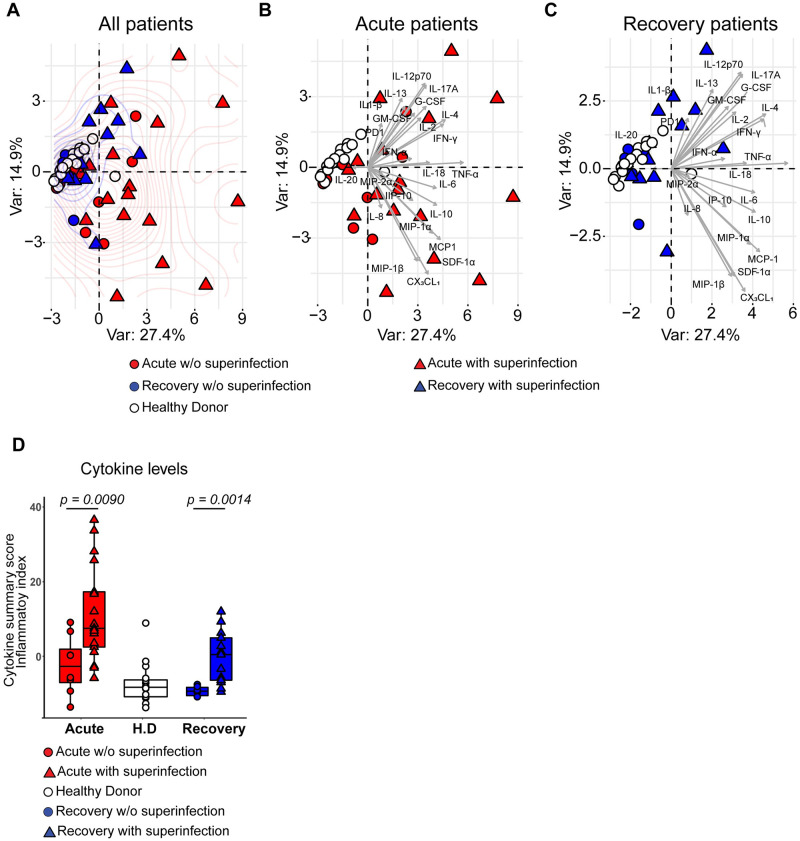
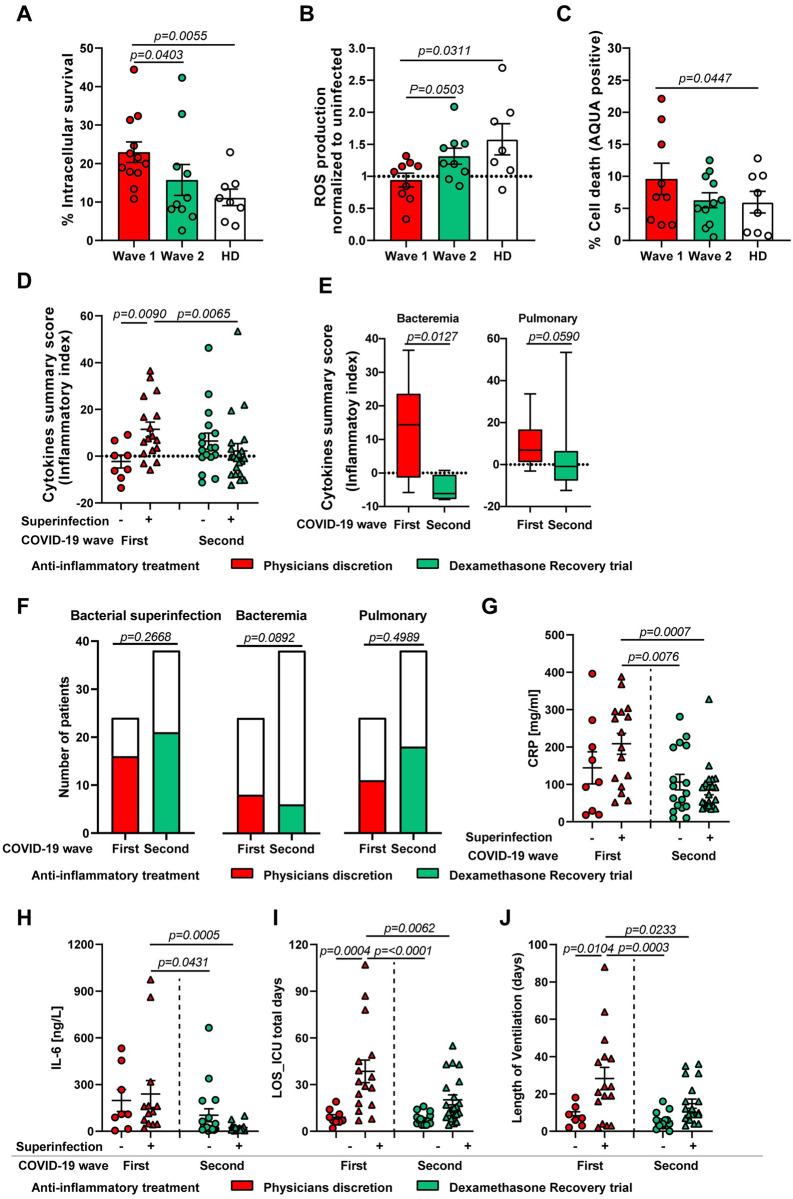
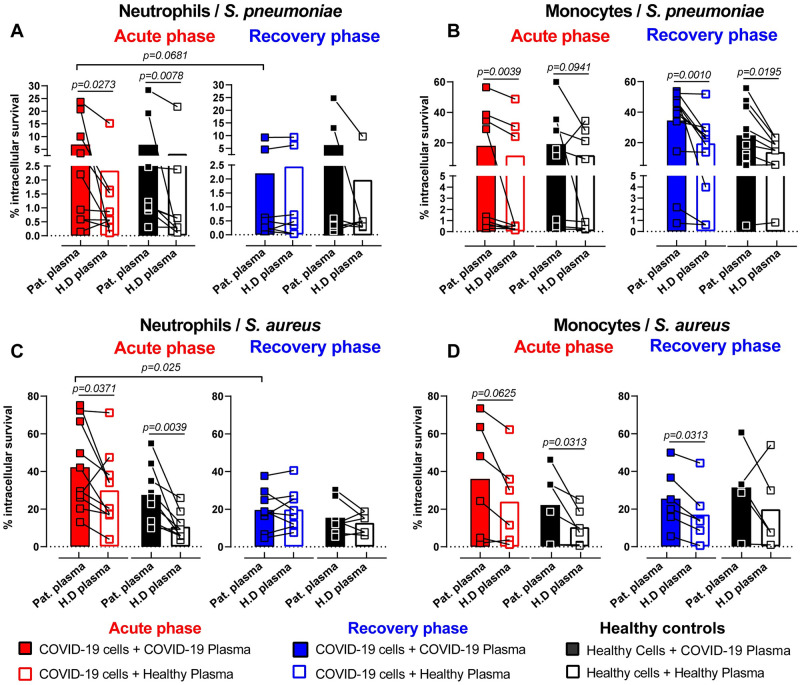
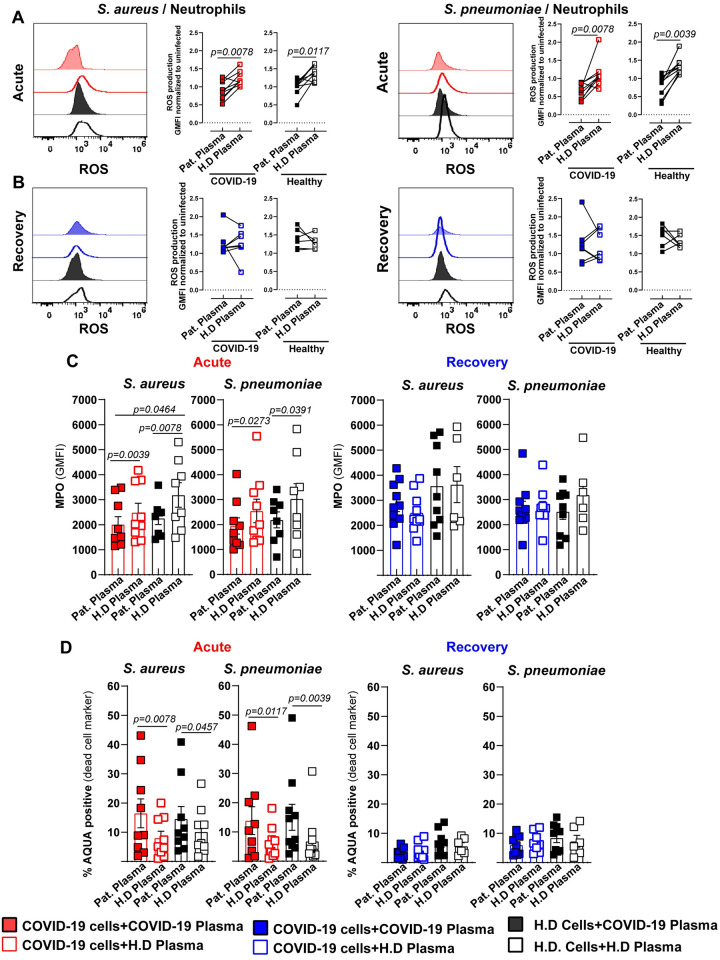
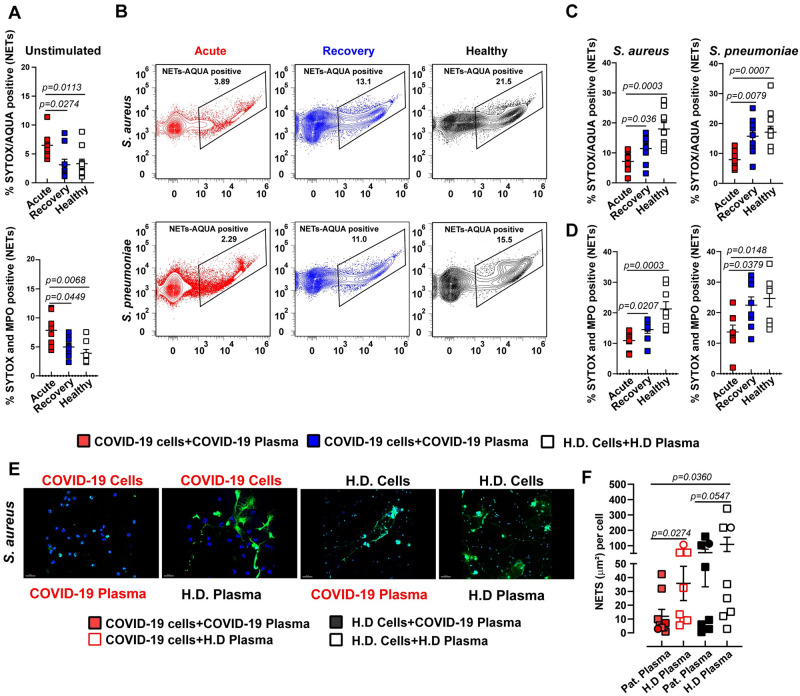
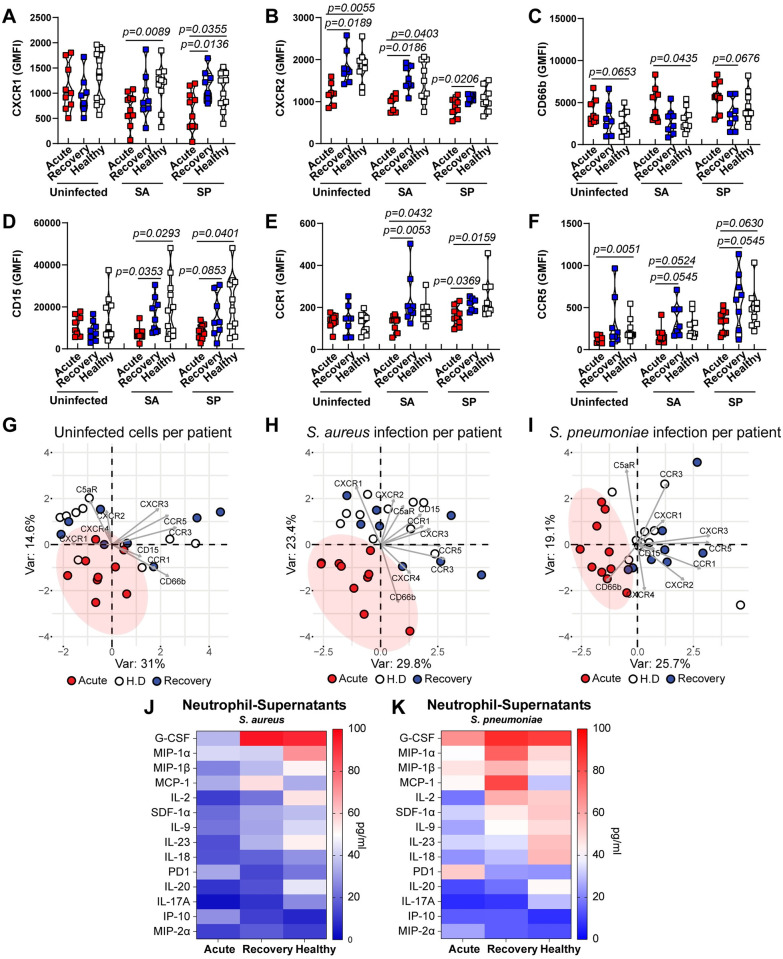
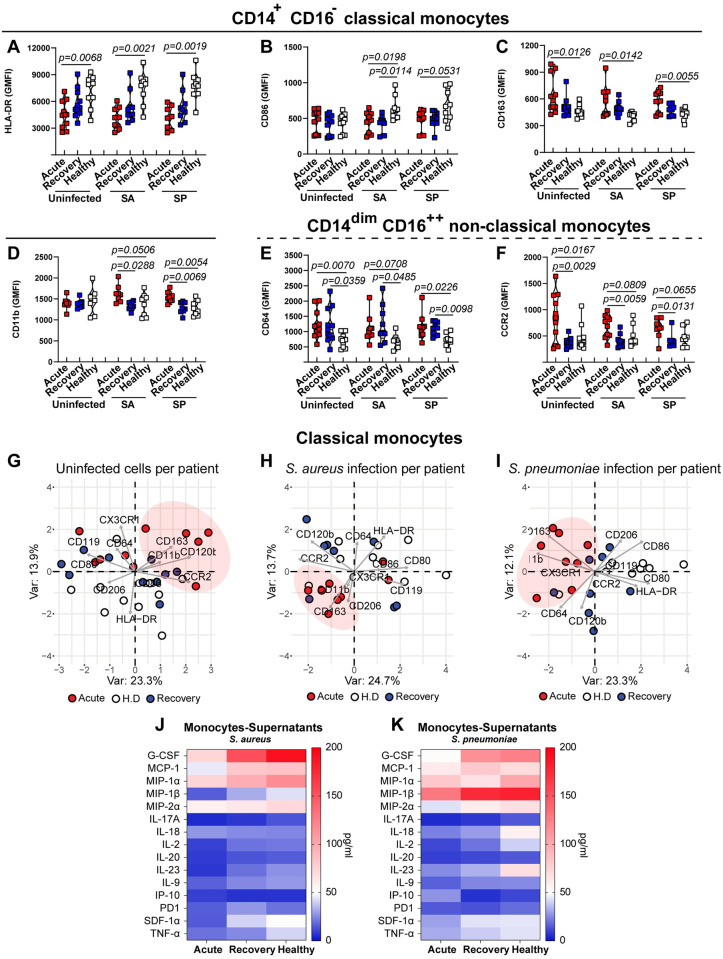
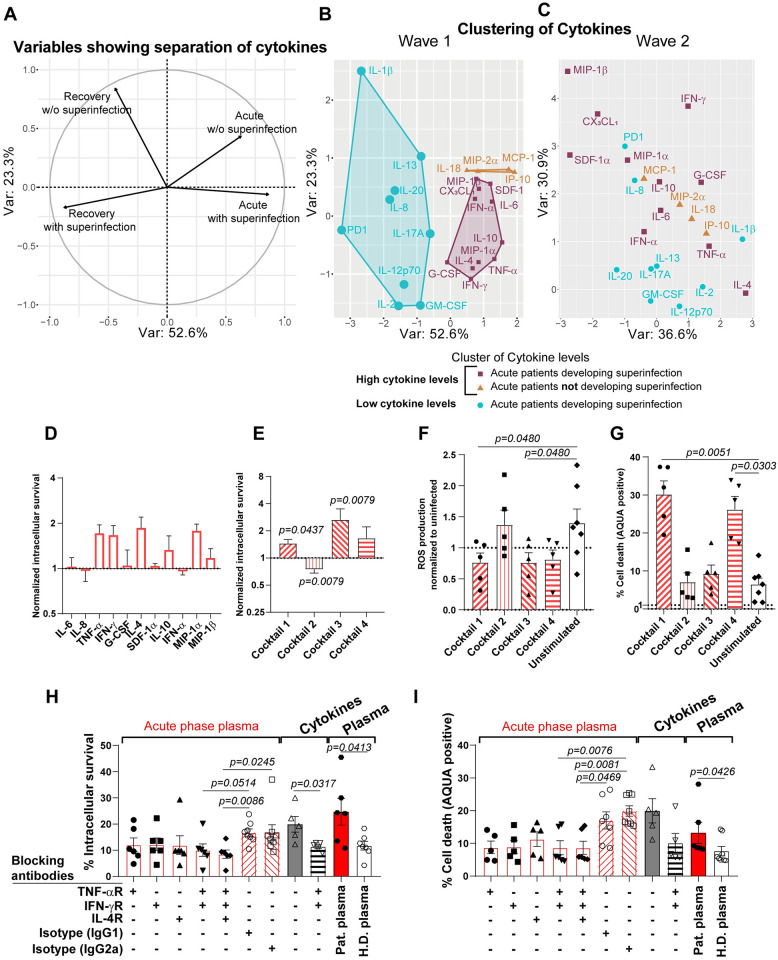
COVID-19 displays diverse disease severities and symptoms including acute systemic inflammation and hypercytokinemia, with subsequent dysregulation of immune cells. Bacterial superinfections in COVID-19 can further complicate the disease course and are associated with increased mortality. However, there is limited understanding of how SARS-CoV-2 pathogenesis and hypercytokinemia impede the innate immune function against bacterial superinfections. We assessed the influence of COVID-19 plasma hypercytokinemia on the functional responses of myeloid immune cells upon bacterial challenges from acute-phase COVID-19 patients and their corresponding recovery-phase. We show that a severe hypercytokinemia status in COVID-19 patients correlates with the development of bacterial superinfections. Neutrophils and monocytes derived from COVID-19 patients in their acute-phase showed an impaired intracellular microbicidal capacity upon bacterial challenges. The impaired microbicidal capacity was reflected by abrogated MPO and reduced NETs production in neutrophils along with reduced ROS production in both neutrophils and monocytes. Moreover, we observed a distinct pattern of cell surface receptor expression on both neutrophils and monocytes, in line with suppressed autocrine and paracrine cytokine signaling. This phenotype was characterized by a high expression of CD66b, CXCR4 and low expression of CXCR1, CXCR2 and CD15 in neutrophils and low expression of HLA-DR, CD86 and high expression of CD163 and CD11b in monocytes. Furthermore, the impaired antibacterial effector function was mediated by synergistic effect of the cytokines TNF-α, IFN-γ and IL-4. COVID-19 patients receiving dexamethasone showed a significant reduction of overall inflammatory markers in the plasma as well as exhibited an enhanced immune response towards bacterial challenge ex vivo. Finally, broad anti-inflammatory treatment was associated with a reduction in CRP, IL-6 levels as well as length of ICU stay and ventilation-days in critically ill COVID-19 patients. Our data provides insights into the transient functional dysregulation of myeloid immune cells against subsequent bacterial infections in COVID-19 patients and describe a beneficial role for the use of dexamethasone in these patients.
COVID-19 表现出多种疾病严重程度和症状,包括急性全身炎症和细胞因子血症,随后免疫细胞失调。COVID-19 中的细菌合并感染会使疾病进程进一步复杂化,并与死亡率增加相关。然而,人们对 SARS-CoV-2 发病机制和细胞因子血症如何阻碍针对细菌合并感染的固有免疫功能知之甚少。我们评估了 COVID-19 血浆细胞因子血症对急性 COVID-19 患者及其相应恢复期细菌挑战后髓系免疫细胞功能反应的影响。我们表明,COVID-19 患者严重的细胞因子血症状态与细菌合并感染的发生相关。来自 COVID-19 患者急性期的中性粒细胞和单核细胞在受到细菌挑战时,其细胞内杀菌能力受损。中性粒细胞中 MPO 减少和 NETs 生成减少以及中性粒细胞和单核细胞中 ROS 生成减少反映了杀菌能力受损。此外,我们观察到两种细胞表面受体在中性粒细胞和单核细胞上的表达模式存在明显差异,这与自分泌和旁分泌细胞因子信号的抑制一致。这种表型的特征是中性粒细胞中 CD66b、CXCR4 表达增加,CXCR1、CXCR2 和 CD15 表达减少,单核细胞中 HLA-DR、CD86 表达减少,CD163 和 CD11b 表达增加。此外,受损的抗细菌效应功能是由细胞因子 TNF-α、IFN-γ 和 IL-4 的协同作用介导的。接受地塞米松治疗的 COVID-19 患者的血浆中总炎症标志物显著减少,并表现出对细菌挑战的增强的免疫反应。最后,广泛的抗炎治疗与 CRP、IL-6 水平降低以及危重症 COVID-19 患者 ICU 住院时间和通气天数减少相关。我们的数据提供了 COVID-19 患者针对随后细菌感染的髓系免疫细胞短暂功能失调的见解,并描述了地塞米松在这些患者中的有益作用。