School of Life Science, Hunan University of Science and Technology, Xiangtan, Hunan, China.
School of Life Science, Hunan University of Science and Technology, Xiangtan, Hunan, China.
J Biol Chem. 2022 Feb;298(2):101572. doi: 10.1016/j.jbc.2022.101572. Epub 2022 Jan 8.
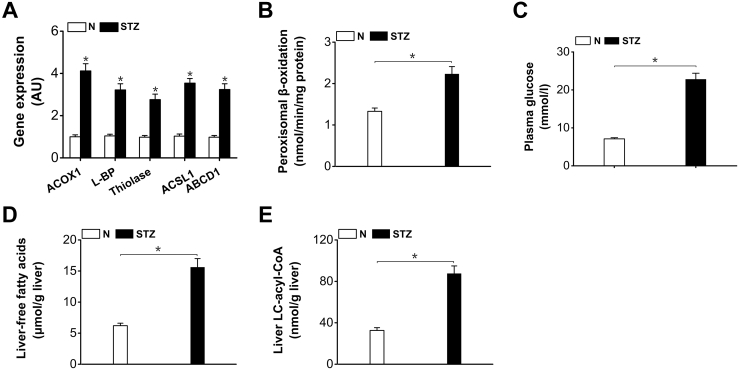
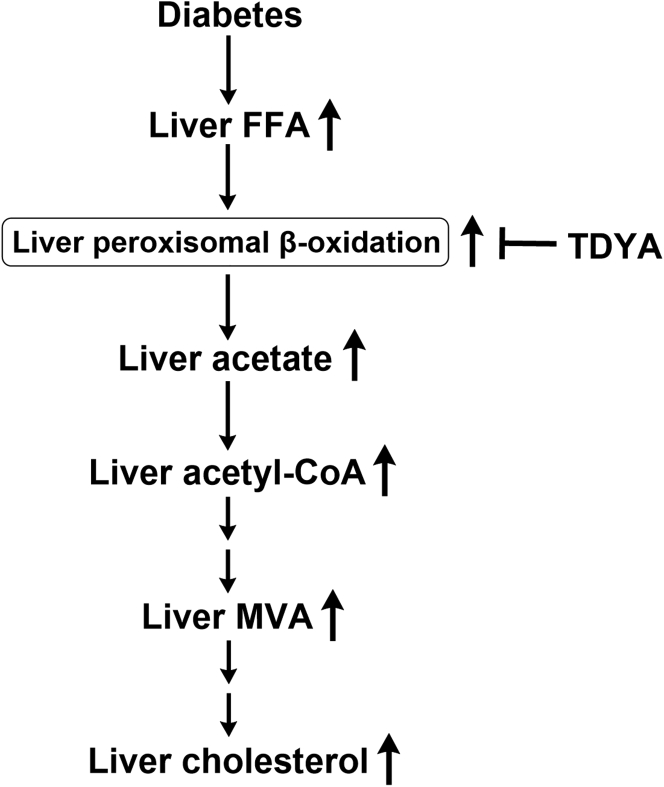
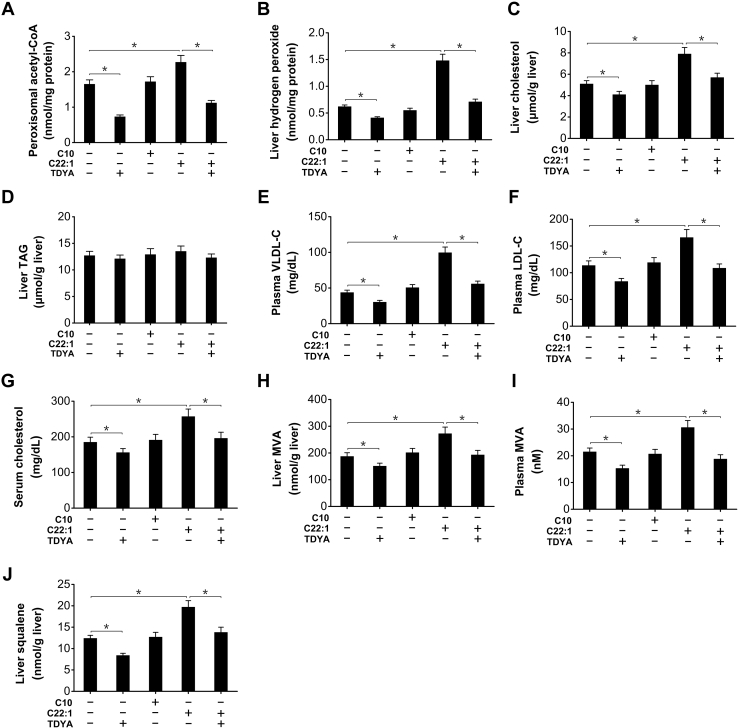
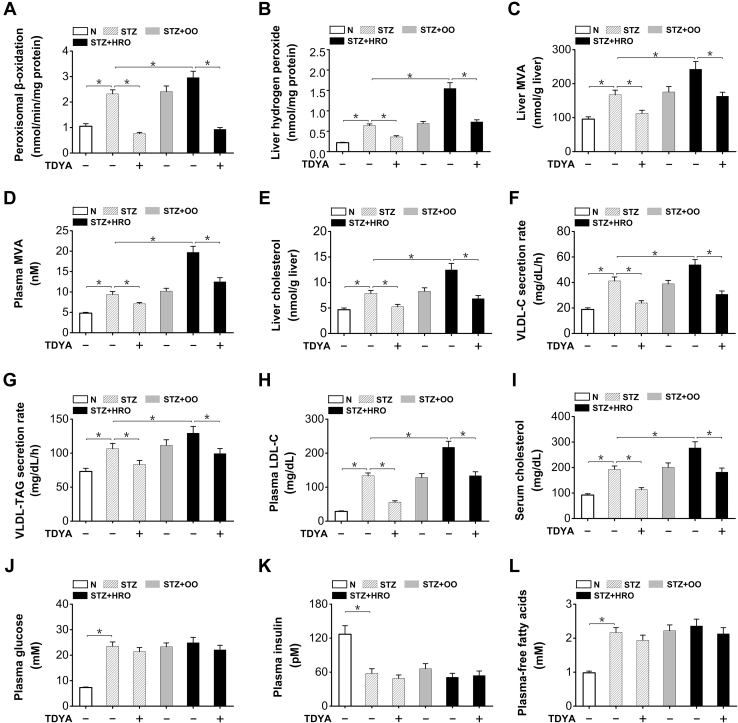
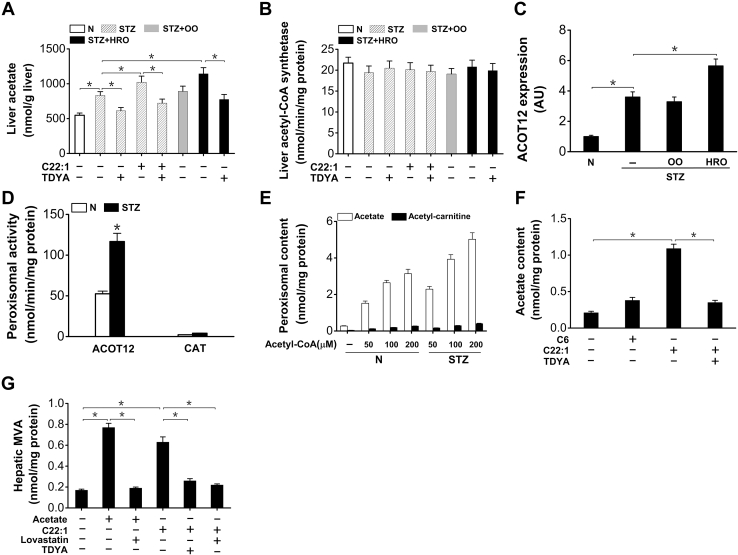
Although diabetes normally causes an elevation of cholesterol biosynthesis and induces hypercholesterolemia in animals and human, the mechanism linking diabetes to the dysregulation of cholesterol biosynthesis in the liver is not fully understood. As liver peroxisomal β-oxidation is induced in the diabetic state and peroxisomal oxidation of fatty acids generates free acetate, we hypothesized that peroxisomal β-oxidation might play a role in liver cholesterol biosynthesis in diabetes. Here, we used erucic acid, a specific substrate for peroxisomal β-oxidation, and 10,12-tricosadiynoic acid, a specific inhibitor for peroxisomal β-oxidation, to specifically induce and suppress peroxisomal β-oxidation. Our results suggested that induction of peroxisomal β-oxidation increased liver cholesterol biosynthesis in streptozotocin-induced diabetic mice. We found that excessive oxidation of fatty acids by peroxisomes generated considerable free acetate in the liver, which was used as a precursor for cholesterol biosynthesis. In addition, we show that specific inhibition of peroxisomal β-oxidation decreased cholesterol biosynthesis by reducing acetate formation in the liver in diabetic mice, demonstrating a crosstalk between peroxisomal β-oxidation and cholesterol biosynthesis. Based on these results, we propose that induction of peroxisomal β-oxidation serves as a mechanism for a fatty acid-induced upregulation in cholesterol biosynthesis and also plays a role in diabetes-induced hypercholesterolemia.
尽管糖尿病通常会导致胆固醇生物合成升高,并在动物和人类中引起高胆固醇血症,但将糖尿病与肝脏胆固醇生物合成失调联系起来的机制尚未完全阐明。由于糖尿病状态下肝脏过氧化物酶体β-氧化被诱导,而过氧化物酶体氧化脂肪酸会产生游离醋酸盐,我们假设过氧化物酶体β-氧化可能在糖尿病中的肝脏胆固醇生物合成中发挥作用。在这里,我们使用了芥酸,一种过氧化物酶体β-氧化的特异性底物,以及 10,12-二十三碳二烯酸,一种过氧化物酶体β-氧化的特异性抑制剂,来特异性地诱导和抑制过氧化物酶体β-氧化。我们的结果表明,过氧化物酶体β-氧化的诱导增加了链脲佐菌素诱导的糖尿病小鼠肝脏中的胆固醇生物合成。我们发现,过氧化物体中脂肪酸的过度氧化在肝脏中产生了相当数量的游离醋酸盐,后者可用作胆固醇生物合成的前体。此外,我们还表明,过氧化物酶体β-氧化的特异性抑制通过减少糖尿病小鼠肝脏中醋酸盐的形成降低了胆固醇生物合成,表明过氧化物酶体β-氧化和胆固醇生物合成之间存在串扰。基于这些结果,我们提出诱导过氧化物酶体β-氧化作为脂肪酸诱导的胆固醇生物合成上调的机制,并在糖尿病引起的高胆固醇血症中发挥作用。