Liu Rin, Shinriki Satoru, Maeshiro Manabu, Hirayama Mayumi, Jono Hirofumi, Yoshida Ryoji, Nakayama Hideki, Matsui Hirotaka
Department of Molecular Laboratory Medicine, Graduate School of Medical Sciences, Kumamoto University, Kumamoto 860-8556, Japan.
Department of Oral and Maxillofacial Surgery, Faculty of Life Sciences, Kumamoto University, Kumamoto 860-8556, Japan.
Cancers (Basel). 2021 Dec 30;14(1):173. doi: 10.3390/cancers14010173.
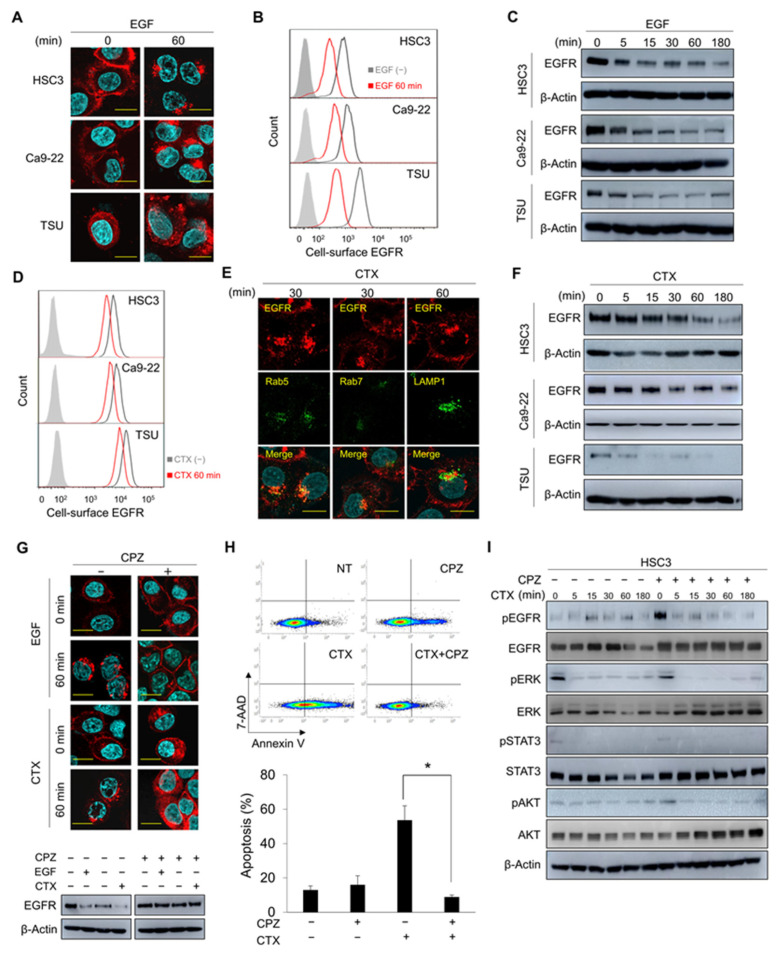
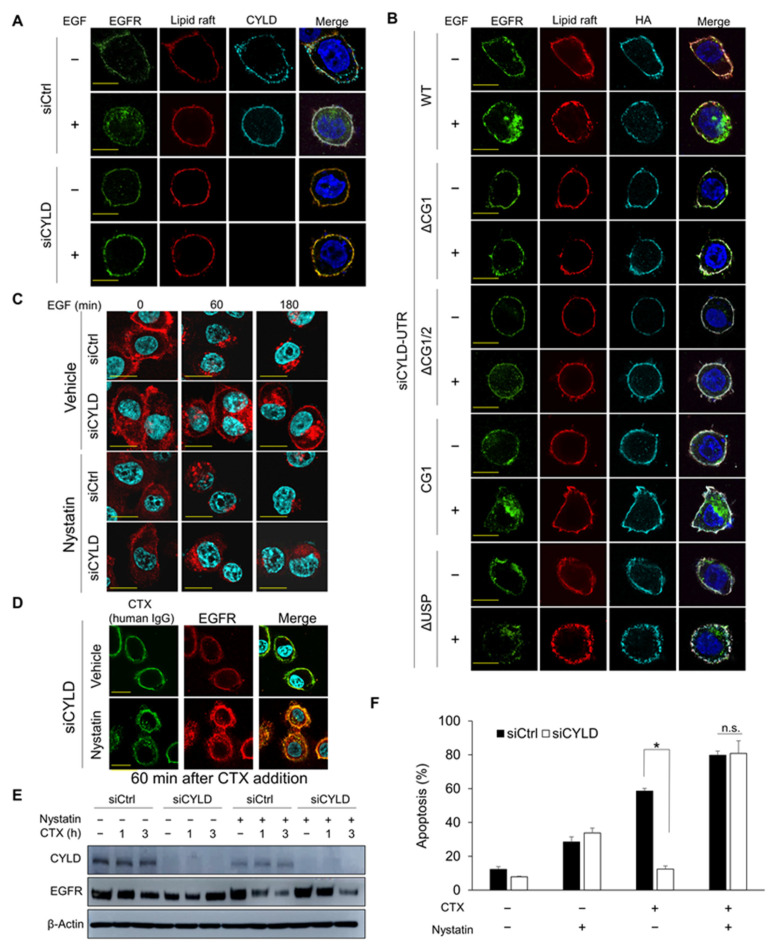
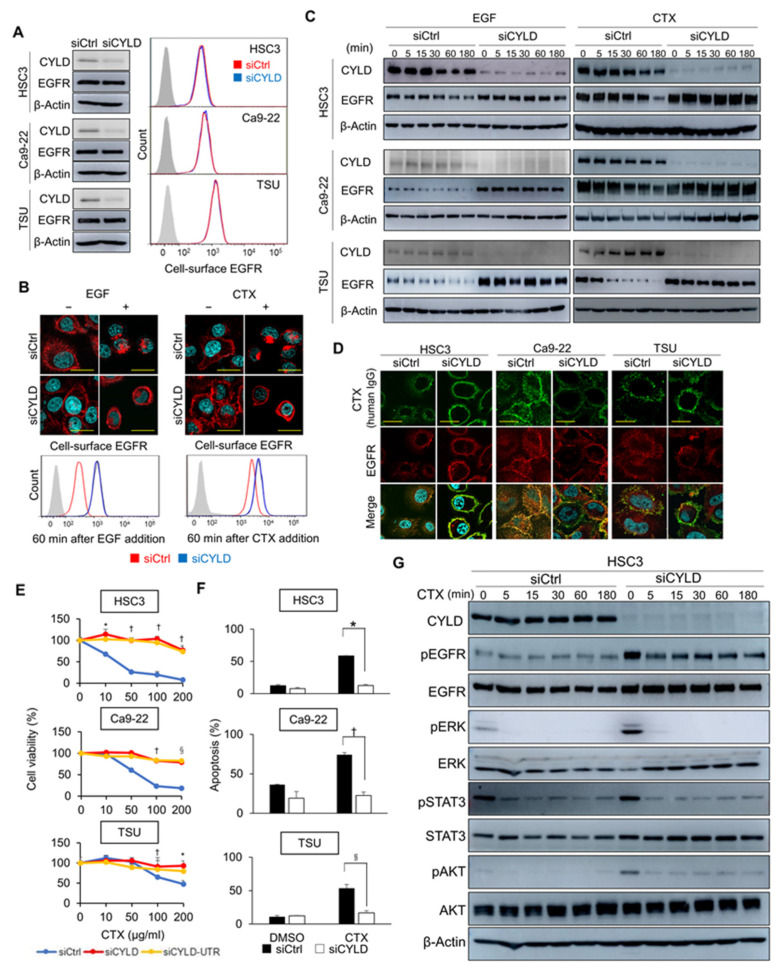
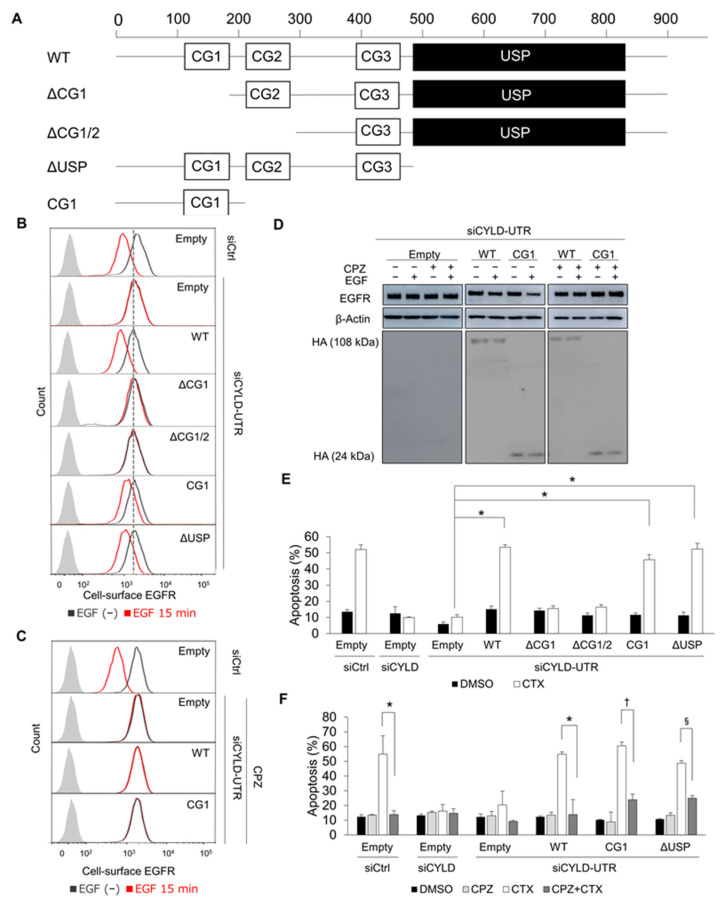
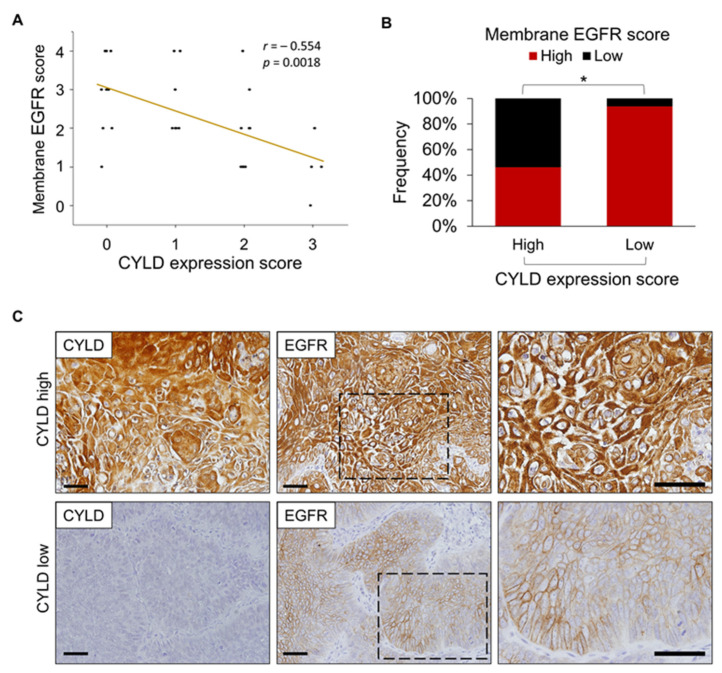
Epidermal growth factor receptor (EGFR) is frequently overexpressed in head and neck squamous cell carcinoma (HNSCC) and is a target for the therapeutic antibody cetuximab (CTX). However, because only some patients have a significant clinical response to CTX, identification of its predictive biomarkers and potentiation of CTX-based therapies are important. We have recently reported a frequent downregulation of cylindromatosis (CYLD) in primary HNSCC, which led to increased cell invasion and cisplatin resistance. Here, we show that CYLD located mainly in lipid rafts was required for clathrin-mediated endocytosis (CME) and degradation of the EGFR induced by EGF and CTX in HNSCC cells. The N-terminus containing the first cytoskeleton-associated protein-glycine domain of CYLD was responsible for this regulation. Loss of CYLD restricted EGFR to lipid rafts, which suppressed CTX-induced apoptosis without impeding CTX's inhibitory activity against downstream signalling pathways. Disruption of the lipid rafts with cholesterol-removing agents overcame this resistance by restoring CME and the degradation of EGFR. Regulation of EGFR trafficking by CYLD is thus critical for the antitumour activity of CTX. Our findings suggest the usefulness of a combination of cholesterol-lowering drugs with anti-EGFR antibody therapy in HNSCC.
表皮生长因子受体(EGFR)在头颈部鳞状细胞癌(HNSCC)中经常过度表达,是治疗性抗体西妥昔单抗(CTX)的靶点。然而,由于只有部分患者对CTX有显著临床反应,因此识别其预测性生物标志物以及增强基于CTX的治疗方法非常重要。我们最近报道了原发性HNSCC中圆柱瘤蛋白(CYLD)的频繁下调,这导致细胞侵袭增加和顺铂耐药。在此,我们表明,在HNSCC细胞中,主要位于脂筏中的CYLD是网格蛋白介导的内吞作用(CME)以及表皮生长因子(EGF)和CTX诱导的EGFR降解所必需的。含有CYLD首个细胞骨架相关蛋白甘氨酸结构域的N末端负责这种调节。CYLD的缺失将EGFR限制在脂筏中,这抑制了CTX诱导的细胞凋亡,同时不妨碍CTX对下游信号通路的抑制活性。用去胆固醇剂破坏脂筏可通过恢复CME和EGFR的降解来克服这种耐药性。因此,CYLD对EGFR转运的调节对于CTX的抗肿瘤活性至关重要。我们的研究结果表明,降低胆固醇的药物与抗EGFR抗体疗法联合应用于HNSCC具有可行性。