Gorgoglione Ruggiero, Impedovo Valeria, Riley Christopher L, Fratantonio Deborah, Tiziani Stefano, Palmieri Luigi, Dolce Vincenza, Fiermonte Giuseppe
Department of Bioscience, Biotechnology and Biopharmaceutics, University of Bari, 70125 Bari, Italy.
Department of Molecular Biosciences, College of Natural Sciences, The University of Texas at Austin, Austin, TX 78712, USA.
Cancers (Basel). 2022 Jan 4;14(1):245. doi: 10.3390/cancers14010245.
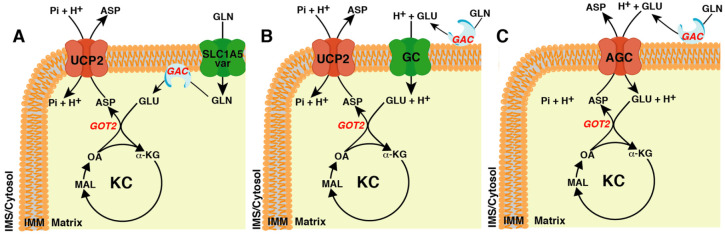
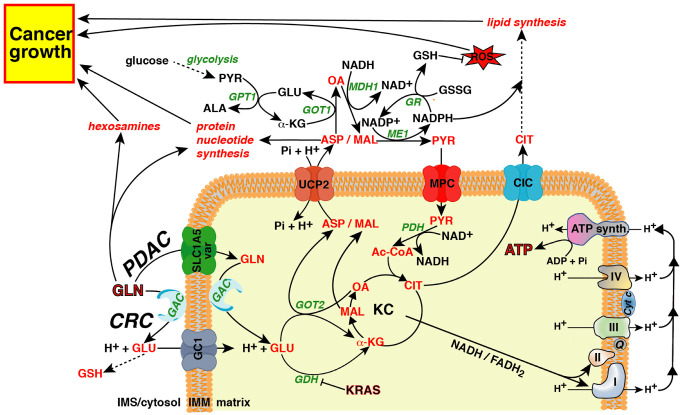
Aspartate has a central role in cancer cell metabolism. Aspartate cytosolic availability is crucial for protein and nucleotide biosynthesis as well as for redox homeostasis. Since tumor cells display poor aspartate uptake from the external environment, most of the cellular pool of aspartate derives from mitochondrial catabolism of glutamine. At least four transporters are involved in this metabolic pathway: the glutamine (SLC1A5_var), the aspartate/glutamate (AGC), the aspartate/phosphate (uncoupling protein 2, UCP2), and the glutamate (GC) carriers, the last three belonging to the mitochondrial carrier family (MCF). The loss of one of these transporters causes a paucity of cytosolic aspartate and an arrest of cell proliferation in many different cancer types. The aim of this review is to clarify why different cancers have varying dependencies on metabolite transporters to support cytosolic glutamine-derived aspartate availability. Dissecting the precise metabolic routes that glutamine undergoes in specific tumor types is of upmost importance as it promises to unveil the best metabolic target for therapeutic intervention.
天冬氨酸在癌细胞代谢中起着核心作用。天冬氨酸在胞质中的可用性对于蛋白质和核苷酸生物合成以及氧化还原稳态至关重要。由于肿瘤细胞从外部环境摄取天冬氨酸的能力较差,细胞内大部分天冬氨酸池来自谷氨酰胺的线粒体分解代谢。这条代谢途径至少涉及四种转运蛋白:谷氨酰胺(SLC1A5_var)、天冬氨酸/谷氨酸(AGC)、天冬氨酸/磷酸盐(解偶联蛋白2,UCP2)和谷氨酸(GC)载体,后三种属于线粒体载体家族(MCF)。这些转运蛋白中的一种缺失会导致许多不同癌症类型的胞质天冬氨酸缺乏和细胞增殖停滞。本综述的目的是阐明为什么不同癌症对代谢物转运蛋白的依赖性不同,以支持胞质中谷氨酰胺衍生的天冬氨酸可用性。剖析谷氨酰胺在特定肿瘤类型中所经历的精确代谢途径至关重要,因为这有望揭示治疗干预的最佳代谢靶点。