Trauma and Emergency Center, China Medical University Hospital, No. 2, Xueshi Rd., North Dist., Taichung City 40447, Taiwan.
Institute of Traditional Medicine, School of Medicine, National Yang Ming Chiao Tung University, No. 155, Sec. 2, Linong Street, Taipei 11221, Taiwan.
Int J Mol Sci. 2022 Jan 5;23(1):558. doi: 10.3390/ijms23010558.
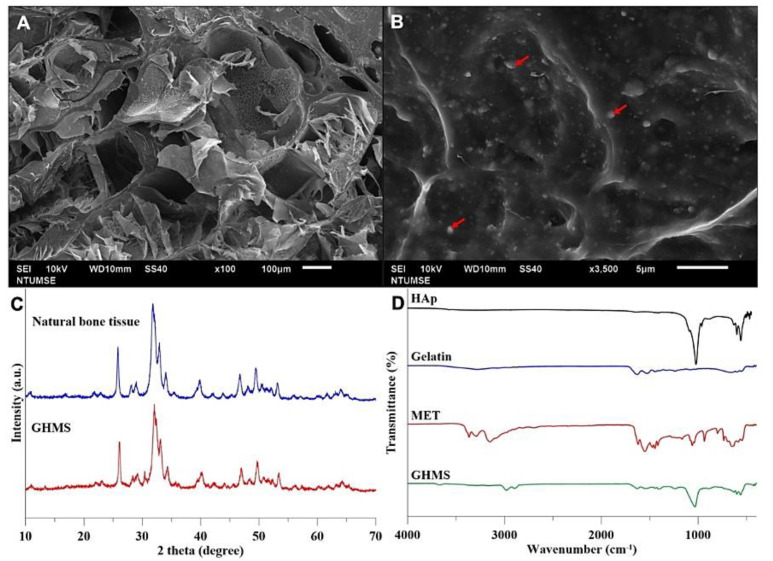
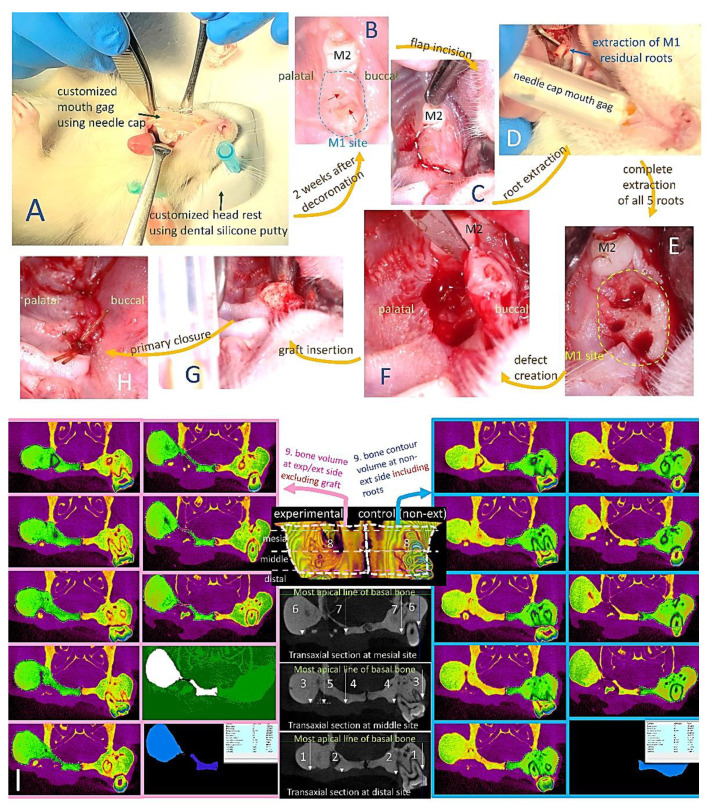
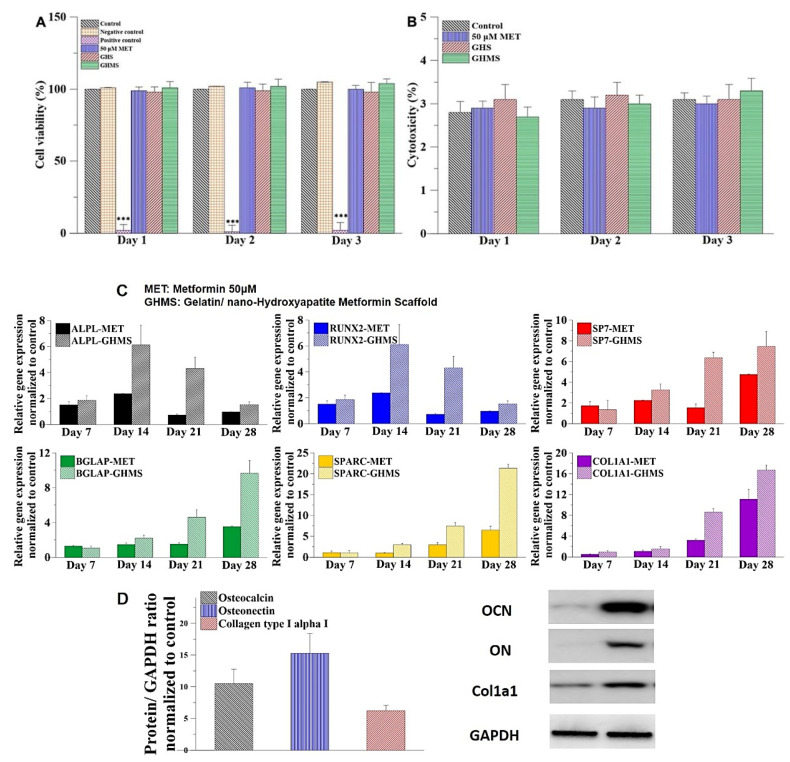
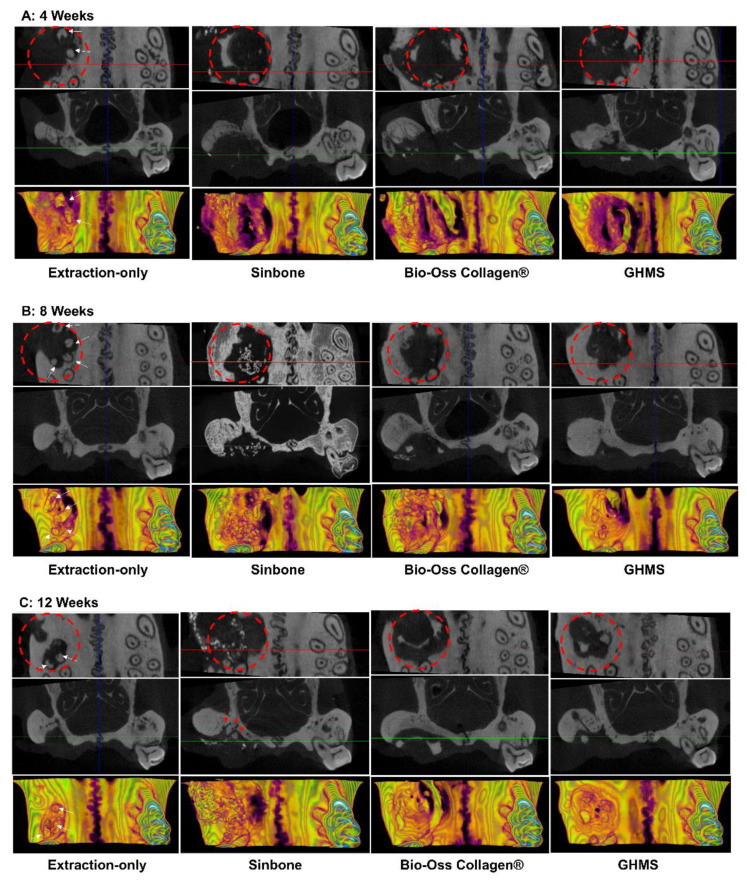
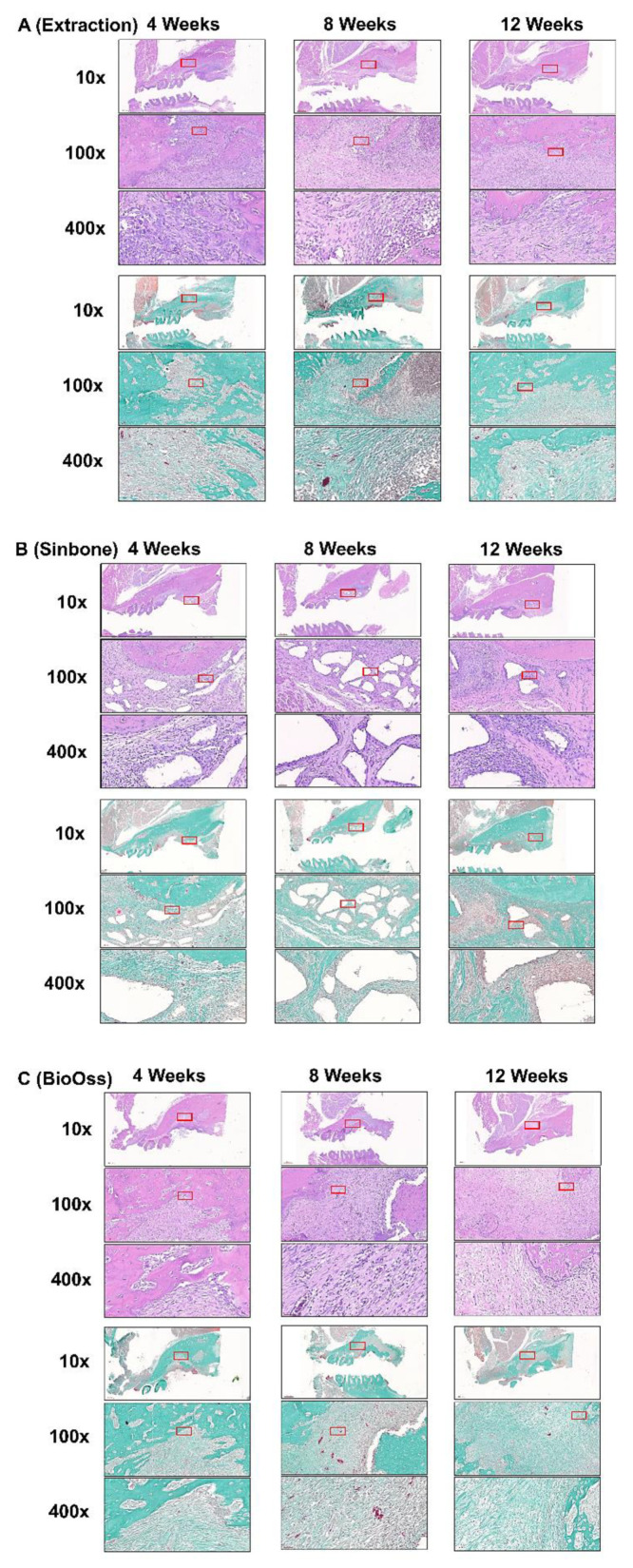
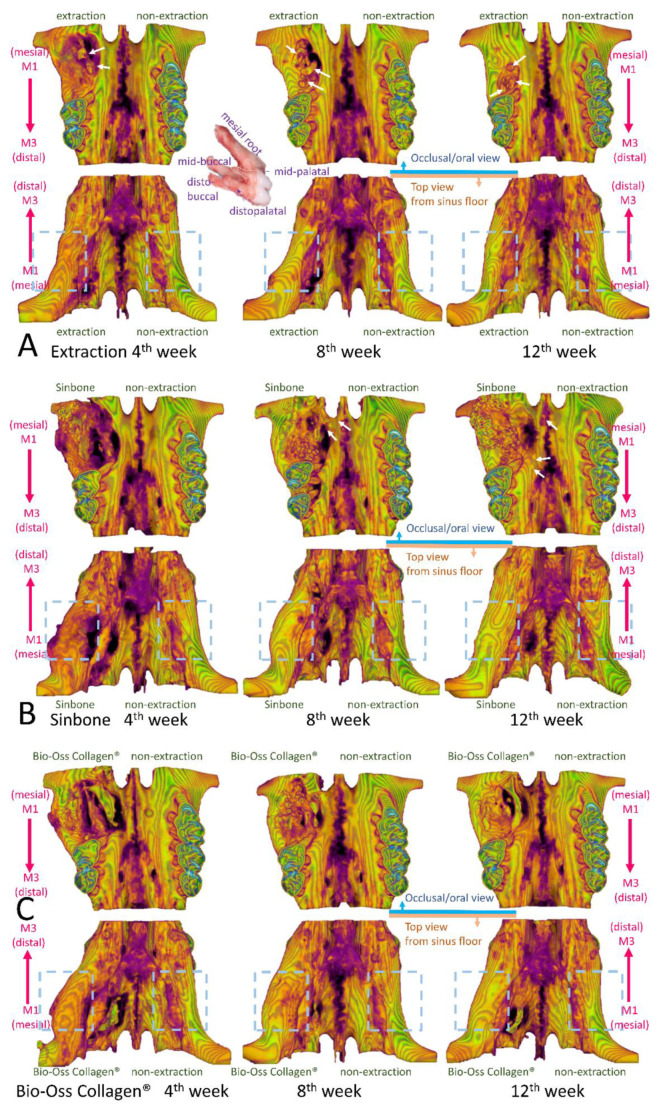
In this study, we fabricated gelatin/nano-hydroxyapatite/metformin scaffold (GHMS) and compared its effectiveness in bone regeneration with extraction-only, Sinbone, and Bio-Oss Collagen groups in a critical size rat alveolar bone defect model. GHMS was synthesized by co-precipitating calcium hydroxide and orthophosphoric acid within gelatin solution, incorporating metformin, and cross-linked by microbial transglutaminase. The morphology, characterization, and biocompatibility of scaffold were examined. The in vitro effects of GHMS on osteogenic gene and protein expressions were evaluated. In vivo bone formation was assessed in a critical size rat alveolar bone defect model with micro-computed tomography and histological examination by comparing GHMS with extraction-only, Sinbone, and Bio-Oss Collagen. The synthesized GHMS had a highly interconnected porous structure with a mean pore size of 81.85 ± 13.8 µm. GHMS exhibited good biocompatibility; promoted ALPL, RUNX2, SP7, BGLAP, SPARC and Col1a1 gene expressions; and upregulated the synthesis of osteogenic proteins, including osteonectin, osteocalcin, and collagen type I. In critical size rat alveolar bone defects, GHMS showed superior bone regeneration compared to extraction-only, Sinbone, and Bio-Oss Collagen groups as manifested by greater alveolar ridge preservation, while more bone formation with a lower percentage of connective tissue and residual scaffold at the defect sites grafted with GHMS in histological staining. The GHMS presented in this study may be used as a potential bone substitute to regenerate alveolar bone. The good biocompatibility, relatively fast degradation, interconnected pores allowing vascularization, and higher bioactivity properties of the components of the GHMS (gelatin, nHA, and metformin) may contribute to direct osteogenesis.
在这项研究中,我们制备了明胶/纳米羟基磷灰石/二甲双胍支架(GHMS),并在大鼠牙槽骨缺损模型中比较了其与单纯拔牙、Sinbone 和 Bio-Oss Collagen 组在骨再生方面的效果。GHMS 通过在明胶溶液中共同沉淀氢氧化钙和正磷酸,加入二甲双胍,并通过微生物转谷氨酰胺酶交联合成。支架的形态、特性和生物相容性进行了检查。评估了 GHMS 对成骨基因和蛋白表达的体外影响。通过微计算机断层扫描和组织学检查,在大鼠牙槽骨缺损模型中评估了 GHMS 在体内的成骨作用,并将 GHMS 与单纯拔牙、Sinbone 和 Bio-Oss Collagen 进行了比较。合成的 GHMS 具有高度互连的多孔结构,平均孔径为 81.85±13.8µm。GHMS 表现出良好的生物相容性;促进了 ALPL、RUNX2、SP7、BGLAP、SPARC 和 Col1a1 基因的表达;并上调了骨形成蛋白的合成,包括骨桥蛋白、骨钙素和 I 型胶原。在大鼠牙槽骨缺损中,GHMS 表现出优于单纯拔牙、Sinbone 和 Bio-Oss Collagen 组的骨再生效果,表现为牙槽嵴保存更好,而在组织学染色中,GHMS 移植部位的骨形成更多,结缔组织和残留支架较少。本研究中提出的 GHMS 可作为一种潜在的骨替代物来再生牙槽骨。GHMS 的良好生物相容性、相对较快的降解速度、允许血管化的互连孔以及其成分(明胶、nHA 和二甲双胍)的更高生物活性特性可能有助于直接成骨。