Jang Jaegeun, Hong Ahreum, Chung Youngcheul, Jin Byungkwan
Department of Neuroscience, Graduate School of Medicine, Kyung Hee University, Seoul 02447, Korea.
Department of Predictive Toxicology, Korea Institute of Toxicology, Daejeon 34114, Korea.
Int J Mol Sci. 2022 Jan 5;23(1):571. doi: 10.3390/ijms23010571.
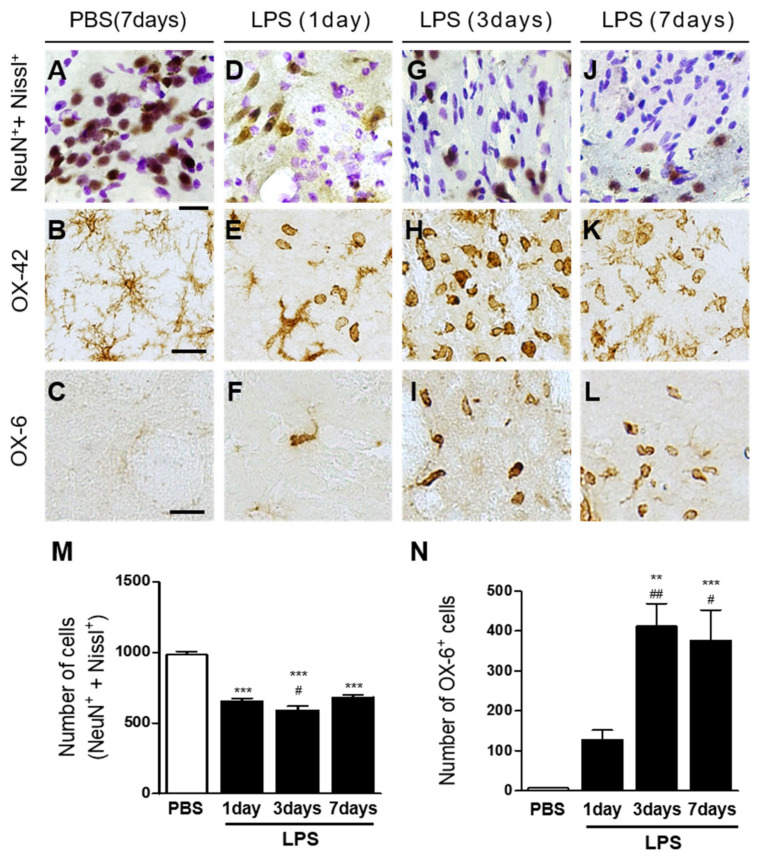
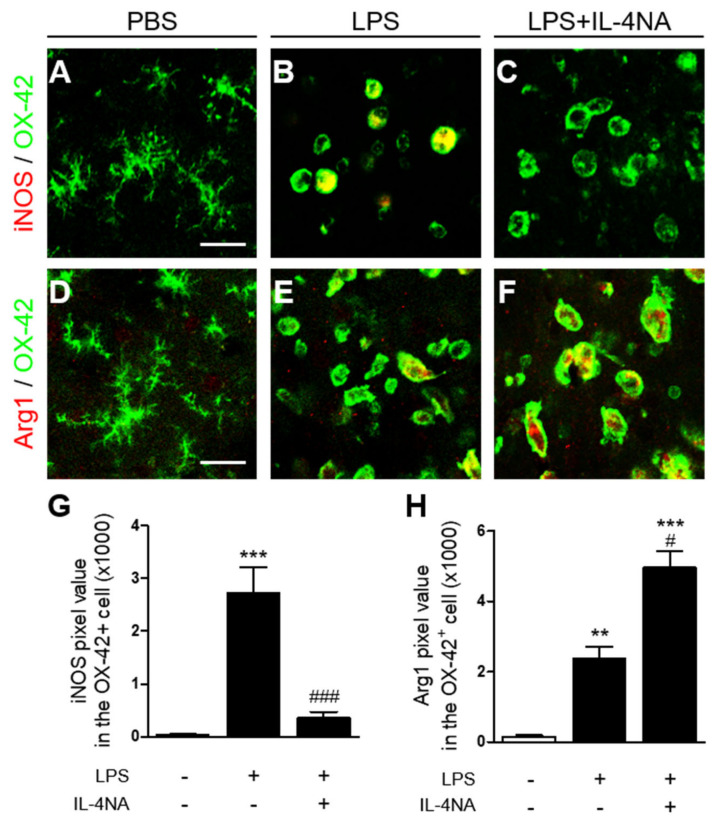
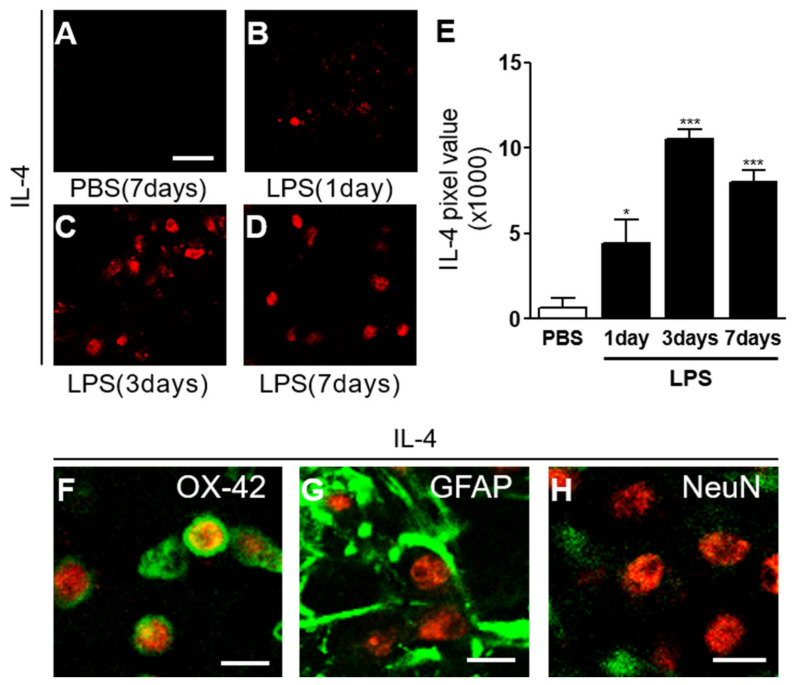
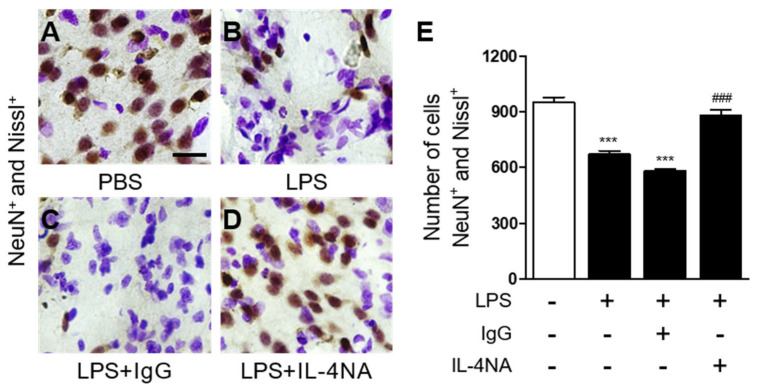
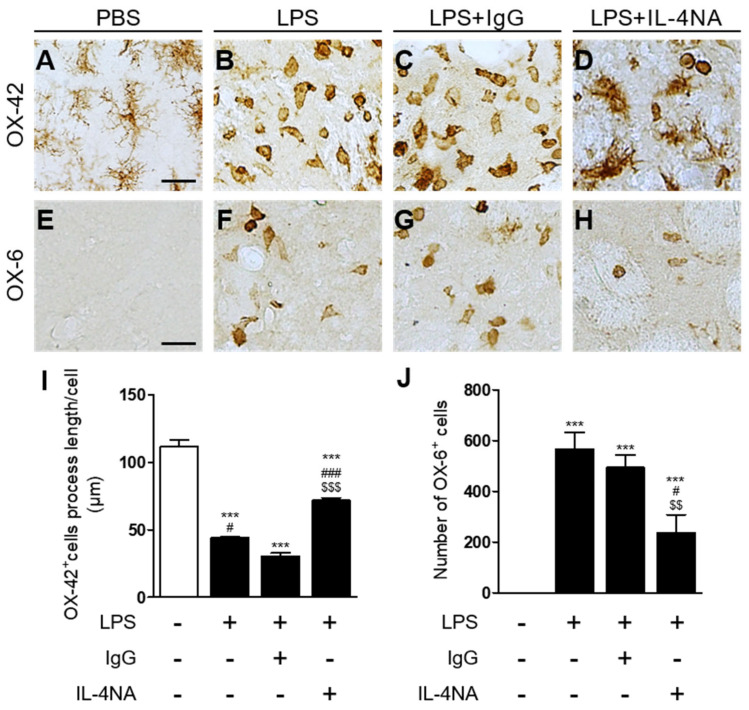
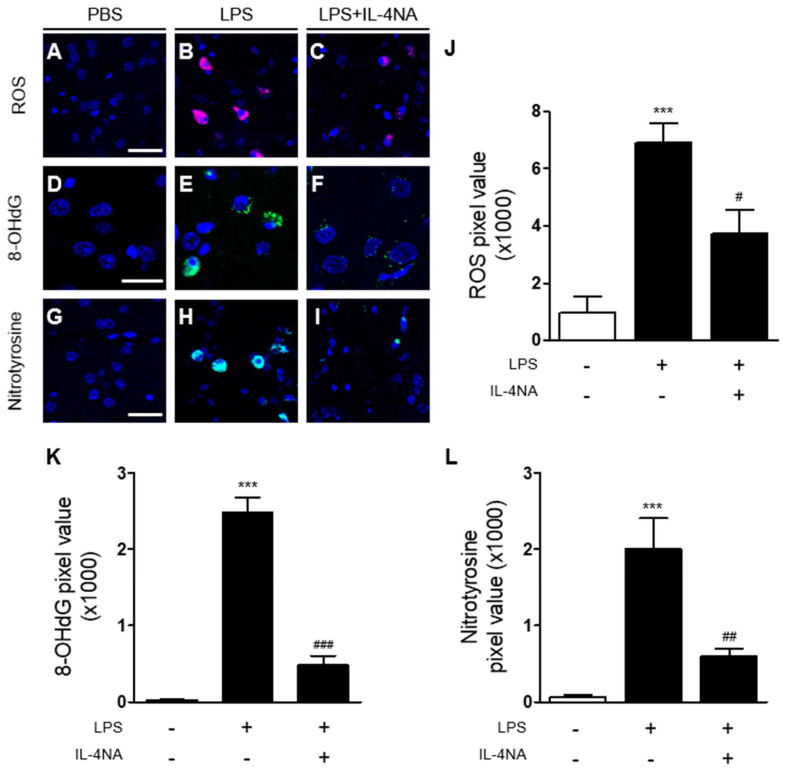
The present study investigated the effects of interleukin (IL)-4 on striatal neurons in lipopolysaccharide (LPS)-injected rat striatum in vivo. Either LPS or PBS as a control was unilaterally injected into the striatum, and brain tissues were processed for immunohistochemical and Nissl staining or for hydroethidine histochemistry at the indicated time points after LPS injection. Analysis by NeuN and Nissl immunohistochemical staining showed a significant loss of striatal neurons at 1, 3, and 7 days post LPS. In parallel, IL-4 immunoreactivity was upregulated as early as 1 day, reached a peak at 3 days, and was sustained up to 7 days post LPS. Increased levels of IL-4 immunoreactivity were exclusively detected in microglia/macrophages, but not in neurons nor astrocytes. The neutralizing antibody (NA) for IL-4 significantly protects striatal neurons against LPS-induced neurotoxicity in vivo. Accompanying neuroprotection, IL-4NA inhibited activation of microglia/macrophages, production of reactive oxygen species (ROS), ROS-derived oxidative damage and nitrosative stress, and produced polarization of microglia/macrophages shifted from M1 to M2. These results suggest that endogenous IL-4 expressed in LPS-activated microglia/macrophages contributes to striatal neurodegeneration in which oxidative/nitrosative stress and M1/M2 polarization are implicated.
本研究在体内调查了白细胞介素(IL)-4对脂多糖(LPS)注射的大鼠纹状体中纹状体神经元的影响。将LPS或作为对照的PBS单侧注射到纹状体中,并在LPS注射后的指定时间点对脑组织进行免疫组织化学和尼氏染色或氢化乙锭组织化学处理。通过NeuN和尼氏免疫组织化学染色分析显示,LPS注射后1天、3天和7天时纹状体神经元显著丢失。同时,IL-4免疫反应性早在1天时就上调,在3天时达到峰值,并持续至LPS注射后7天。IL-4免疫反应性水平的升高仅在小胶质细胞/巨噬细胞中检测到,而在神经元和星形胶质细胞中未检测到。IL-4的中和抗体(NA)在体内显著保护纹状体神经元免受LPS诱导的神经毒性。伴随神经保护作用,IL-4NA抑制了小胶质细胞/巨噬细胞的激活、活性氧(ROS)的产生、ROS衍生的氧化损伤和亚硝化应激,并使小胶质细胞/巨噬细胞的极化从M1型转变为M2型。这些结果表明,LPS激活的小胶质细胞/巨噬细胞中表达的内源性IL-4促成了纹状体神经退行性变,其中涉及氧化/亚硝化应激和M1/M2极化。