Mazur Małgorzata, Marcysiak Katarzyna, Dunajska Agnieszka, Gawlak Magdalena, Kałuski Tomasz
Faculty of Biological Sciences, Kazimierz Wielki University, Ossolińskich 12, 85-093 Bydgoszcz, Poland.
Institute of Plant Protection-National Research Institute, Władysława Węgorka 20, 60-318 Poznan, Poland.
Plants (Basel). 2021 Dec 28;11(1):88. doi: 10.3390/plants11010088.
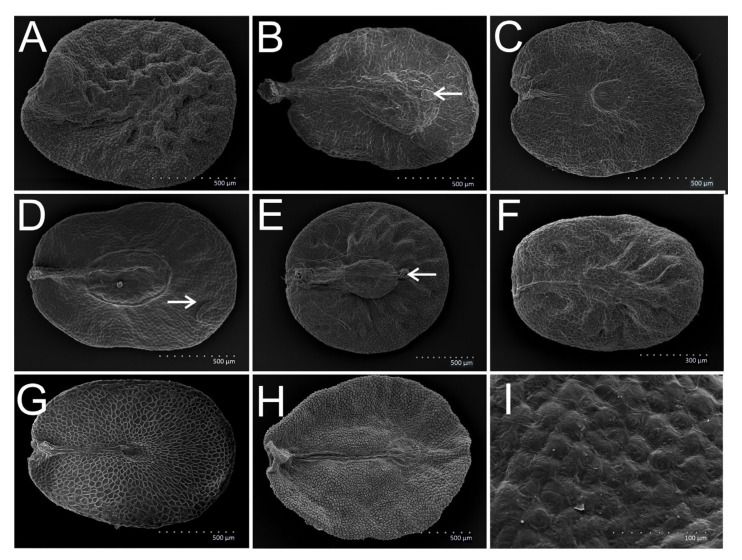
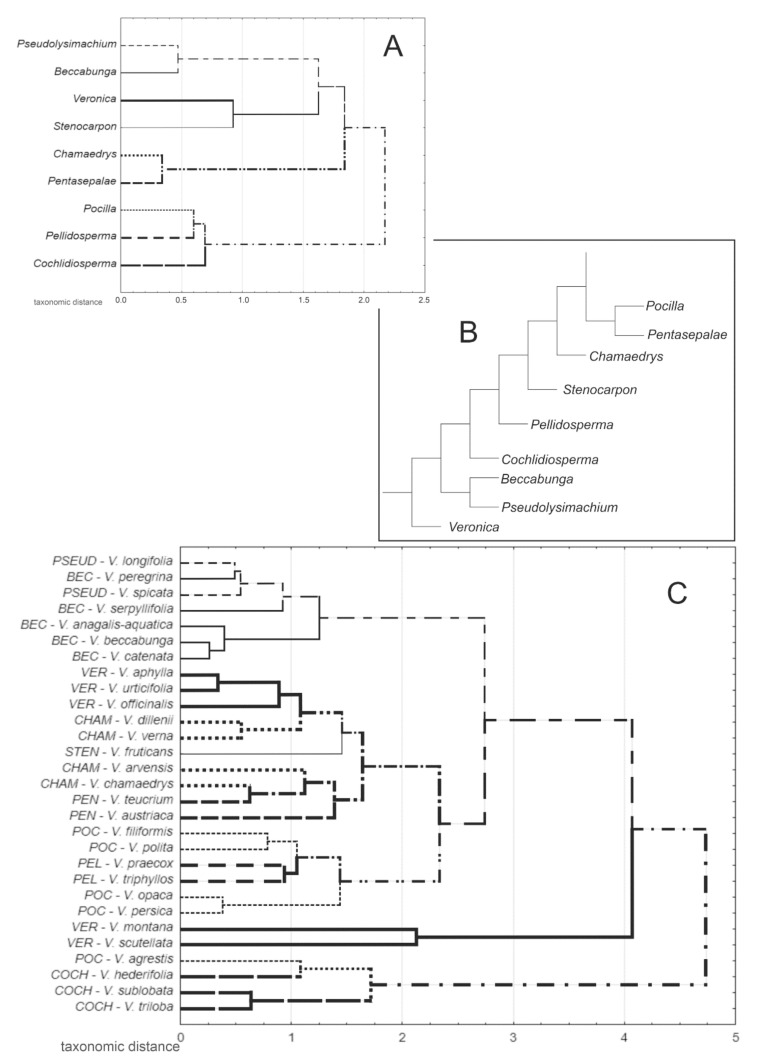
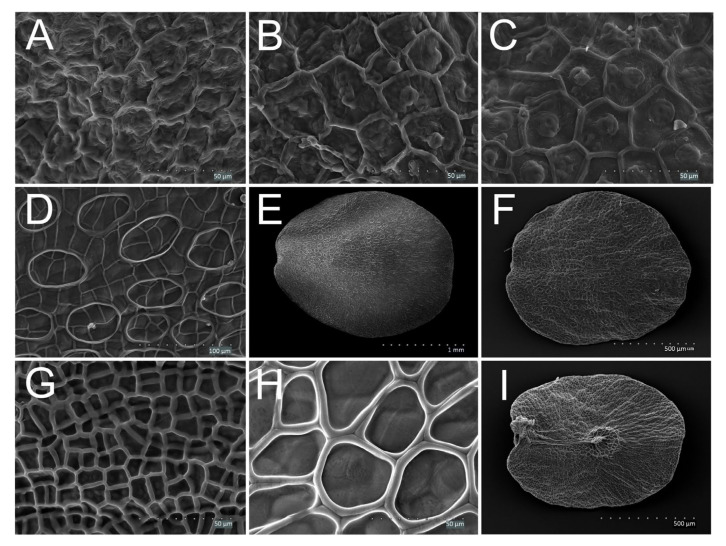
In this study, 1159 seeds of 29 Central European species of the genus were analyzed based on scanning electron microscopy images. The species belonged to nine subgenera: , , , , , , , and , following the newest phylogenetic classification of the genus. Nine measured characteristics of seeds and nine ratios were analyzed statistically using ANOVA followed by post hoc testing, cluster analysis and discriminant analysis. In most cases, the results were not congruent with the contemporary classification of the genus. Examinations of qualitative seed features by scanning electron microscopy included the cochlidiospermous or discoid seed type, the seed shape, the general sculpture of the seed coat surface, the sculpture of anticlinal and periclinal walls and some species-specific traits such as the presence of the epidermal appendix. All these features, apart from seed shape, were useful to distinguish all subgenera and some species within subgenera: , , , (only ) and . The identification key based on the seed micromorphological features was prepared.
在本研究中,基于扫描电子显微镜图像对29种中欧该属植物的1159粒种子进行了分析。按照该属最新的系统发育分类,这些物种分属于9个亚属: 、 、 、 、 、 、 、 和 。使用方差分析(ANOVA),随后进行事后检验、聚类分析和判别分析,对种子的9个测量特征和9个比率进行了统计分析。在大多数情况下,结果与该属的当代分类不一致。通过扫描电子显微镜对种子定性特征的检查包括耳蜗状或盘状种子类型、种子形状、种皮表面的总体纹饰、垂周壁和平周壁的纹饰以及一些物种特异性特征,如表皮附属物的存在。除种子形状外,所有这些特征都有助于区分所有亚属以及亚属内的一些物种: 、 、 、 (仅 )和 。基于种子微观形态特征编制了鉴定检索表。