Chaudhari Amit, Kartal Tamara, Brill George, Amano Kazami Joanne, Lagayan Maria Glofezita, Jorca Daphne
Humane Society International, 2100 L St., NW, Washington, DC 20037, USA.
Independent Consultant, Davao City 8000, Philippines.
Animals (Basel). 2022 Jan 2;12(1):105. doi: 10.3390/ani12010105.
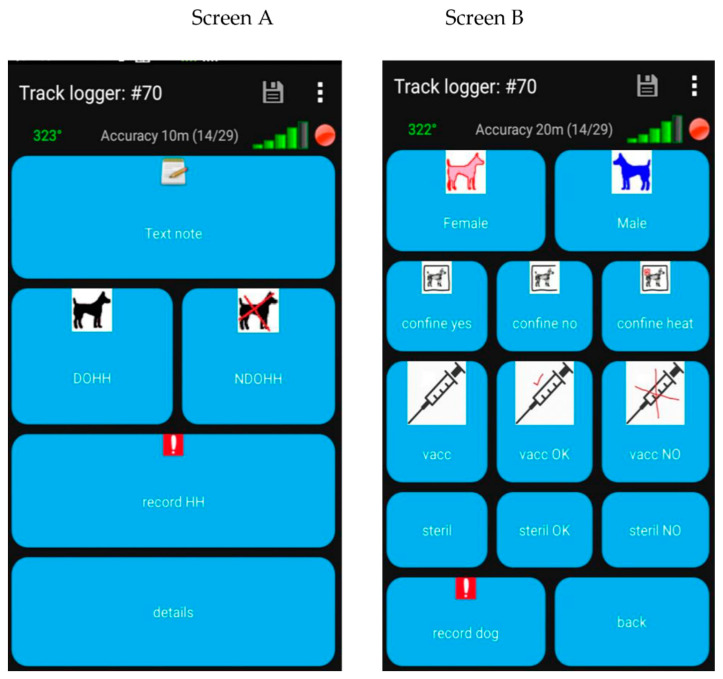
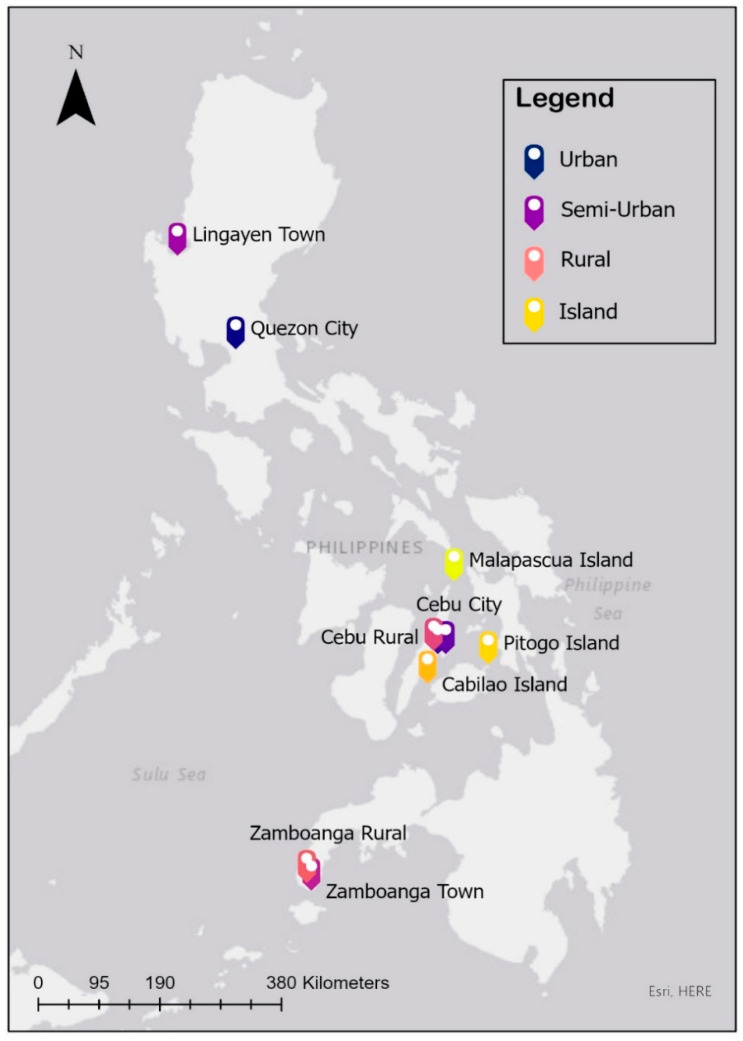
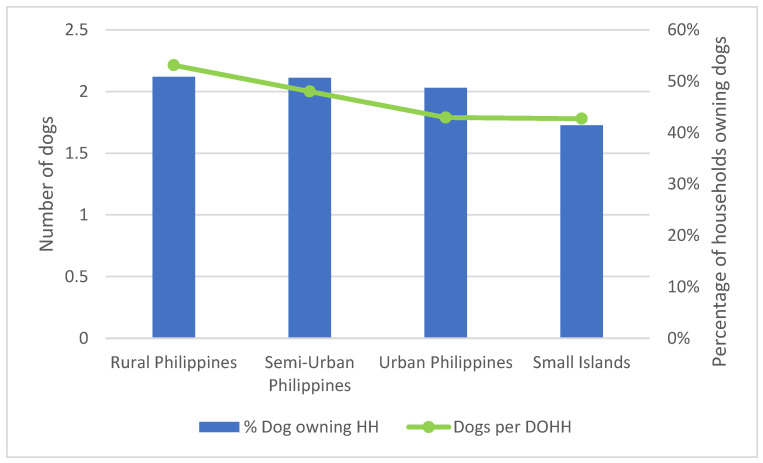
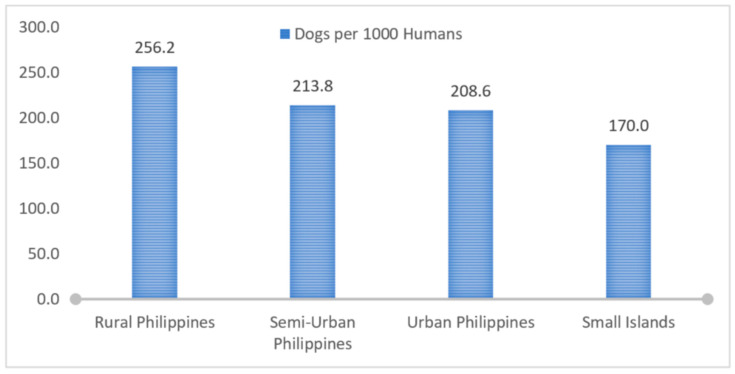
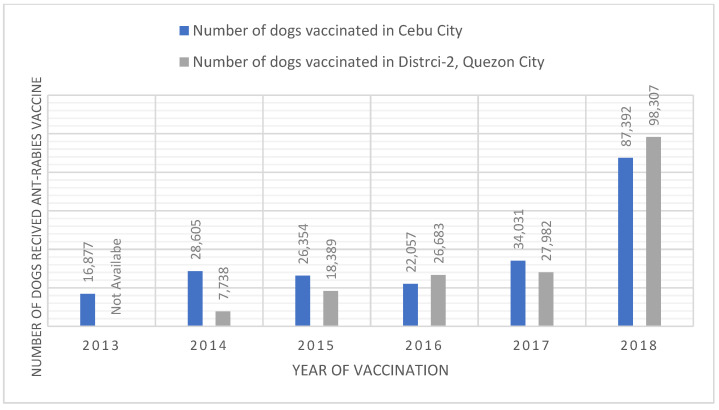
Understanding dog population dynamics plays a vital role in planning both rabies and dog management interventions. Establishing a human to dog ratio and an understanding how the urban/rural nature of the community might affect the overall dog population estimate provides an easy-to-use reference to estimate approximate dog populations in a range of communities. A total of 10,664 households were interviewed in 10 locations in the Philippines (2017 and 2018) to understand the dog population variations among the urban, semi-urban and rural areas. Epicollect5 and OSM tracker applications were used to conduct household interviews using a predesigned fixed set of questions. All answers were recorded directly using mobile phone applications. The survey results showed that for every 1000 humans, there are 256.3 dogs in rural areas, 213.8 dogs in semi-rural areas, 208.7 dogs in urban areas and 170.0 dogs on small islands of the Philippines. We estimate a total dog population in the Philippines of 23.29 million dogs (CI 95%, 22.51-24.07 million). Based on the survey findings from Quezon City and Cebu City, targets, resources allocations and vaccination approach were adjusted for the anti-rabies vaccination program at two locations in 2018, which lead to a 3- to 4-fold increase in the total number of dogs vaccinated in each city compared to previous years.
了解犬类种群动态对于规划狂犬病防控和犬类管理干预措施起着至关重要的作用。确定人与犬的比例,并了解社区的城乡性质如何影响总体犬类数量估计,可为估算一系列社区的大致犬类数量提供一个易于使用的参考。2017年和2018年,在菲律宾的10个地点对总共10,664户家庭进行了访谈,以了解城市、半城市和农村地区的犬类种群差异。使用Epicollect5和OSM跟踪器应用程序,通过预先设计的固定问题集进行家庭访谈。所有答案都直接使用手机应用程序记录。调查结果显示,每1000人中,农村地区有256.3只犬,半农村地区有213.8只犬,城市地区有208.7只犬,菲律宾小岛屿上有170.0只犬。我们估计菲律宾的犬类总数为2329万只(95%置信区间,2251 - 2407万只)。根据奎松市和宿务市的调查结果,2018年在这两个地点调整了抗狂犬病疫苗接种计划的目标、资源分配和接种方法,与前几年相比,每个城市接种疫苗的犬类总数增加了3至4倍。