Petrescu Tudor-Cristian, Mihai Petru, Voordijk Johannes Theodorus, Nedeff Valentin, Văideanu Dorin, Nedeff Florin, Babor Traian-Dănuț, Vasincu Decebal, Agop Maricel
Department of Structural Mechanics, Faculty of Civil Engineering and Building Services, "Gheorghe Asachi" Technical University of Iași, 700050 Jassy, Romania.
Department of Concrete Structures, Building Materials, Technology and Management, Faculty of Civil Engineering and Building Services, "Gheorghe Asachi" Technical University of Iași, 700050 Jassy, Romania.
Polymers (Basel). 2021 Dec 24;14(1):64. doi: 10.3390/polym14010064.
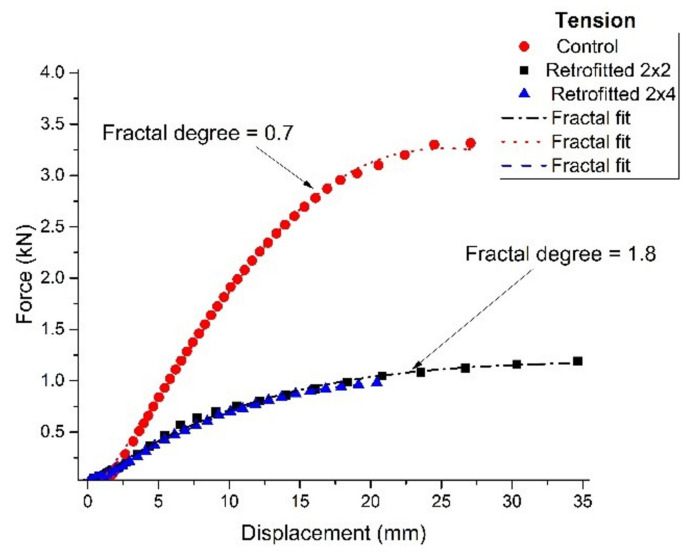
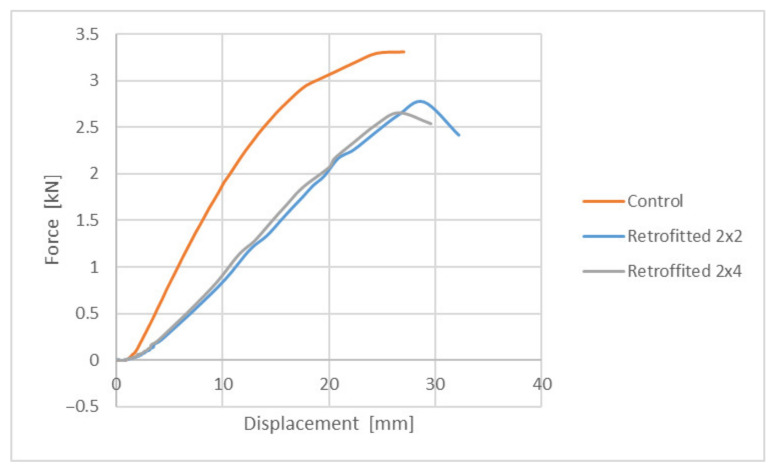
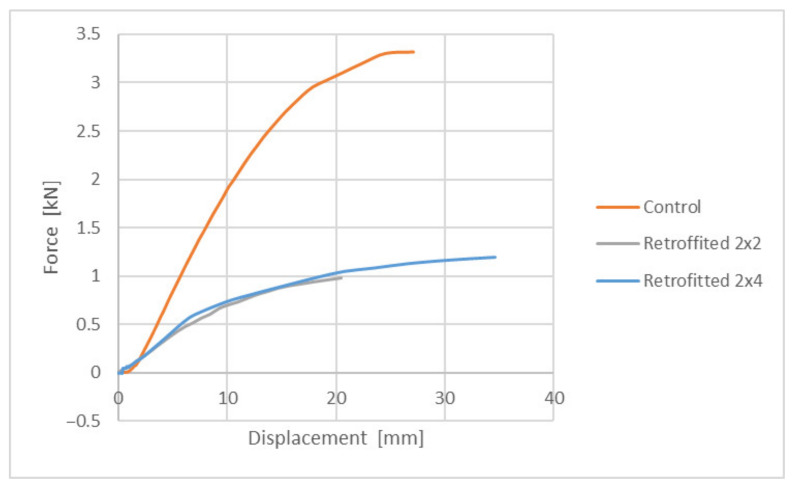
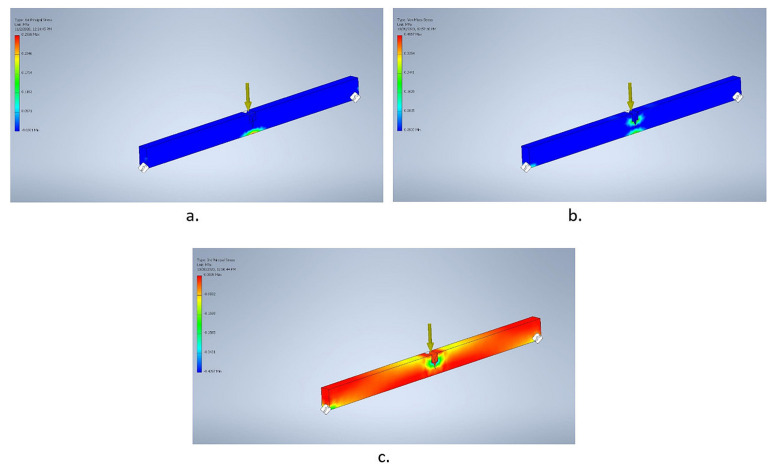
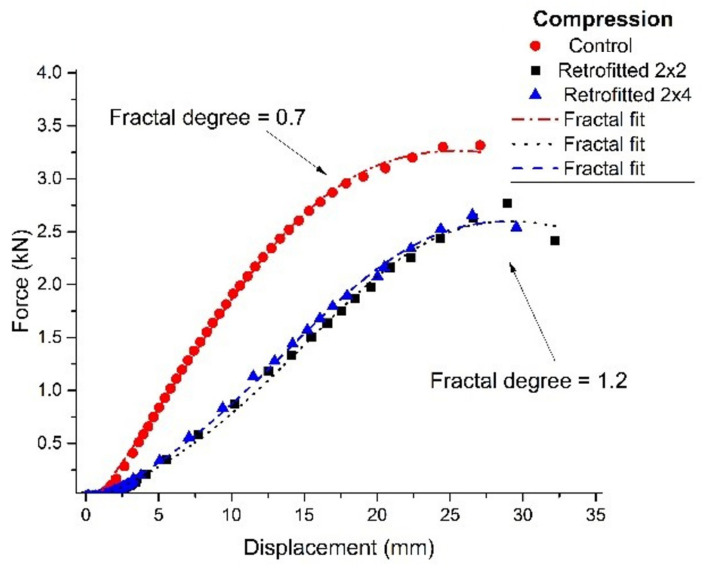
The purpose of the present paper is to analyze, both experimentally and theoretically, the behavior of the polymeric biocomposite generically known as "liquid wood", trademarked as Arbofill. The experimental part refers to the mechanical performance in tension and compression, having as finality the possibility of using "liquid wood" as a material suitable for the rehabilitation of degraded wooden elements in civil structures (ex. use in historical buildings, monuments etc.). The theoretical part refers to computer simulations regarding the mechanical behavior of "liquid wood" as well as to a theoretical model in the paradigm of motion, which describes the same behavior. This model is based on the hypothesis that "liquid wood" can be assimilated, both structurally and functionally, to a multifractal object, situation in which its entities are described through continuous, non-differentiable curves. Then, descriptions of the behavior of "liquid wood", both in the Schrödinger-type and in hydrodynamic-type representations at various scale resolutions, become operational. Since in the hydrodynamic-type representation, the constitutive law of "liquid wood" can be highlighted, several operational procedures (Ricatti-type gauge, differential geometry in absolute space etc.) will allow correlations between the present proposed model and the experimental data. The obtained results, both practical (81% bearing capacity in compression and 36% bearing capacity in tension, compared to control samples) and theoretical (validation of material performance in virtual environment simulations, stresses and strains correlations in a theoretical model) indicate that "liquid wood" could be used in the construction industry, as a potential rehabilitation material, but with more development clearly needed.
本文的目的是通过实验和理论分析一种通常被称为“液态木材”(商标为Arbofill)的聚合物生物复合材料的性能。实验部分涉及拉伸和压缩时的力学性能,最终目标是确定“液态木材”是否适合用作土木结构中退化木质构件修复的材料(例如用于历史建筑、古迹等)。理论部分涉及“液态木材”力学行为的计算机模拟以及运动范式下的理论模型,该模型描述了相同的行为。此模型基于这样的假设:“液态木材”在结构和功能上都可被视为一个多重分形对象,其实体通过连续、不可微的曲线来描述。这样一来,在各种尺度分辨率下,以薛定谔型和流体动力学型表示法对“液态木材”行为的描述就变得可行。由于在流体动力学型表示法中可以突出“液态木材”的本构定律,一些操作程序(里卡蒂型规范、绝对空间中的微分几何等)将使本文提出的模型与实验数据之间建立关联。所获得的结果,无论是实际结果(与对照样本相比,压缩时承载能力为81%,拉伸时承载能力为36%)还是理论结果(在虚拟环境模拟中对材料性能的验证、理论模型中的应力和应变相关性)都表明,“液态木材”可作为一种潜在的修复材料用于建筑行业,但显然还需要更多的发展。