Song You, Deng Jiangang, Xu Zhuolin, Nie Yu, Lan Zhenbo
Wuhan Nari Limited Liability Company of State Grid Electric Power Research Institute, Wuhan 430074, China.
State Grid Electric Power Research Institute, Nanjing 210000, China.
Polymers (Basel). 2021 Dec 24;14(1):67. doi: 10.3390/polym14010067.
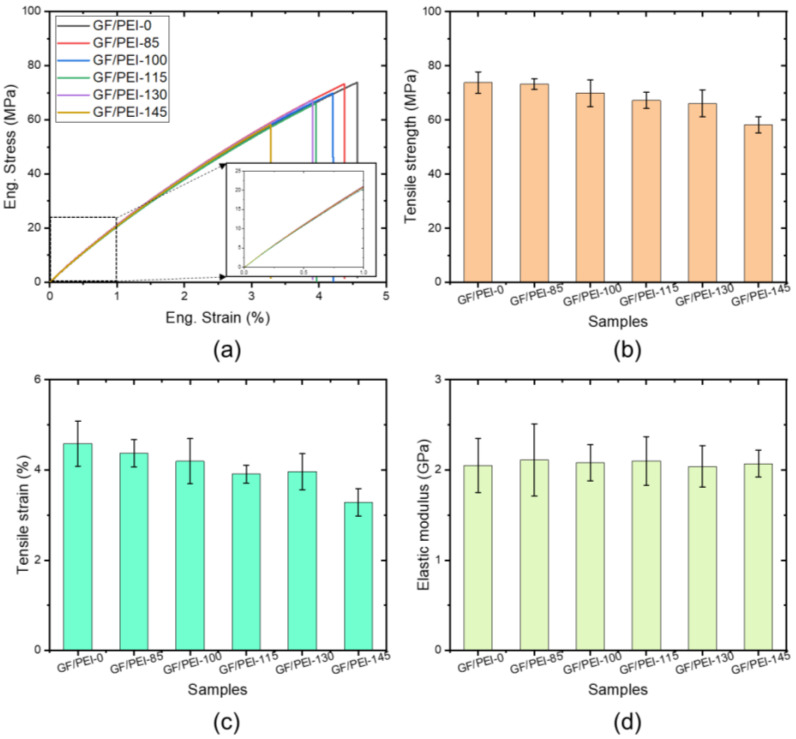
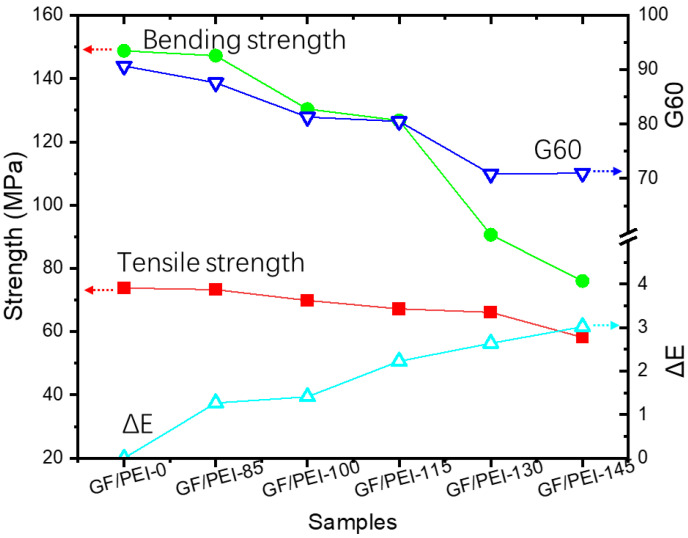
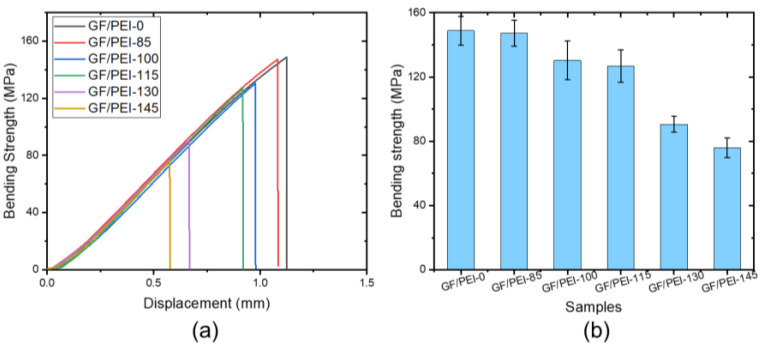
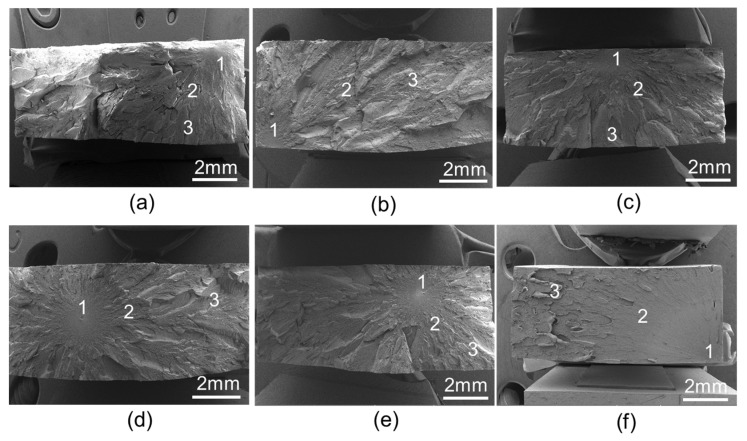
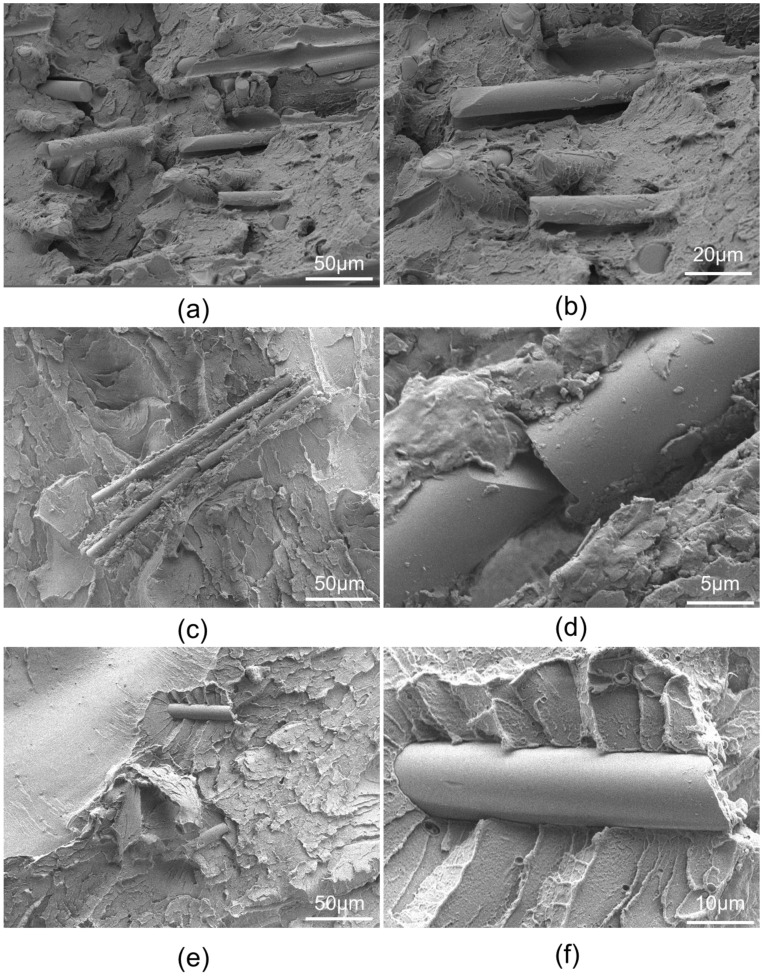
This research study is aimed at evaluating the mechanical characteristics in terms of tensile strength and flexural strength of glass fiber reinforced Polyetherimide (GF/PEI) under different thermal aging. Tensile testing and bending testing were performed on the thermally aged polyetherimide composites. The mechanical properties of the thermally aged samples were also correlated with their color difference. The experimental results showed that both the tensile strength and flexural strength of the GF/PEI composite samples decreased with increasing aging temperature. However, the elastic modulus of the composite samples is nearly independent on the thermal aging. The thermally aged samples exhibited brittle fracture, resulting in low strength and low ductility. The loss in strength after thermal aging could be also linked to the change of their color difference, which can indirectly reflect the change of the strength for the composites after thermal aging.
本研究旨在评估不同热老化条件下玻璃纤维增强聚醚酰亚胺(GF/PEI)在拉伸强度和弯曲强度方面的力学特性。对热老化的聚醚酰亚胺复合材料进行了拉伸试验和弯曲试验。热老化样品的力学性能还与其色差相关。实验结果表明,GF/PEI复合样品的拉伸强度和弯曲强度均随老化温度的升高而降低。然而,复合样品的弹性模量几乎与热老化无关。热老化样品表现出脆性断裂,导致强度低和延展性低。热老化后的强度损失也可能与它们的色差变化有关,色差变化可以间接反映热老化后复合材料强度的变化。