Department of Molecular Biosciences, University of Texas at Austin, Austin, Texas, USA.
mBio. 2022 Feb 22;13(1):e0351221. doi: 10.1128/mbio.03512-21. Epub 2022 Jan 11.
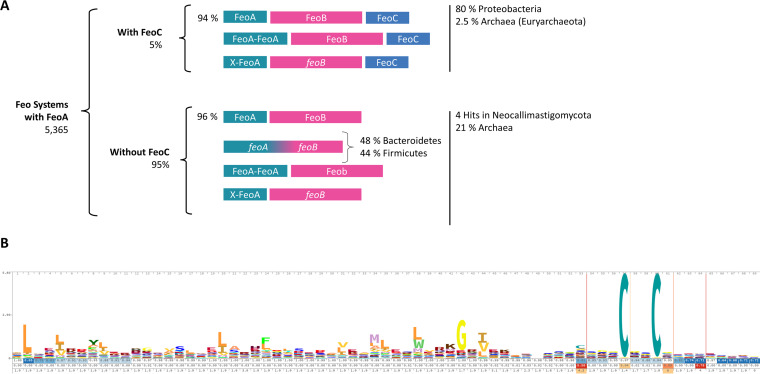
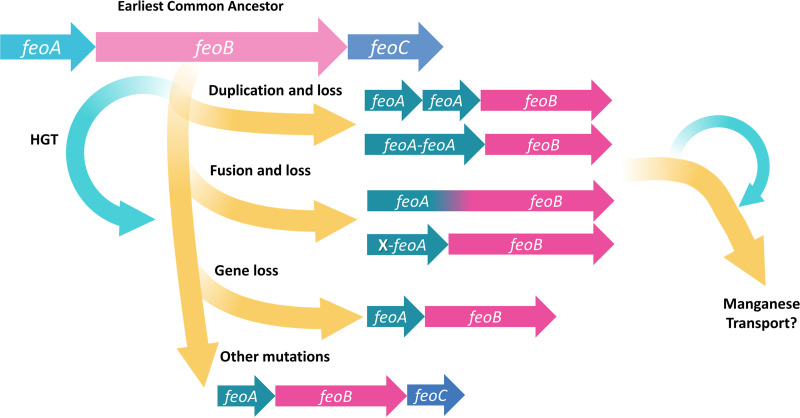
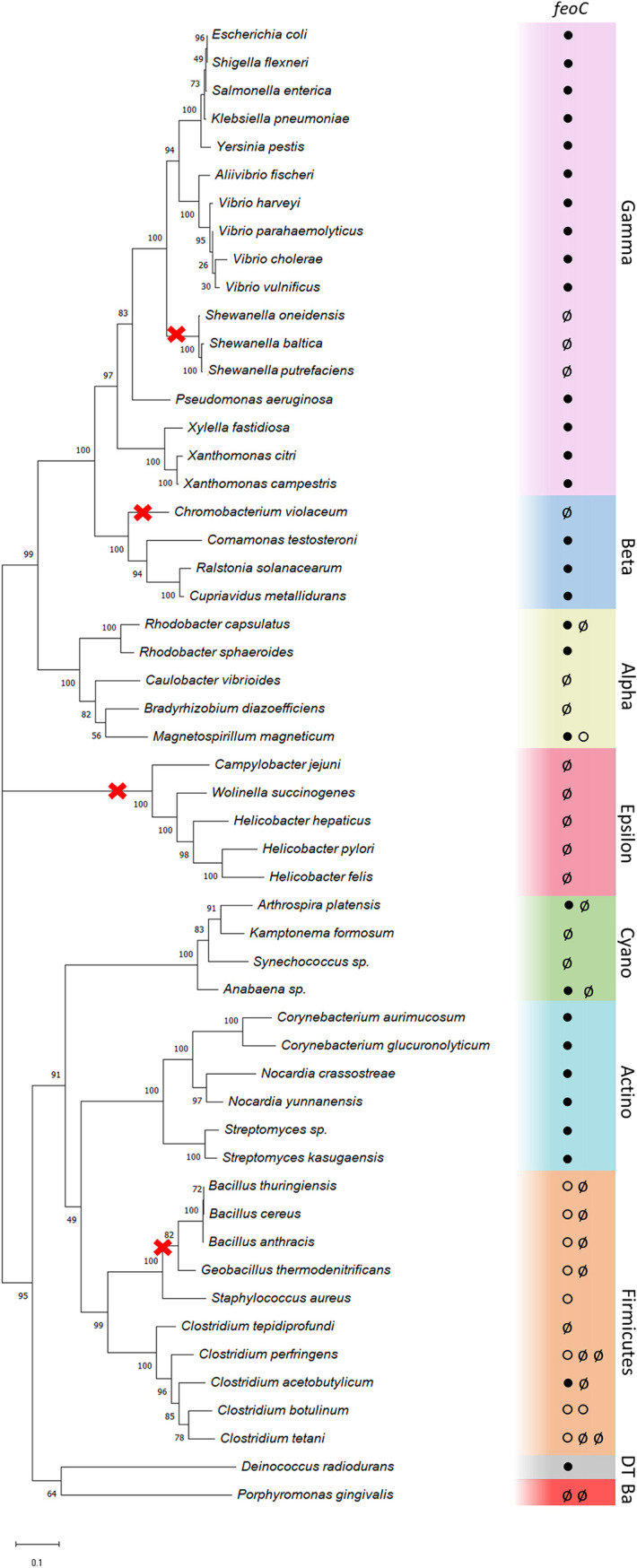
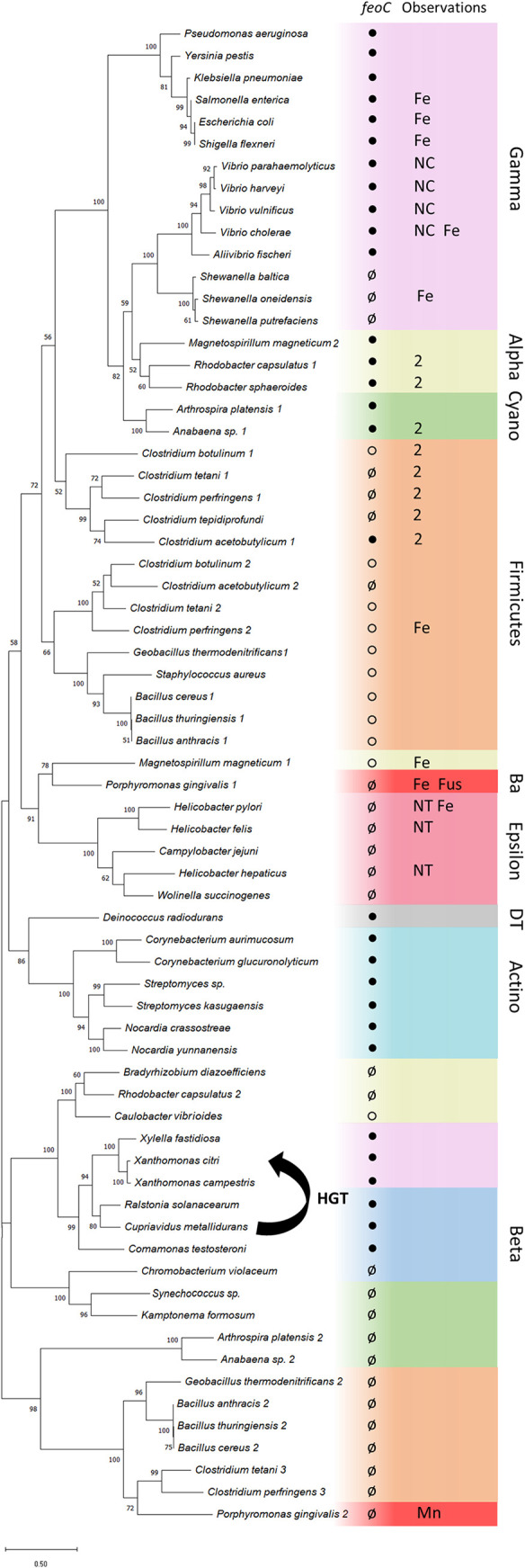
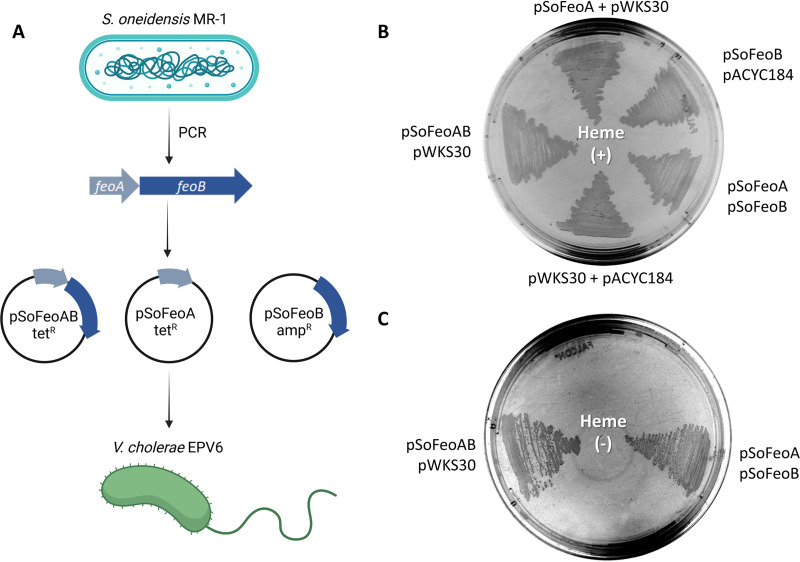
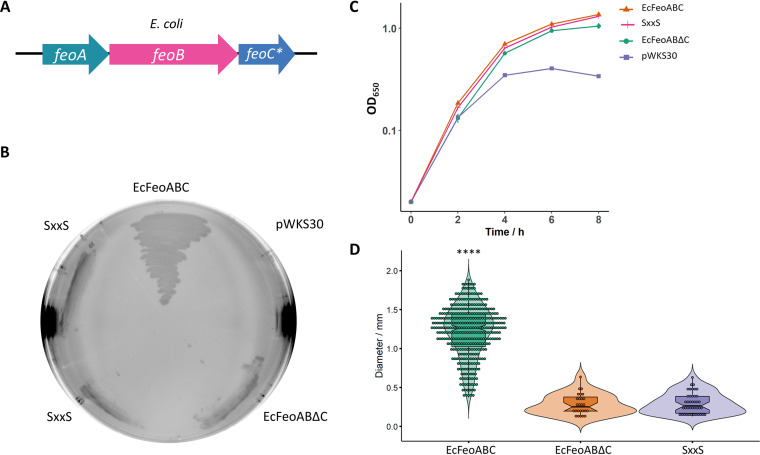
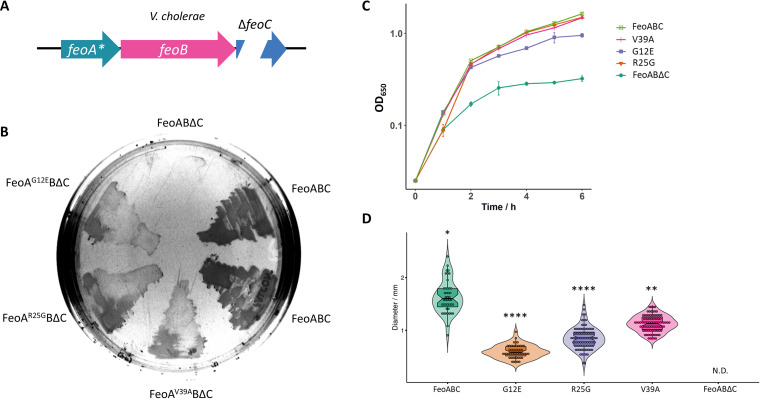
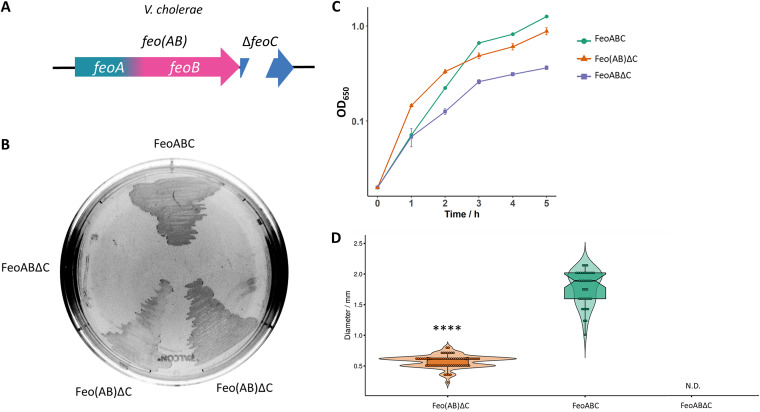
Iron acquisition is essential for almost all living organisms. In certain environments, ferrous iron is the most prevalent form of this element. Feo is the most widespread system for ferrous iron uptake in bacteria and is critical for virulence in some species. The canonical architecture of Feo consists of a large transmembrane nucleoside triphosphatase (NTPase) protein, FeoB, and two accessory cytoplasmic proteins, FeoA and FeoC. The role of the latter components and the mechanism by which Feo orchestrates iron transport are unclear. In this study, we conducted a comparative analysis of Feo protein sequences to gain insight into the evolutionary history of this transporter. We identified instances of how horizontal gene transfer contributed to the evolution of Feo. Also, we found that FeoC, while absent in most lineages, is largely present in the group, although its sequence is poorly conserved. We propose that FeoC, which may couple FeoB NTPase activity with pore opening, was an ancestral element that has been dispensed with through mutations in FeoA and FeoB in some lineages. We provide experimental evidence supporting this hypothesis by isolating and characterizing FeoC-independent mutants of the Vibrio cholerae Feo system. Also, we confirmed that the closely related species Shewanella oneidensis does not require FeoC; thus, FeoC sequences may resemble transitional forms on an evolutionary pathway toward FeoC-independent transporters. Finally, by combining data from our bioinformatic analyses with this experimental evidence, we propose an evolutionary model for the Feo system in bacteria. Feo, a ferrous iron transport system composed of three proteins (FeoA, -B, and -C), is the most prevalent bacterial iron transporter. It plays an important role in iron acquisition in low-oxygen environments and some host-pathogen interactions. The large transmembrane protein FeoB provides the channel for the transport of iron into the bacterial cell, but the functions of the two small, required accessory proteins FeoA and FeoC are not well understood. Analysis of the evolution of this transporter shows that FeoC is poorly conserved and has been lost from many bacterial lineages. Experimental evidence indicates that FeoC may have different functions in different species that retain this protein, and the loss of FeoC is promoted by mutations in FeoA or by the fusion of FeoA and FeoB.
铁的获取对几乎所有生物体都是必不可少的。在某些环境中,二价铁是这种元素最常见的形式。Feo 是细菌中摄取二价铁的最广泛系统,对某些物种的毒力至关重要。Feo 的典型结构由一个大型跨膜核苷三磷酸酶(NTPase)蛋白 FeoB 和两个辅助细胞质蛋白 FeoA 和 FeoC 组成。后两个组件的作用以及 Feo 协调铁运输的机制尚不清楚。在这项研究中,我们对 Feo 蛋白序列进行了比较分析,以深入了解该转运体的进化历史。我们确定了水平基因转移如何促成 Feo 的进化的实例。此外,我们发现虽然 FeoC 在大多数谱系中不存在,但它在 组中大量存在,尽管其序列保守性较差。我们提出,FeoC 可能通过与 FeoB NTPase 活性偶联来打开孔,它是一个祖先元素,在某些谱系中通过 FeoA 和 FeoB 的突变而被摒弃。我们通过分离和表征霍乱弧菌 Feo 系统的 FeoC 独立突变体提供了支持这一假设的实验证据。此外,我们证实密切相关的物种希瓦氏菌不需要 FeoC;因此,FeoC 序列可能类似于 FeoC 独立转运体进化途径上的过渡形式。最后,通过将我们的生物信息学分析数据与该实验证据相结合,我们提出了细菌 Feo 系统的进化模型。Feo 是一种由三个蛋白(FeoA、-B 和 -C)组成的二价铁转运系统,是最常见的细菌铁转运体。它在低氧环境和一些宿主-病原体相互作用中的铁获取中发挥重要作用。大型跨膜蛋白 FeoB 提供了将铁运输到细菌细胞内的通道,但两个小的必需辅助蛋白 FeoA 和 FeoC 的功能尚不清楚。对该转运体进化的分析表明,FeoC 保守性较差,已从许多细菌谱系中丢失。实验证据表明,FeoC 在保留该蛋白的不同物种中可能具有不同的功能,FeoC 的丢失是由 FeoA 中的突变或 FeoA 和 FeoB 的融合促进的。