Department of Psychology, Universidad Loyola Andalucía, 41704, Dos Hermanas, Sevilla, Spain.
Department of Social, Developmental and Educational Psychology, Faculty of Education Sciences, University of Huelva, 21071, Huelva, Spain.
Health Qual Life Outcomes. 2022 Jan 10;20(1):8. doi: 10.1186/s12955-021-01914-6.
The objectives of this study were to analyze the psychometric properties of the Sense of Coherence scale (SOC-13), determine the role of the method effect in the performance of the instrument, and identify the relationship with health perception, quality of life, and sleep quality in patients at cardiovascular risk.
The final sample consisted of 293 patients at cardiovascular risk, with a mean age of 61.9 years (SD = 8.8), 49.8% of whom were women. The SOC-13, the Patient Health Questionnaire (PHQ-9), and the Medical Outcomes Study-Sleep Scale (MOS-Sleep) were administered. In addition, the participant's self-perceived health and quality of life were also evaluated. All analyses were carried out with SPSS 26.0 and EQS 6.1 statistical software.
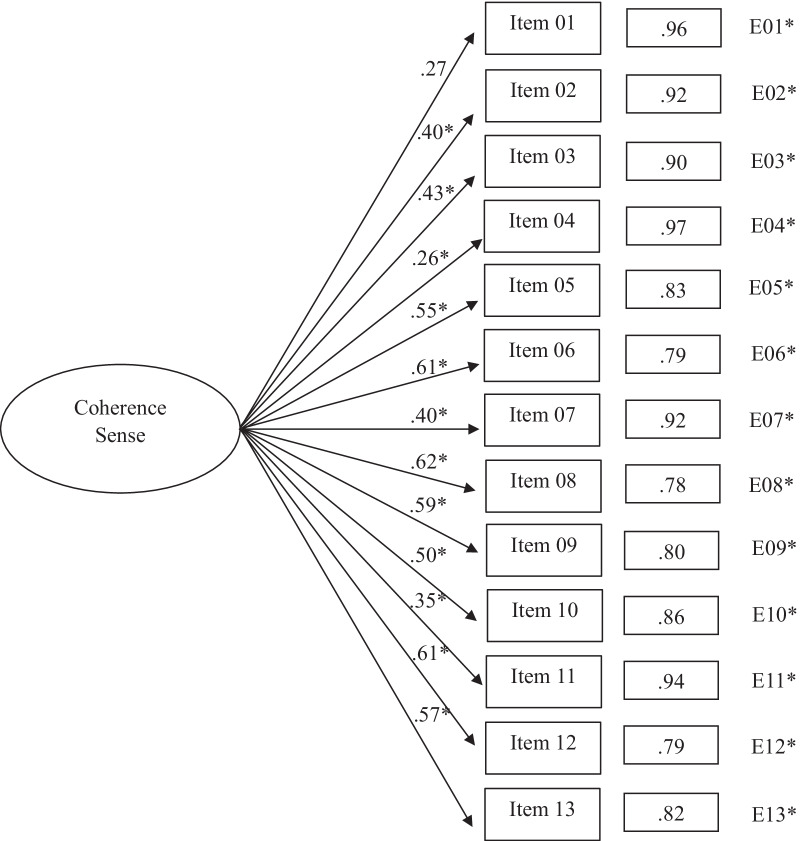
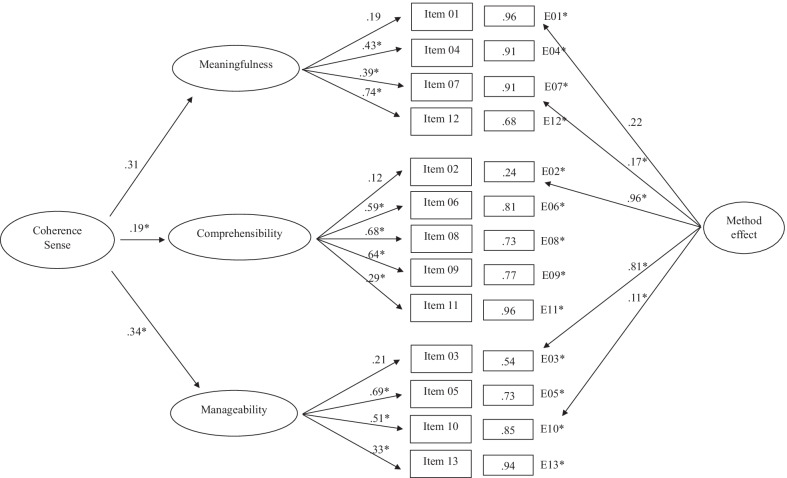
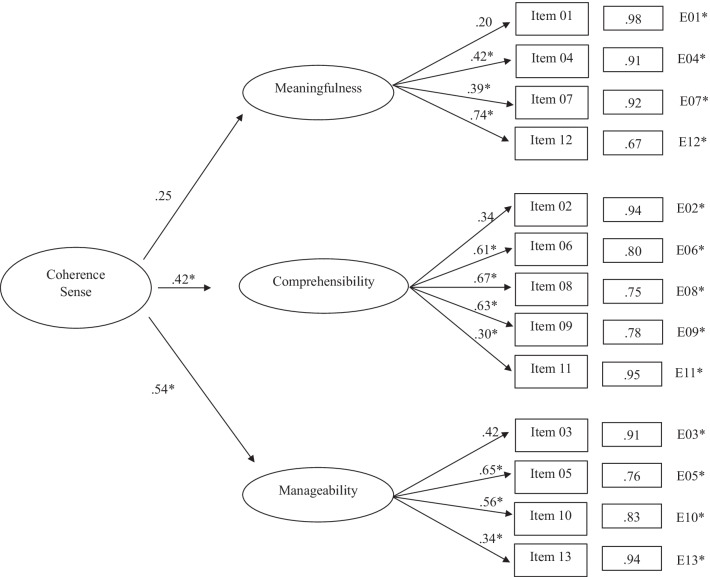
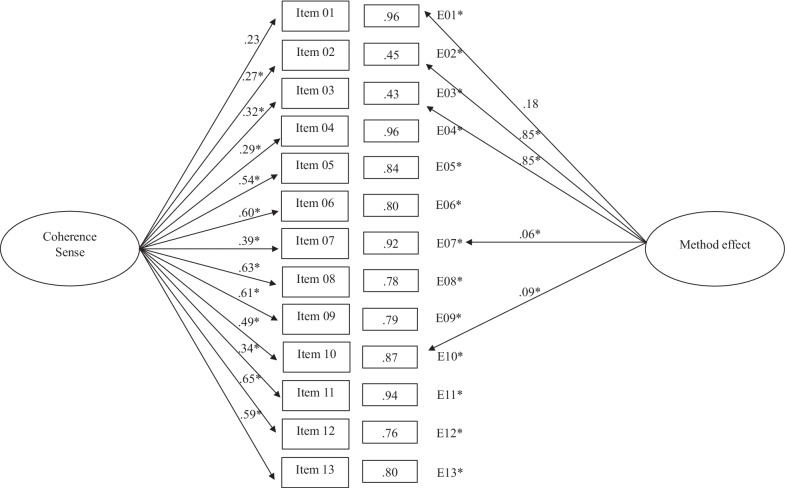
The results showed adequate reliability for the SOC-13, with a Cronbach's alpha of .789. The fit of the structures was not adequate in any of the cases (.26 to .62 for one factor, .26 to.73 for three factors, .20 to .54 for one second-order factor, and .25, .42, and .54 for three first-order factors). The three structure models showed an improved fit when adding a latent factor resulting from the method effect (.6 to .85 for one factor, .11 to.90 for three factors, and .11 to .96 for one second-order factor). Moreover, positive correlations were found with health perception, perceived quality of life, and perceived sleep quality.
The SOC-13 is a suitable instrument for patients with cardiovascular risk in Spain, and it is also an indicator of health perception, quality of life, and perceived quality of sleep. Control of the method effect improves the fit of the instrument's structure. As a future direction, it is recommended to conduct new studies in this and other samples and using different versions of the SOC.
International Standard Randomized Controlled Trial Number: ISRCTN76069254, 08/04/2015 retrospectively registered.
本研究的目的是分析心理韧性量表(SOC-13)的心理测量学特性,确定方法效应在仪器性能中的作用,并确定其与心血管风险患者的健康感知、生活质量和睡眠质量的关系。
最终样本包括 293 名心血管风险患者,平均年龄为 61.9 岁(SD=8.8),其中 49.8%为女性。采用 SOC-13、患者健康问卷(PHQ-9)和医疗结果研究-睡眠量表(MOS-Sleep)进行评估。此外,还评估了参与者的自我感知健康和生活质量。所有分析均使用 SPSS 26.0 和 EQS 6.1 统计软件进行。
结果表明,SOC-13 的信度良好,Cronbach's alpha 为.789。在任何情况下,结构的拟合都不理想(一个因素为.26 至.62,三个因素为.26 至.73,一个二阶因素为.20 至.54,三个一阶因素为.25、.42 和.54)。当添加一个由方法效应产生的潜在因素时,三个结构模型的拟合度得到改善(一个因素为.6 至.85,三个因素为.11 至.90,一个二阶因素为.11 至.96)。此外,与健康感知、感知生活质量和感知睡眠质量呈正相关。
SOC-13 是西班牙心血管风险患者的合适工具,也是健康感知、生活质量和感知睡眠质量的指标。方法效应的控制可以提高仪器结构的拟合度。作为未来的方向,建议在这个和其他样本中进行新的研究,并使用 SOC 的不同版本。
国际标准随机对照试验编号:ISRCTN76069254,2015 年 8 月 4 日回顾性注册。