Mi Zihao, Wang Zhenzhen, Xue Xiaotong, Liu Tingting, Wang Chuan, Sun Lele, Yu Gongqi, Zhang Yuan, Shi Peidian, Sun Yonghu, Yang Yongliang, Ma Shanshan, Wang Zhe, Yu Yueqian, Liu Jianjun, Liu Hong, Zhang Furen
Shandong Provincial Hospital for Skin Diseases & Shandong Provincial Institute of Dermatology and Venereology, Shandong First Medical University & Shandong Academy of Medical Sciences, Jinan, Shandong, China.
Shandong Provincial Hospital Affiliated to Shandong First Medical University, Jinan, Shandong, China.
Cell Discov. 2022 Jan 11;8(1):2. doi: 10.1038/s41421-021-00353-3.
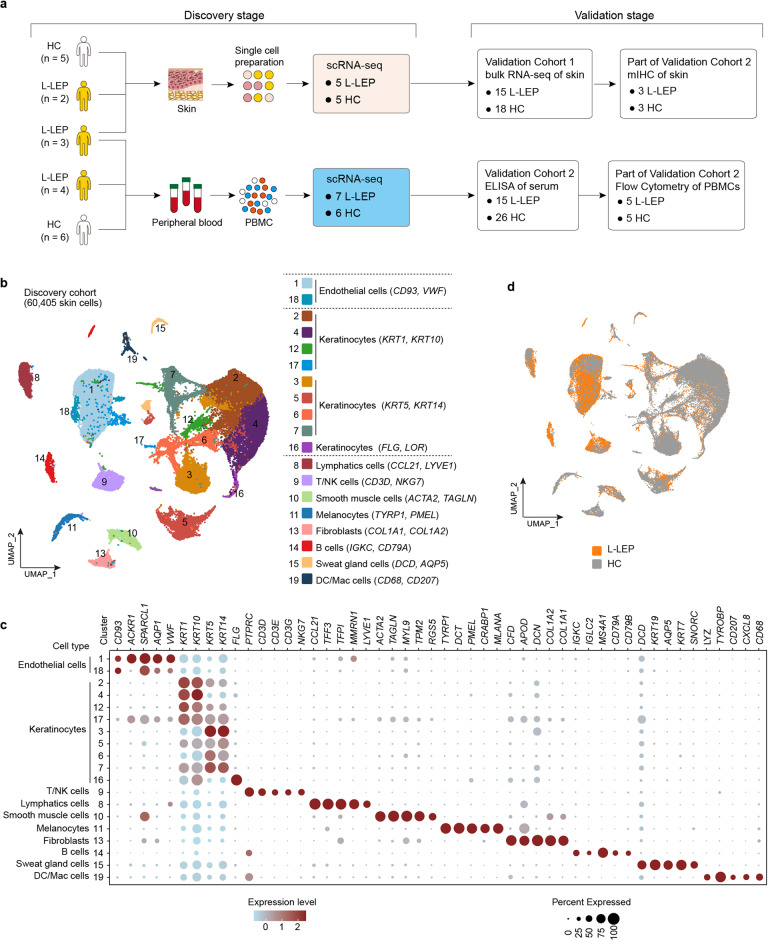
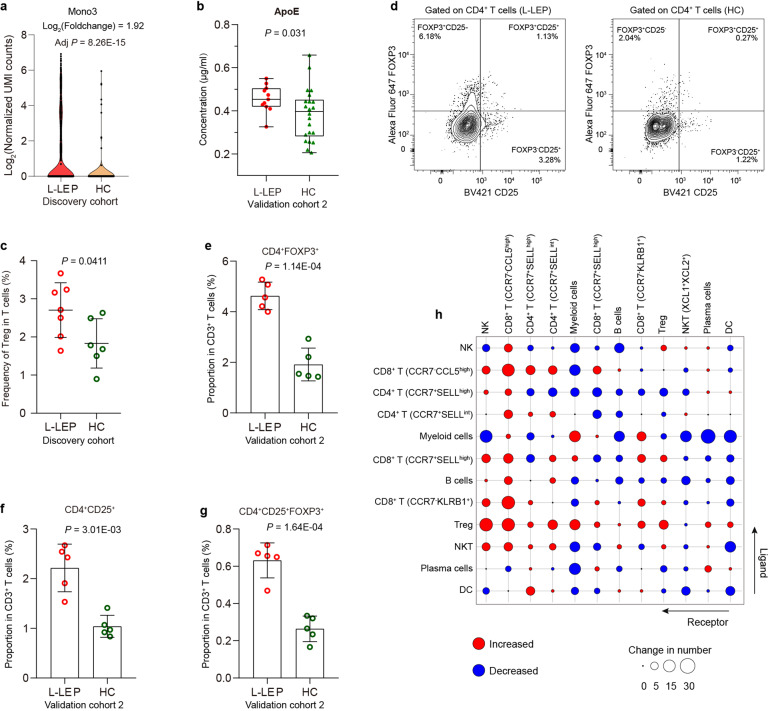
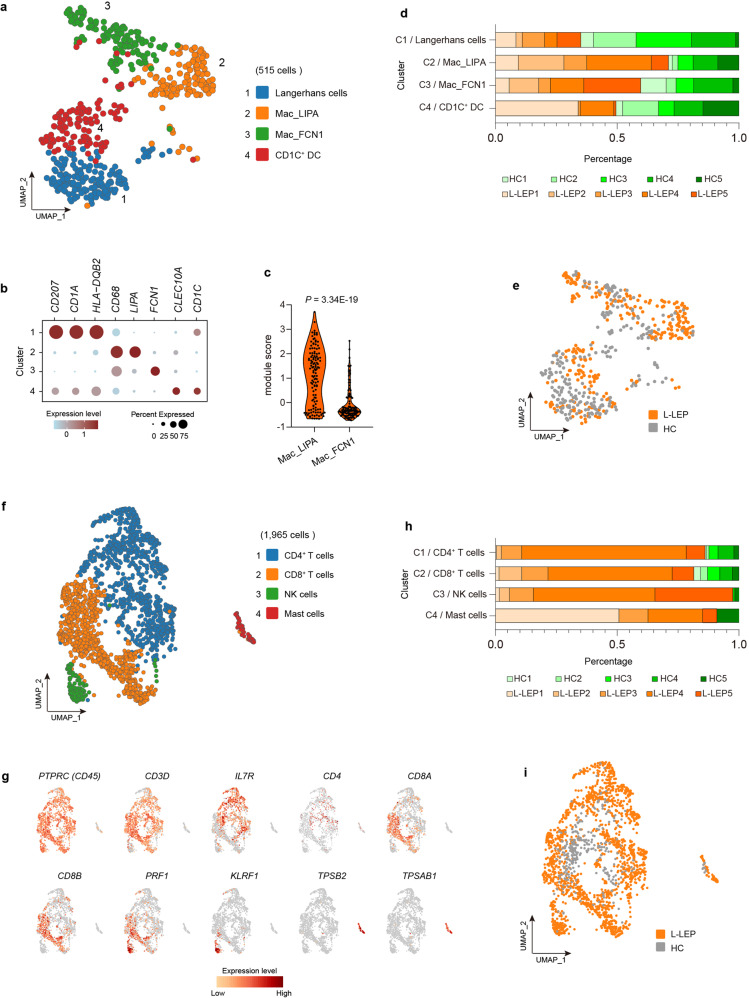
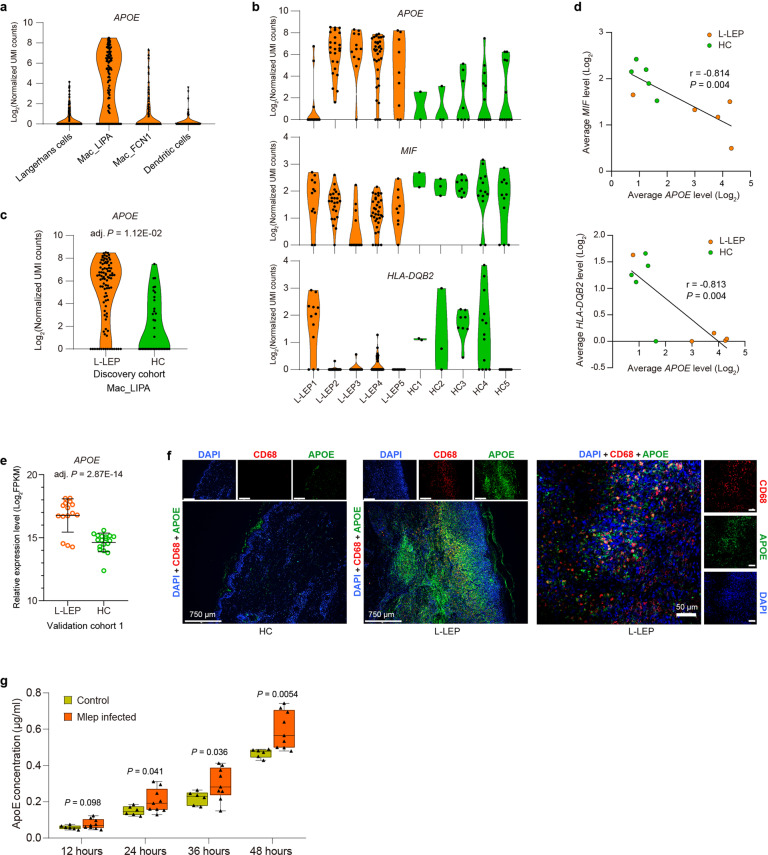
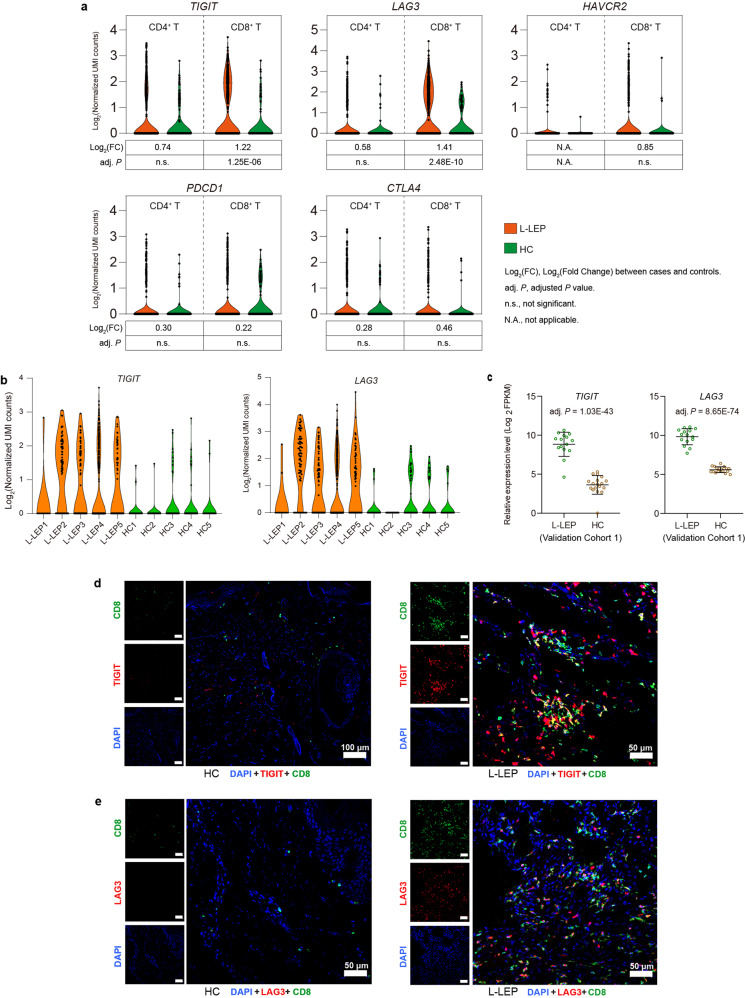
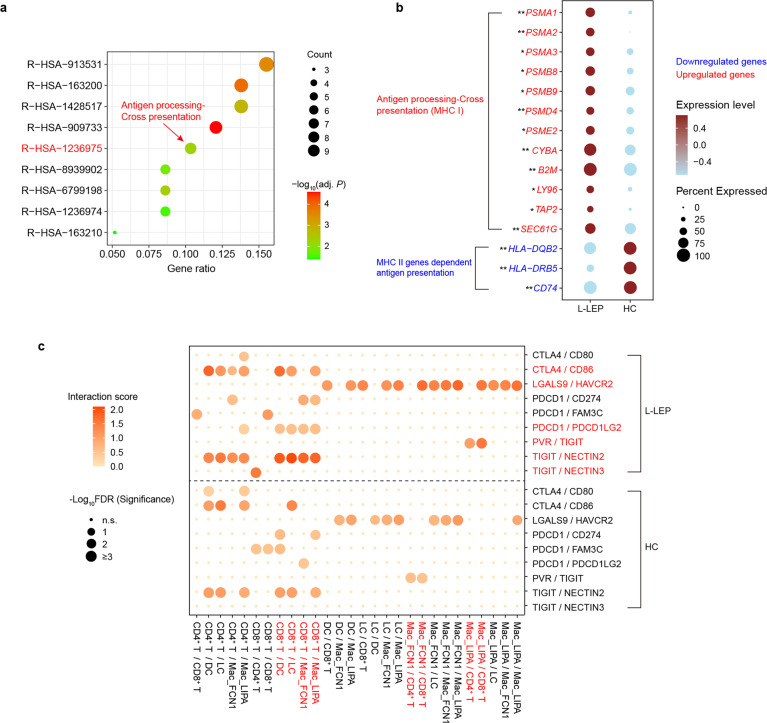
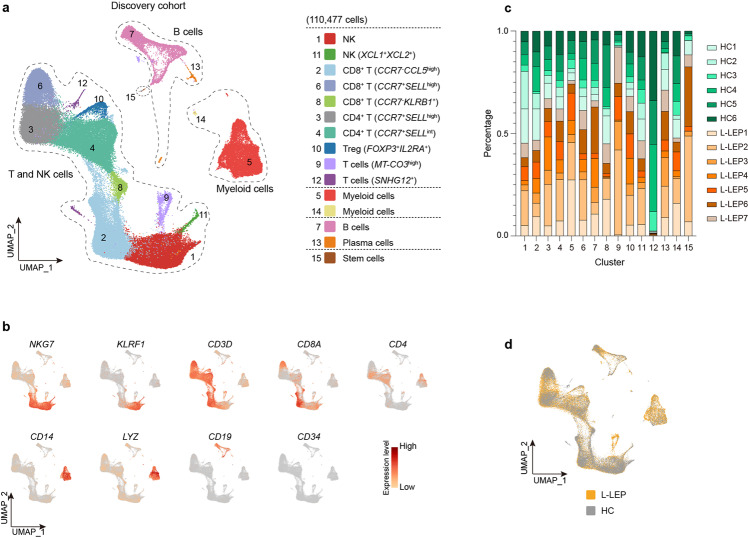
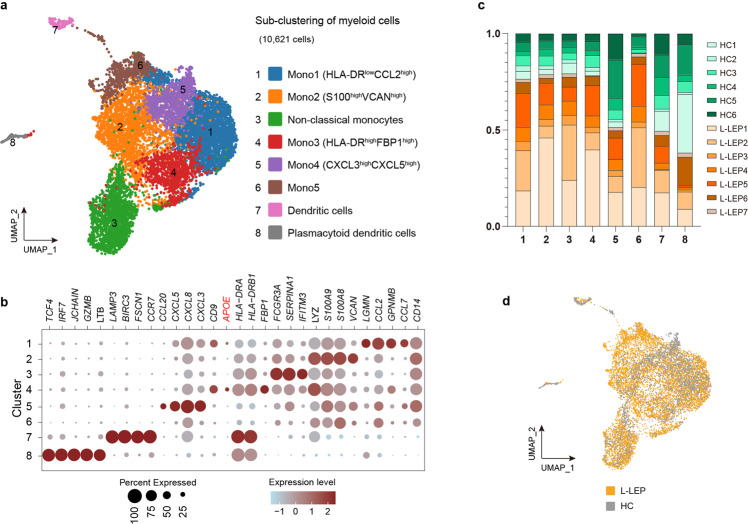
Lepromatous leprosy (L-LEP), caused by the massive proliferation of Mycobacterium leprae primarily in macrophages, is an ideal disease model for investigating the molecular mechanism of intracellular bacteria evading or modulating host immune response. Here, we performed single-cell RNA sequencing of both skin biopsies and peripheral blood mononuclear cells (PBMCs) of L-LEP patients and healthy controls. In L-LEP lesions, we revealed remarkable upregulation of APOE expression that showed a negative correlation with the major histocompatibility complex II gene HLA-DQB2 and MIF, which encodes a pro-inflammatory and anti-microbial cytokine, in the subset of macrophages exhibiting a high expression level of LIPA. The exhaustion of CD8 T cells featured by the high expression of TIGIT and LAG3 in L-LEP lesions was demonstrated. Moreover, remarkable enhancement of inhibitory immune receptors mediated crosstalk between skin immune cells was observed in L-LEP lesions. For PBMCs, a high expression level of APOE in the HLA-DRFBP1 monocyte subset and the expansion of regulatory T cells were found to be associated with L-LEP. These findings revealed the primary suppressive landscape in the L-LEP patients, providing potential targets for the intervention of intracellular bacteria caused persistent infections.
瘤型麻风(L-LEP)主要由麻风分枝杆菌在巨噬细胞中大量增殖引起,是研究细胞内细菌逃避或调节宿主免疫反应分子机制的理想疾病模型。在此,我们对L-LEP患者和健康对照者的皮肤活检组织及外周血单个核细胞(PBMC)进行了单细胞RNA测序。在L-LEP病变中,我们发现APOE表达显著上调,在表现出高LIPA表达水平的巨噬细胞亚群中,APOE表达与主要组织相容性复合体II类基因HLA-DQB2以及编码促炎和抗微生物细胞因子的MIF呈负相关。在L-LEP病变中证实了以TIGIT和LAG3高表达为特征的CD8 T细胞耗竭。此外,在L-LEP病变中观察到抑制性免疫受体介导的皮肤免疫细胞间串扰显著增强。对于PBMC,发现HLA-DRFBP1单核细胞亚群中APOE的高表达水平以及调节性T细胞的扩增与L-LEP相关。这些发现揭示了L-LEP患者的主要抑制格局,为干预细胞内细菌引起的持续性感染提供了潜在靶点。