Department of Psychology, University of Toronto, 100 St. George Street, Toronto, ON, M5S 3G3, Canada.
University of Washington, Seattle, USA.
Sci Rep. 2022 Jan 10;12(1):365. doi: 10.1038/s41598-021-04370-w.
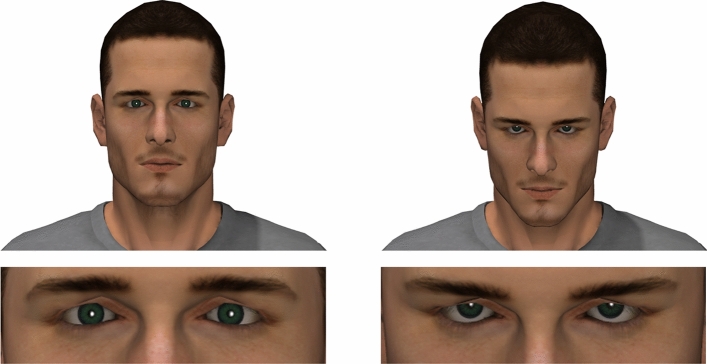
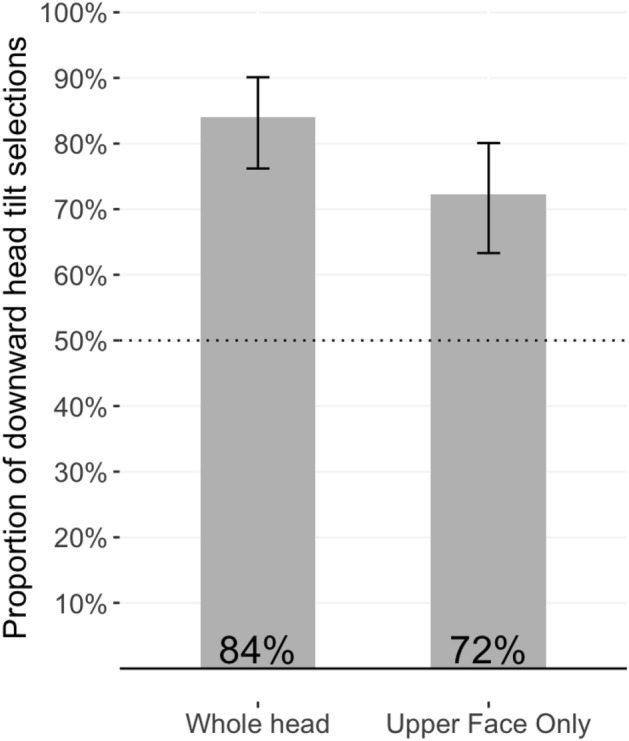
The present pre-registered research provides the first evidence that a downwards head tilt is sufficient to communicate dominance from a neutral facial expression among the Mayangna, members of an unindustrialized, small-scale traditional society in Nicaragua who have had minimal exposure to North American culture. Consistent with the Action Unit imposter effect observed in North American populations (Witkower and Tracy in Psychol Sci 30:893-906, 2019), changes to the appearance of the upper face caused by a downwards head tilt were sufficient to elicit perceptions of dominance among this population. Given that the Mayangna are unlikely to associate a downwards head tilt or related apparent facial changes with dominance as a result of cross-cultural learning, the present results suggest that perceptions of dominance formed from a downwards head tilt, and the visual illusion shaping these perceptions, are a widely generalizable, and possibly universal, feature of human psychology.
本预先注册的研究首次提供证据表明,在尼加拉瓜的一个未工业化的小规模传统社会——梅安加纳人中,当头向下倾斜时,即使面部表情保持中立,也足以传达出支配地位。这与在北美人群中观察到的动作单元赝象效应一致(Witkower 和 Tracy 在《心理科学》30:893-906, 2019),当头向下倾斜引起的上面部外观的变化足以引起该人群对支配地位的感知。鉴于梅安加纳人不太可能因为跨文化学习而将头向下倾斜或相关的明显面部变化与支配地位联系起来,因此目前的结果表明,从头向下倾斜形成的支配地位感知以及塑造这些感知的视觉错觉是人类心理中广泛存在的、可能是普遍存在的特征。