Laboratory of Vaccine Materials, Center for Vaccine and Adjuvant Research and Laboratory of Gut Environmental System, National Institutes of Biomedical Innovation, Health and Nutrition (NIBIOHN), 7-6-8 Asagi Saito, Ibaraki, Osaka, 567-0085, Japan.
Division of Applied Life Sciences, Graduate School of Agriculture, Kyoto University, Kitashirakawa-oiwakecho, Sakyo-ku, Kyoto, 606-8502, Japan.
Mucosal Immunol. 2022 Feb;15(2):289-300. doi: 10.1038/s41385-021-00477-5. Epub 2022 Jan 10.
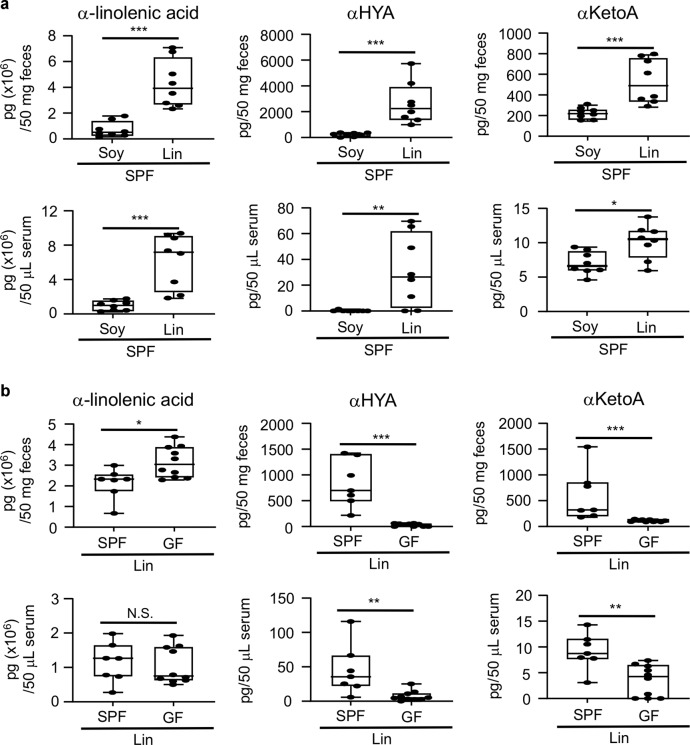
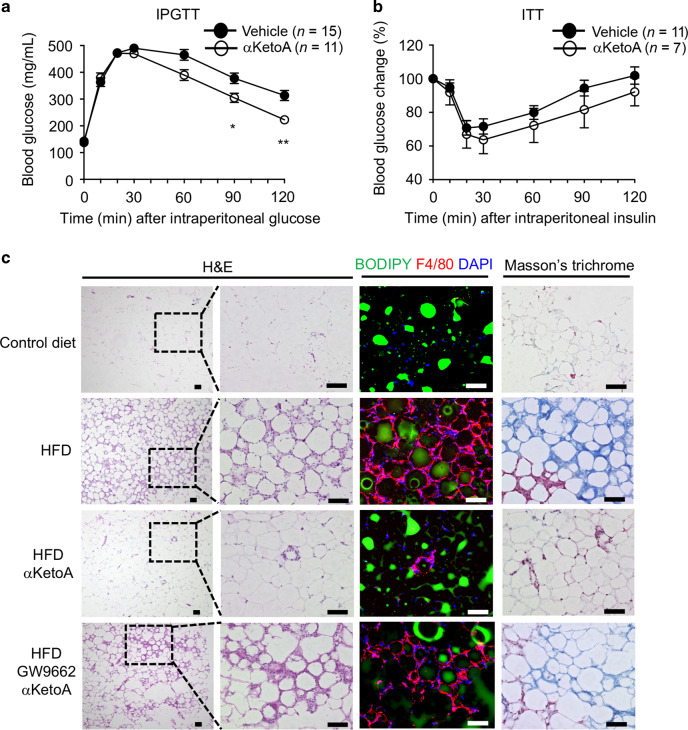
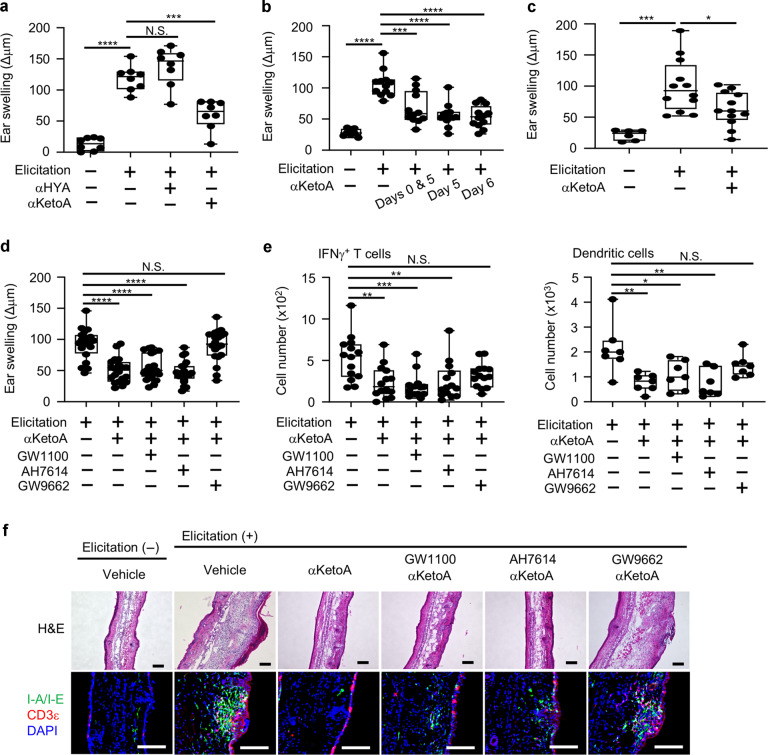
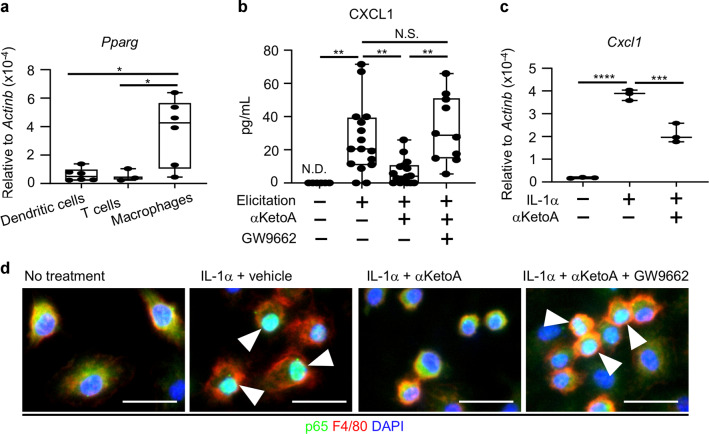
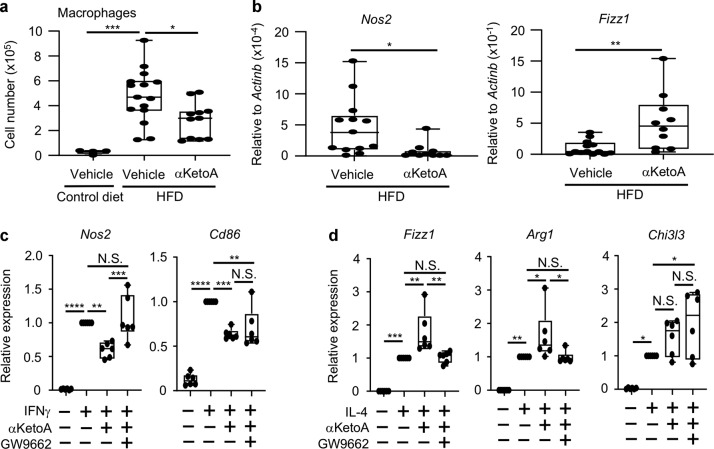
Dietary ω3 fatty acids have important health benefits and exert their potent bioactivity through conversion to lipid mediators. Here, we demonstrate that microbiota play an essential role in the body's use of dietary lipids for the control of inflammatory diseases. We found that amounts of 10-hydroxy-cis-12-cis-15-octadecadienoic acid (αHYA) and 10-oxo-cis-12-cis-15-octadecadienoic acid (αKetoA) increased in the feces and serum of specific-pathogen-free, but not germ-free, mice when they were maintained on a linseed oil diet, which is high in α-linolenic acid. Intake of αKetoA, but not αHYA, exerted anti-inflammatory properties through a peroxisome proliferator-activated receptor (PPAR)γ-dependent pathway and ameliorated hapten-induced contact hypersensitivity by inhibiting the development of inducible skin-associated lymphoid tissue through suppression of chemokine secretion from macrophages and inhibition of NF-κB activation in mice and cynomolgus macaques. Administering αKetoA also improved diabetic glucose intolerance by inhibiting adipose tissue inflammation and fibrosis through decreased macrophage infiltration in adipose tissues and altering macrophage M1/M2 polarization in mice fed a high-fat diet. These results collectively indicate that αKetoA is a novel postbiotic derived from α-linolenic acid, which controls macrophage-associated inflammatory diseases and may have potential for developing therapeutic drugs as well as probiotic food products.
膳食 ω3 脂肪酸对健康有重要益处,并通过转化为脂质介质发挥其强大的生物活性。在这里,我们证明了微生物群在人体利用膳食脂质控制炎症性疾病方面起着至关重要的作用。我们发现,当无菌或非无菌小鼠食用富含α-亚麻酸的亚麻籽油饮食时,粪便和血清中的 10-羟基顺式-12-顺式-15-十八碳二烯酸(αHYA)和 10-氧代顺式-12-顺式-15-十八碳二烯酸(αKetoA)的含量增加。αKetoA 的摄入通过过氧化物酶体增殖物激活受体(PPAR)γ依赖性途径发挥抗炎作用,并通过抑制巨噬细胞趋化因子分泌和抑制 NF-κB 激活来改善半抗原诱导的接触过敏,从而改善了诱导性皮肤相关淋巴组织的发育在小鼠和食蟹猴中。在高脂肪饮食喂养的小鼠中,通过减少脂肪组织中巨噬细胞浸润和改变巨噬细胞 M1/M2 极化,αKetoA 还可通过抑制脂肪组织炎症和纤维化来改善糖尿病葡萄糖不耐受。这些结果共同表明,αKetoA 是一种源自 α-亚麻酸的新型后生元,可控制与巨噬细胞相关的炎症性疾病,并且可能有潜力开发治疗药物和益生菌食品。