Biomanufacturing Research Institute and Technology Enterprise, North Carolina Central University, Durham, North Carolina, USA.
Integrated Biosciences PhD Program, North Carolina Central University, Durham, North Carolina, USA.
J Neurosci Res. 2022 Aug;100(8):1585-1601. doi: 10.1002/jnr.25008. Epub 2022 Jan 11.
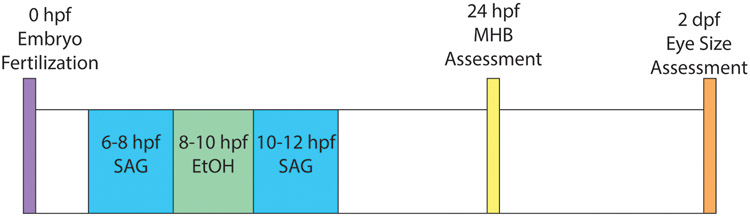
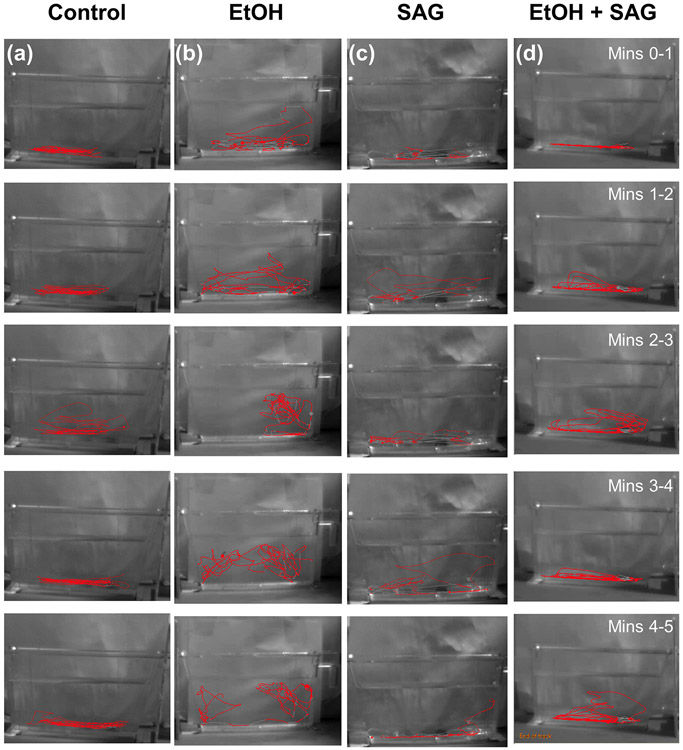
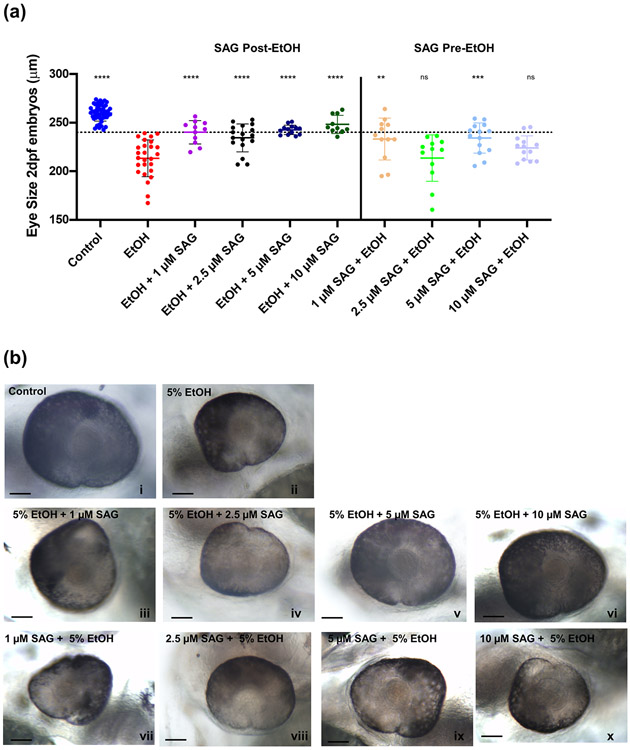
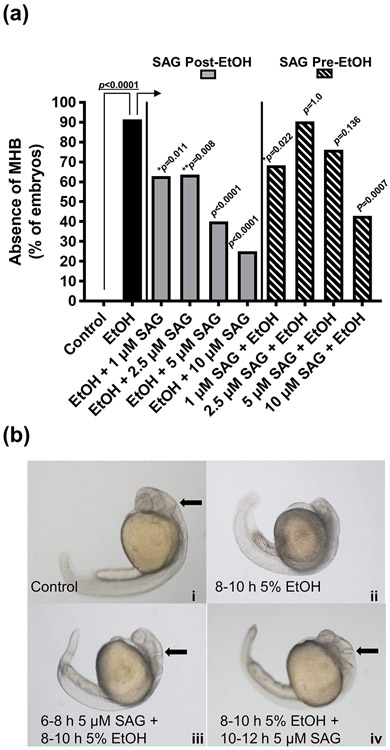
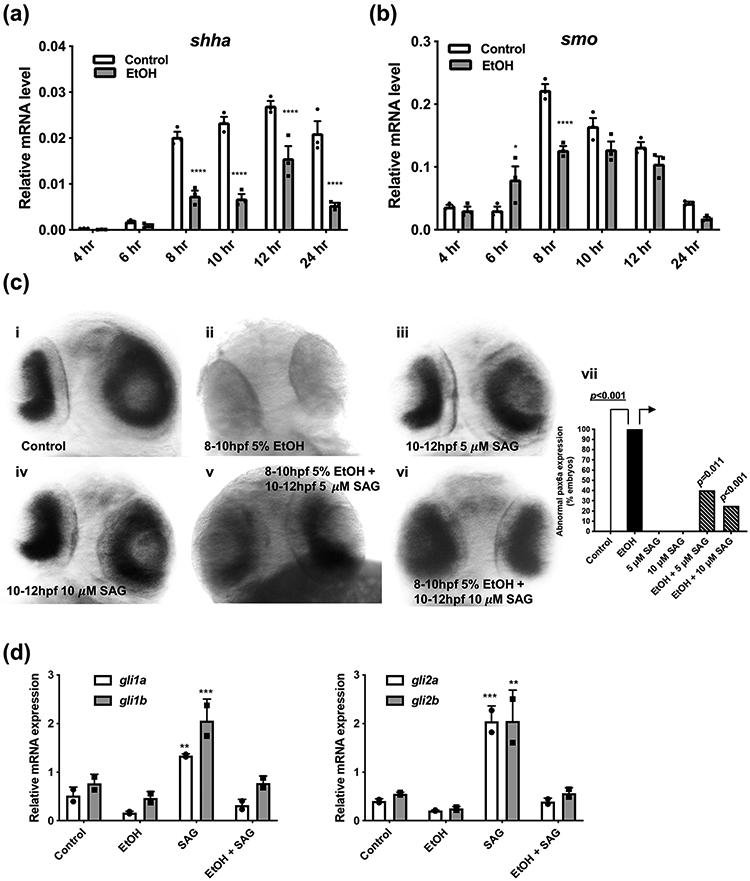
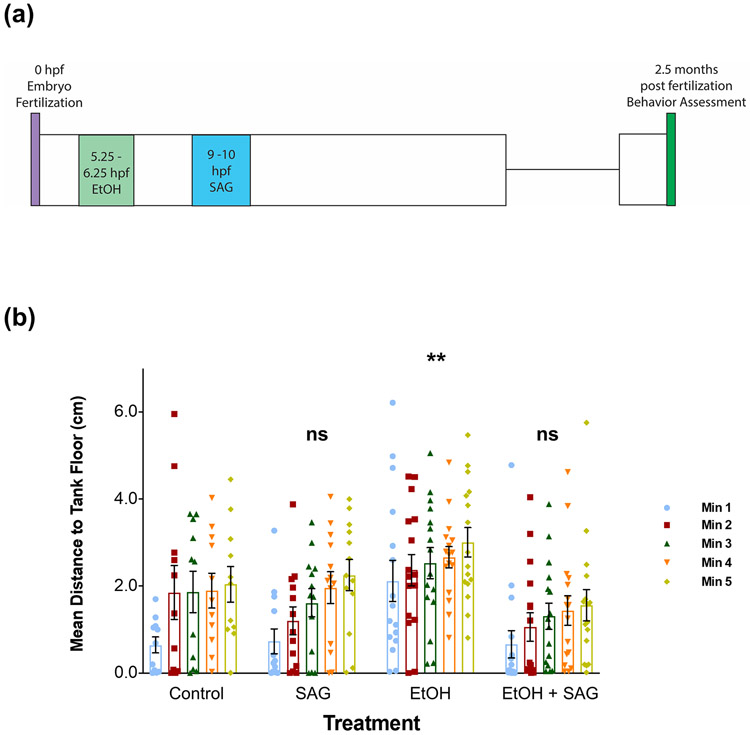
Ethanol exposure during the early stages of embryonic development can lead to a range of morphological and behavioral differences termed fetal alcohol spectrum disorders (FASDs). In a zebrafish model, we have shown that acute ethanol exposure at 8-10 hr postfertilization (hpf), a critical time of development, produces birth defects similar to those clinically characterized in FASD. Dysregulation of the Sonic hedgehog (Shh) pathway has been implicated as a molecular basis for many of the birth defects caused by prenatal alcohol exposure. We observed in zebrafish embryos that shh expression was significantly decreased by ethanol exposure at 8-10 hpf, while smo expression was much less affected. Treatment of zebrafish embryos with SAG or purmorphamine, small molecule Smoothened agonists that activate Shh signaling, ameliorated the severity of ethanol-induced developmental malformations including altered eye size and midline brain development. Furthermore, this rescue effect of Smo activation was dose dependent and occurred primarily when treatment was given after ethanol exposure. Markers of Shh signaling (gli1/2) and eye development (pax6a) were restored in embryos treated with SAG post-ethanol exposure. Since embryonic ethanol exposure has been shown to produce later-life neurobehavioral impairments, juvenile zebrafish were examined in the novel tank diving test. Our results further demonstrated that in zebrafish embryos exposed to ethanol, SAG treatment was able to mitigate long-term neurodevelopmental impairments related to anxiety and risk-taking behavior. Our results indicate that pharmacological activation of the Shh pathway at specific developmental timing markedly diminishes the severity of alcohol-induced birth defects.
乙醇在胚胎发育早期暴露可导致一系列形态和行为差异,称为胎儿酒精谱系障碍(FASD)。在斑马鱼模型中,我们已经表明,在受精后 8-10 小时(hpf)的关键发育时期急性乙醇暴露会产生类似于 FASD 临床特征的出生缺陷。Sonic hedgehog(Shh)途径的失调已被认为是许多由产前酒精暴露引起的出生缺陷的分子基础。我们在斑马鱼胚胎中观察到,Shh 表达在 8-10 hpf 时的乙醇暴露下显著降低,而 smo 表达受影响较小。用 SAG 或 purmorphamine(激活 Shh 信号的小分子 Smoothened 激动剂)处理斑马鱼胚胎,可改善乙醇诱导的发育畸形的严重程度,包括眼睛大小和中线脑发育的改变。此外,这种 Smo 激活的挽救作用是剂量依赖性的,主要发生在乙醇暴露后进行治疗时。Gli1/2(Shh 信号标志物)和眼部发育(pax6a)的标志物在乙醇暴露后用 SAG 处理的胚胎中得到恢复。由于胚胎乙醇暴露已被证明会导致生命后期的神经行为损伤,因此在新的水箱潜水测试中检查了幼年斑马鱼。我们的结果进一步表明,在暴露于乙醇的斑马鱼胚胎中,SAG 处理能够减轻与焦虑和冒险行为相关的长期神经发育损伤。我们的结果表明,在特定的发育时间点激活 Shh 途径的药理学方法可显著减轻酒精引起的出生缺陷的严重程度。