Periodontology, Restorative Unit, School of Dentistry, Faculty of Medical Sciences, The University of the West Indies, St Augustine Campus, Eric Williams Medical Sciences Complex, Uriah Butler Highway, Champs Fleurs, West Indies, Trinidad and Tobago.
BMC Med Educ. 2022 Jan 12;22(1):33. doi: 10.1186/s12909-021-03078-9.
Self-assessment is a mandated educational requirement for use in dental undergraduate programmes. It is weakly supported for use in early clinical training and studies are criticized for the conceptual and methodology shortfalls. The aim of the study was to compare the alignment of student self-assessment to both staff assessment and written exams in early clinical training using an educational approach.
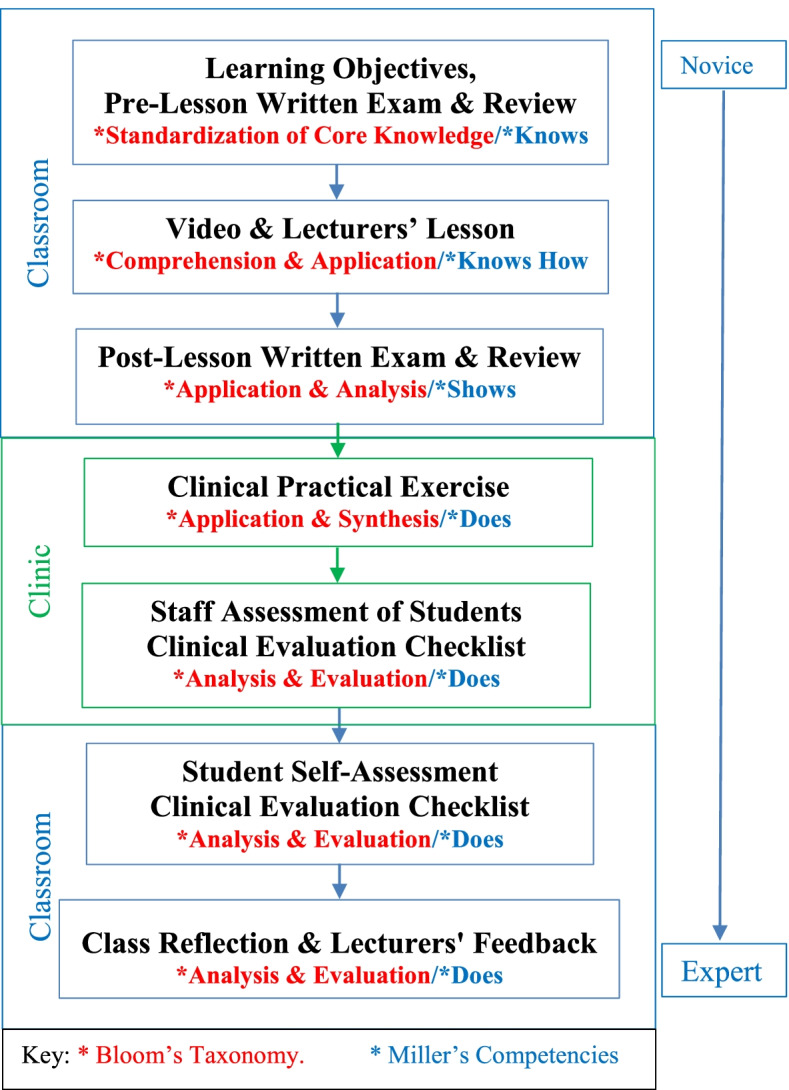
In 2014-2015, 55 third-year dental students completed three educational sessions comprising of (a) classroom teaching (lecture, video) with post-lesson written exam and (b) clinical activity with student self-assessment, staff assessment and student reflection. An intra-individual analysis approach, staff validation, and student scoring standardization were implemented. Cognitive (clinical competency) and non-cognitive (professionalism) items were separated in the analyses.
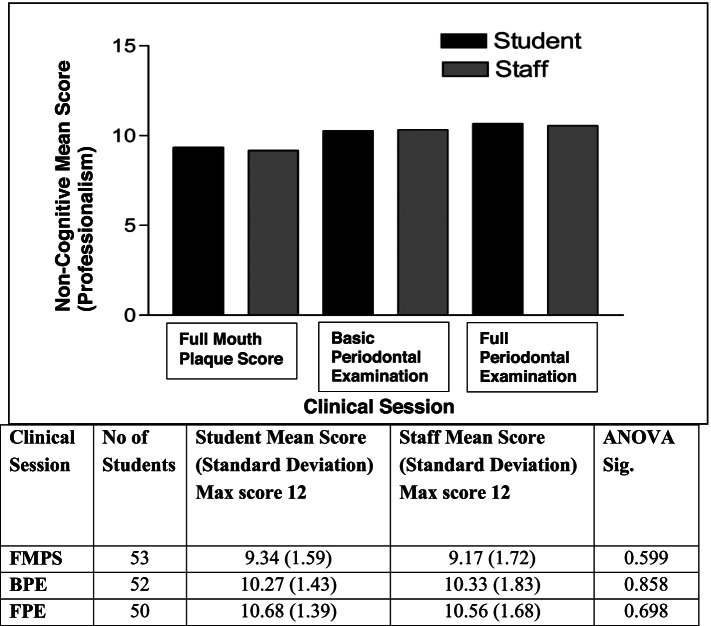
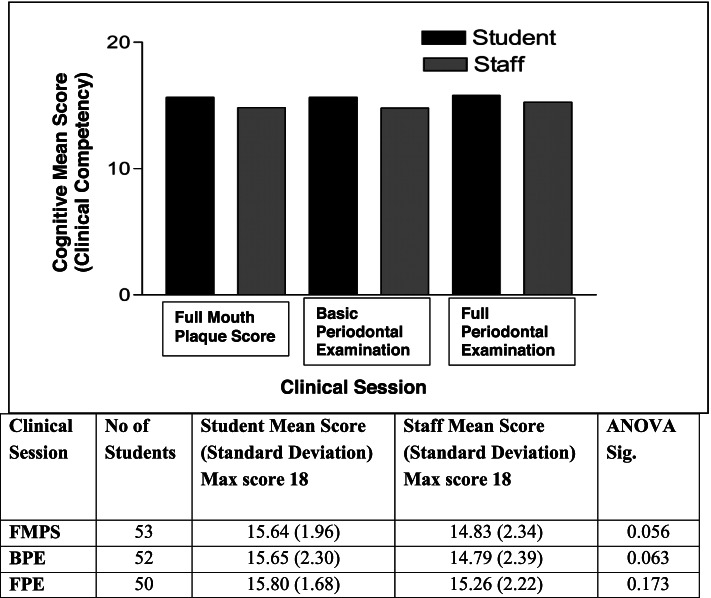
There were medium correlations (Spearman's rho, r) between student self-assessment and staff assessment scores for cognitive items (r, 0.32) and for non-cognitive items (r, 0.44) for all three combined sessions. There were large correlations for individual sessions. Compared to the post-lesson written exam, students showed small correlation (r, 0.22, 0.29) and staff showed medium correlation (r, 0.31, 0.34) for cognitive and non-cognitive items. Students showed improvements in their mean scores for both cognitive (t-test; p > 0.05) and non-cognitive items (t-test; p = 0.000). Mean scores of students were not different statistically from that of staff (p > 0.05).
Students may adequately act as self-assessors at the beginning of their clinical work in periodontology. Self-assessment may potentially improve the clinical performance. Self-assessment may be nurtured through clear guidelines, educational training strategies, feedback and reflection leading to better evaluative judgement and lifelong learning.
自我评估是牙科本科课程的强制性教育要求。它在早期临床培训中得到的支持较弱,并且研究因概念和方法上的不足而受到批评。本研究的目的是使用教育方法比较学生自我评估与员工评估和书面考试在早期临床培训中的一致性。
在 2014-2015 年,55 名三年级牙科学生完成了三个教育课程,包括(a)课堂教学(讲座、视频),课后有书面考试,以及(b)临床活动,包括学生自我评估、员工评估和学生反思。实施了个体分析方法、员工验证和学生评分标准化。在分析中,将认知(临床能力)和非认知(专业精神)项目分开。
对于认知项目(Spearman's rho,r,0.32)和非认知项目(r,0.44),学生自我评估和员工评估得分之间存在中等相关性(Spearman's rho,r),所有三个组合课程。对于个别课程,相关性较大。与课后书面考试相比,学生对认知(r,0.22,0.29)和非认知(r,0.31,0.34)项目的相关性较小,而员工的相关性为中等。学生的认知(t 检验;p>0.05)和非认知项目(t 检验;p=0.000)的平均分数均有所提高。学生的平均分数在统计学上与员工的分数没有差异(p>0.05)。
学生在牙周病学临床工作开始时可以充分担任自我评估者。自我评估可能会提高临床表现。通过明确的指导方针、教育培训策略、反馈和反思,可以培养自我评估能力,从而提高评估判断能力和终身学习能力。