Dhenge S A, Ghadge S N, Ahire M C, Gorantiwar S D, Shinde M G
Centre for Advanced Agriculture Science and Technology for Climate Smart Agriculture and Water Management, Mahatma Phule Krishi Vidyapeeth, Rahuri, Dist., Ahmednagar, Maharashtra 413722 India.
Environ Dev Sustain. 2022;24(12):13841-13886. doi: 10.1007/s10668-021-02015-6. Epub 2022 Jan 13.
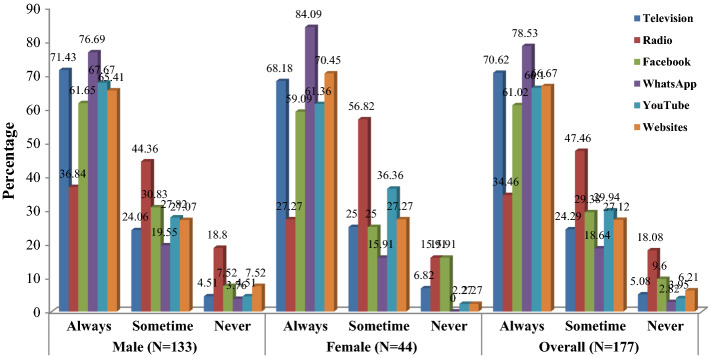
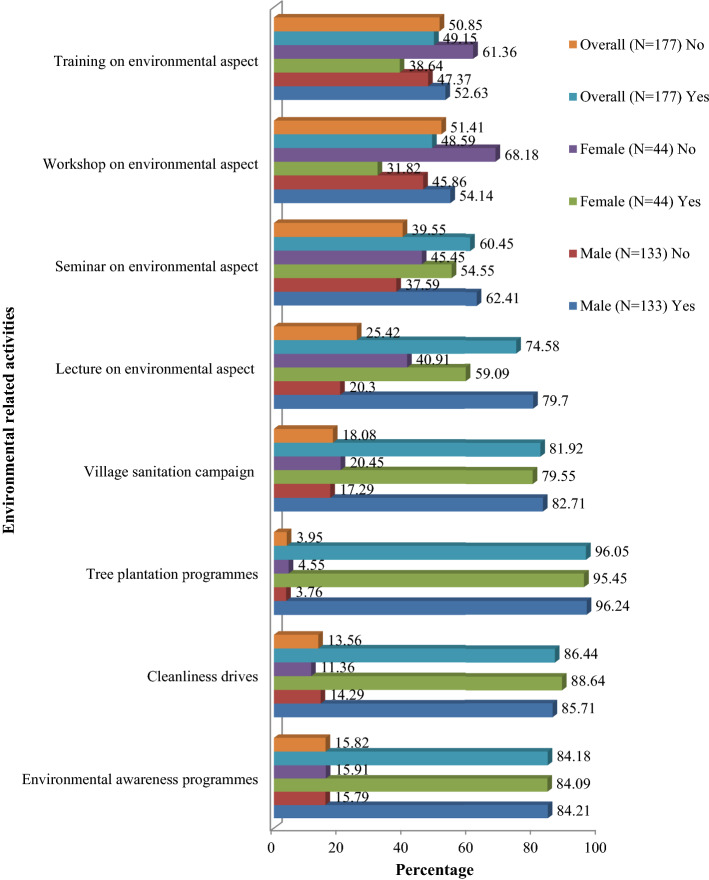
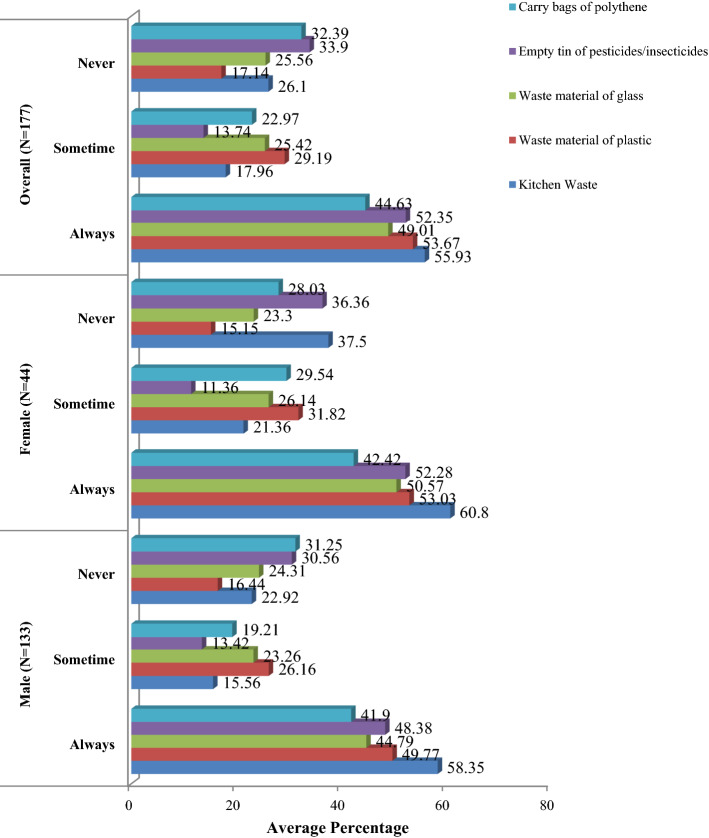
Attitude towards environmental protection is a crucial component in environmental safeguard psychology. It is a psychological tendency expressed by evaluating the environmental gender attitude with favour or disfavour. This study aimed to compare the attitude level of male and female trainees towards environmental protection based on personal, psychological and sociocultural variables by using an ex post facto research design. The research population was composed of the trainees (=177) who participated in the online training programmes organized from April 07 to May 31, 2020, by the Centre for Advanced Agricultural Science and Technology (CAAST) for Climate Smart Agriculture and Water Management (CSAWM), MPKV, Rahuri, Maharashtra, during COVID-19 lockdown period. In this study, an online survey method was used. The research instrument was a well-designed and structured online questionnaire using a Google Form consisting of two sections. The first section consisted of 11 independent variables of personal, psychological and sociocultural characteristics. The second section consisted of 17 environmental attitude questions focusing on closed structure questions with a five-point Likert scale, i.e. Strongly Agree to Strongly Disagree. The results revealed that age, training received, membership of environmental societies or organizations, courses taught, waste management and social media use significantly affect the trainees' attitudes to environment protection. The female respondents had a favourable environmental attitude when compared with the male respondents. Therefore, the study concluded that a set of factors influences the gender attitude of the online trainees. These factors alone cannot change trainees' attitudes towards environmental protection. Accordingly, necessary and appropriate conditions should be provided to change the attitude of male trainees for environmental protection. Sustained support is necessary to efficiently understand the role of gender in environment protection through government policies, social media, policymakers, scientists, extension workers, research organizations, various training programmes, participation of students and faculty in the environmental cleanliness drive and awareness programs, etc.
对环境保护的态度是环境保障心理学的一个关键组成部分。它是一种通过对环境性别态度进行赞成或反对的评价而表现出来的心理倾向。本研究旨在采用事后回溯研究设计,基于个人、心理和社会文化变量,比较男女学员对环境保护的态度水平。研究对象是2020年4月7日至5月31日期间,在新冠疫情封锁期间,由位于马哈拉施特拉邦拉胡里的MPKV先进农业科学技术中心(CAAST)为气候智能农业与水资源管理(CSAWM)组织的在线培训项目的学员(=177人)。在本研究中,采用了在线调查方法。研究工具是一份精心设计且结构合理的在线问卷,使用谷歌表单,由两部分组成。第一部分包括11个个人、心理和社会文化特征的自变量。第二部分包括17个环境态度问题,重点是采用五点李克特量表的封闭式结构问题,即从强烈同意到强烈不同意。结果显示,年龄、接受的培训、环境社团或组织的成员身份、所教授的课程、废物管理和社交媒体使用显著影响学员对环境保护的态度。与男性受访者相比,女性受访者对环境持更积极的态度。因此,该研究得出结论,一系列因素会影响在线学员的性别态度。仅这些因素并不能改变学员对环境保护的态度。因此,应该提供必要且合适的条件来改变男性学员对环境保护的态度。通过政府政策、社交媒体、政策制定者、科学家、推广人员、研究组织、各种培训项目、学生和教师参与环境清洁运动和意识项目等,持续的支持对于有效理解性别在环境保护中的作用是必要的。