
纳米材料在砂岩上的吸附作用。
Sorption of Nanomaterials to Sandstone Rock.
作者信息
Scheurer Christian, Hincapie Rafael E, Neubauer Elisabeth, Metz Astrid, Ness Daniel
机构信息
DPE Department Petroleum Engineering, Montanuniversität Leoben, Franz-Josef-Straße 18, 8700 Leoben, Austria.
OMV Upstream Technology & Innovation, TECH Center & Lab, OMV Exploration & Production GmbH, 1020 Vienna, Austria.
出版信息
Nanomaterials (Basel). 2022 Jan 7;12(2):200. doi: 10.3390/nano12020200.
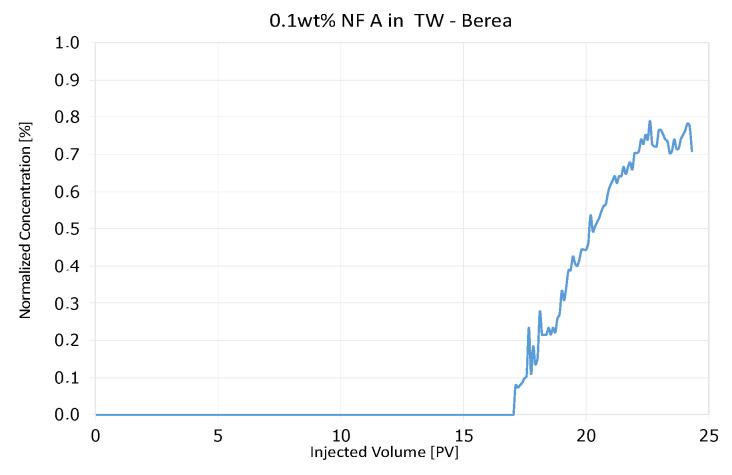
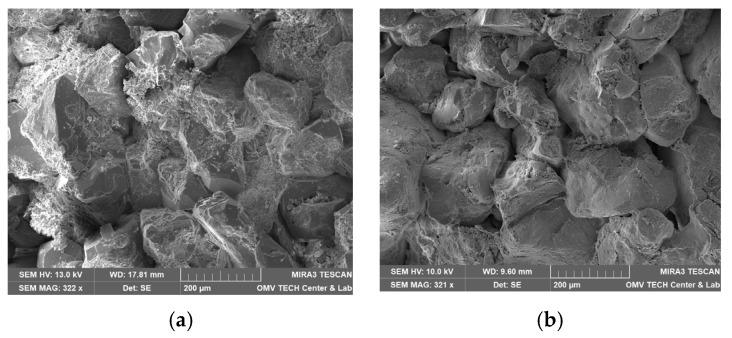
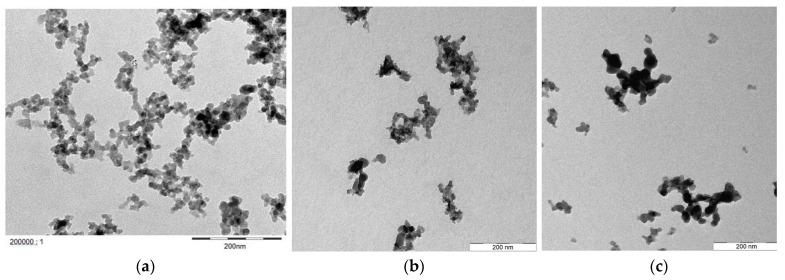
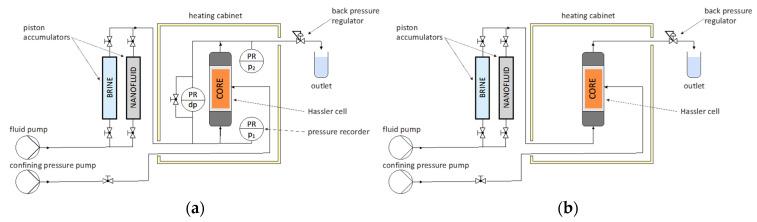
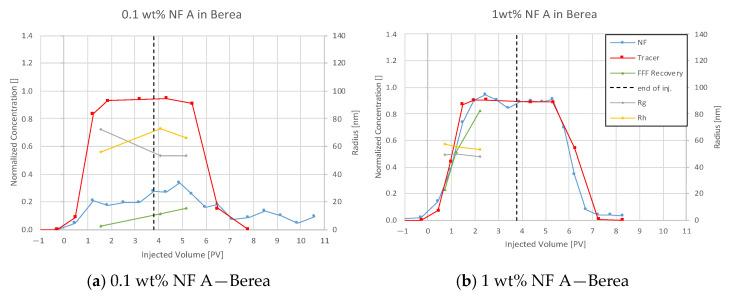
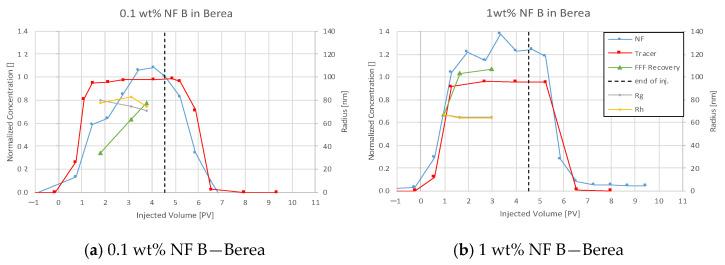
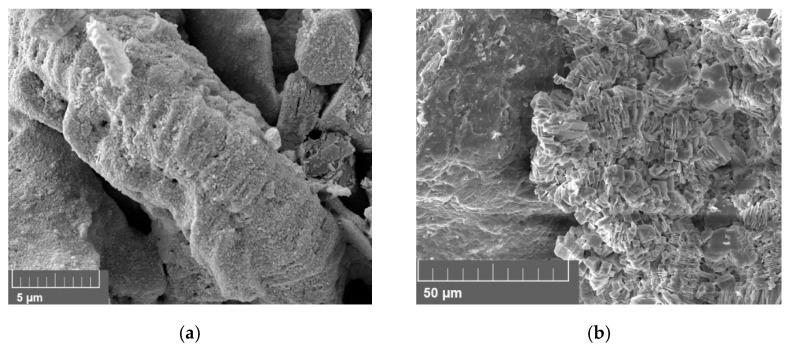
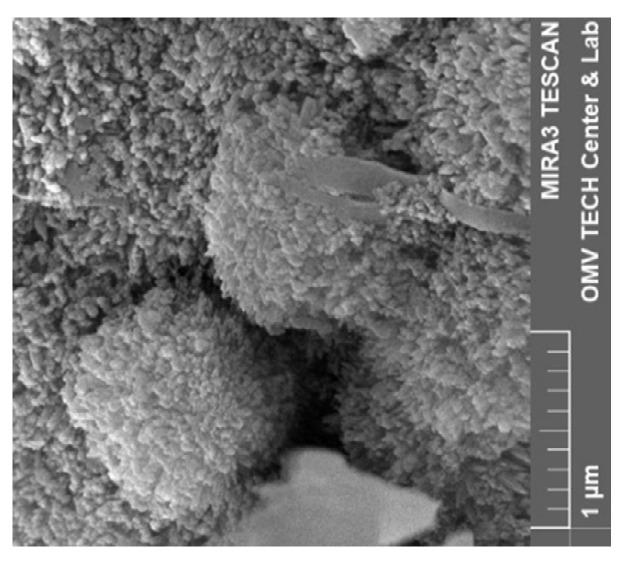
We investigated the interaction of silica nanostructured particles and sandstone rock using various experimental approaches, such as fluid compatibility, batch sorption and single-phase core-floods. Diol and polyethylenglycol (PEG) surface-modified nanostructured silica materials were tested using two brines differing in ionic strength and with the addition of sodium carbonate (NaCO). Berea and Keuper outcrop materials (core plug and crushed samples) were used. Core-flood effluents were analysed to define changes in concentration and a rock's retention compared to a tracer. Field Flow Fractionation (FFF) and Dynamic Light Scattering (DLS) were performed to investigate changes in the effluent's size distribution. Adsorption was evaluated using UV-visible spectroscopy and scanning electron microscopy (SEM). The highest adsorption was observed in brine with high ionic strength, whereas the use of alkali reduced the adsorption. The crushed material from Berea rock showed slightly higher adsorption compared to Keuper rock, whereas temperature had a minor effect on adsorption behaviour. In core-flood experiments, no effects on permeability have been observed. The used particles showed a delayed breakthrough compared to the tracer, and bigger particles passed the rock core faster. Nanoparticle recovery was significantly lower for PEG-modified nanomaterials in Berea compared to diol-modified nanomaterials, suggesting high adsorption. SEM images indicate that adsorption spots are defined via surface roughness rather than mineral type. Despite an excess of nanomaterials in the porous medium, monolayer adsorption was the prevailing type observed.
我们使用了多种实验方法研究了二氧化硅纳米结构颗粒与砂岩之间的相互作用,如流体相容性、批量吸附和单相岩心驱替实验。使用了两种离子强度不同且添加了碳酸钠(NaCO)的盐水,对二醇和聚乙二醇(PEG)表面改性的纳米结构二氧化硅材料进行了测试。使用了 Berea 和 Keuper 露头材料(岩心塞和粉碎样品)。对岩心驱替实验的流出物进行分析,以确定与示踪剂相比浓度的变化和岩石的保留情况。进行了场流分级(FFF)和动态光散射(DLS)实验,以研究流出物尺寸分布的变化。使用紫外可见光谱和扫描电子显微镜(SEM)评估吸附情况。在高离子强度的盐水中观察到最高的吸附量,而碱的使用降低了吸附量。与 Keuper 岩石相比,Berea 岩石的粉碎材料显示出略高的吸附量,而温度对吸附行为的影响较小。在岩心驱替实验中,未观察到对渗透率的影响。与示踪剂相比,所用颗粒的突破有所延迟,较大的颗粒更快地通过岩心。与二醇改性的纳米材料相比,Berea 中 PEG 改性的纳米材料的纳米颗粒回收率显著较低,表明吸附性高。SEM 图像表明,吸附位点是由表面粗糙度而非矿物类型决定的。尽管多孔介质中有过量的纳米材料,但观察到的主要吸附类型是单层吸附。










 Zotero 插件