Department of Urology, Kidney and Urology Center, The Seventh Affiliated Hospital, Sun Yat-sen University, 628 Zhenyuan Road, Shenzhen, 518107, China.
Department of Pathology, The Seventh Affiliated Hospital, Sun Yat-sen University, Shenzhen, 518107, China.
BMC Cancer. 2022 Jan 20;22(1):83. doi: 10.1186/s12885-022-09183-2.
Cancer cells prefer utilizing aerobic glycolysis in order to exacerbate tumor mass and maintain un-regulated proliferative rates. As a key glycolytic activator, phosphofructo-2-kinase/fructose-2,6-bisphosphatase 3 (PFKFB3) has been implicated in multiple tumor type progression. However, the specific function and clinical significance of PFKFB3 in renal cell carcinoma (RCC) are yet not clarified. This investigation assessed PFKFB3 roles in RCC.
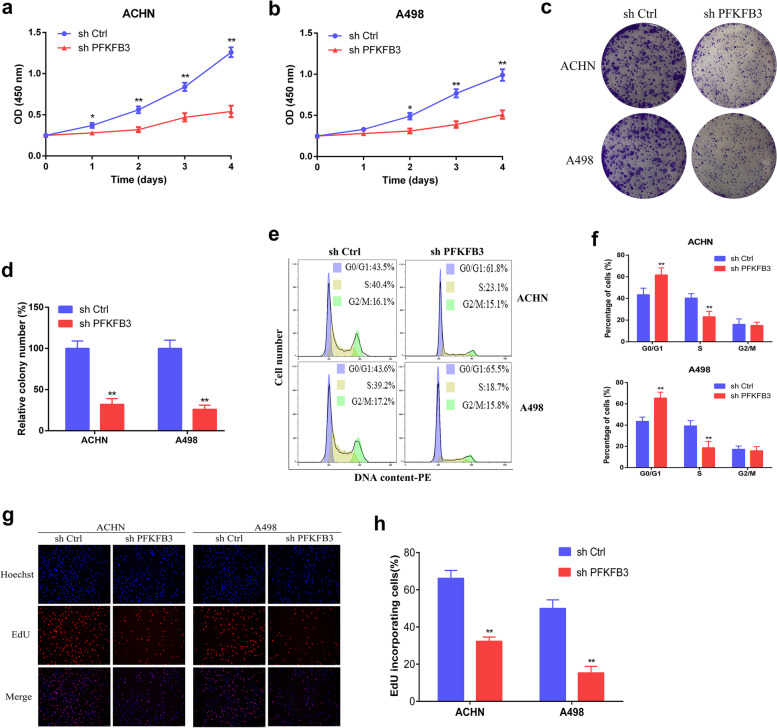
PFKFB3 expression levels were analyzed in clear cell renal cell carcinoma (ccRCC) tissues, together with its relationship with clinical characteristics of ccRCC. Real-time PCR and Western blot assays were employed for determining PFKFB3 expression in different RCC cell lines. Furthermore, we determined the glycolytic activity by glucose uptake, lactate secretion assay and ECAR analysis. CCK-8 assay, clone formation, flow cytometry and EdU assessments were performed for monitoring tumor proliferative capacity and cell-cycle distribution. Furthermore, a murine xenograft model was employed for investigating the effect of PFKFB3 on tumor growth in vivo.
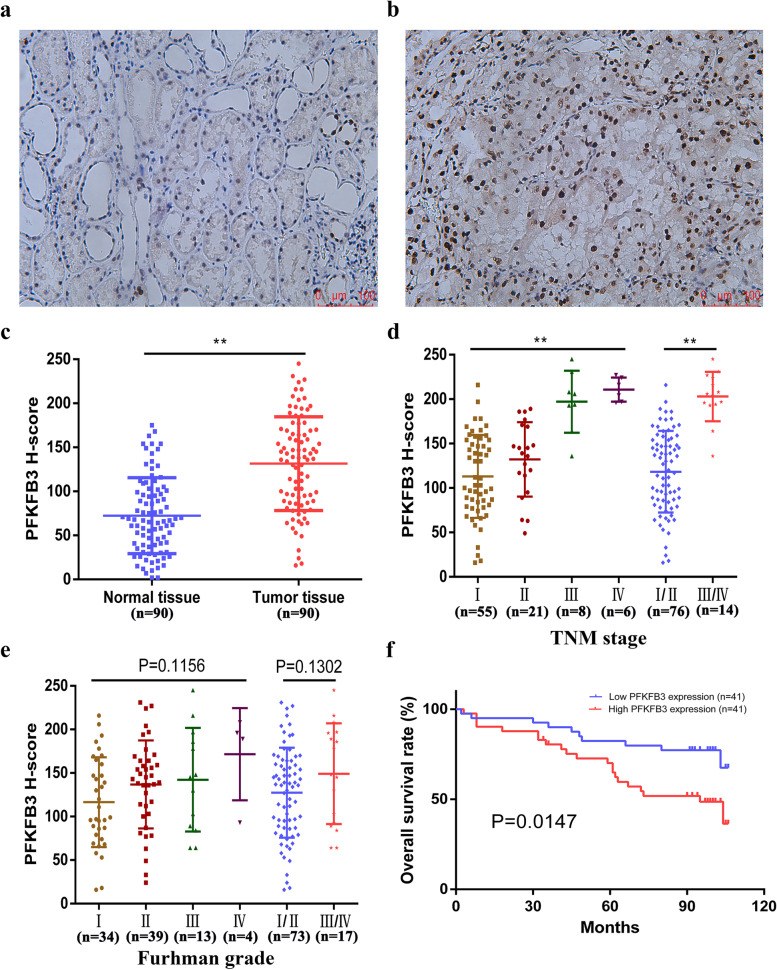
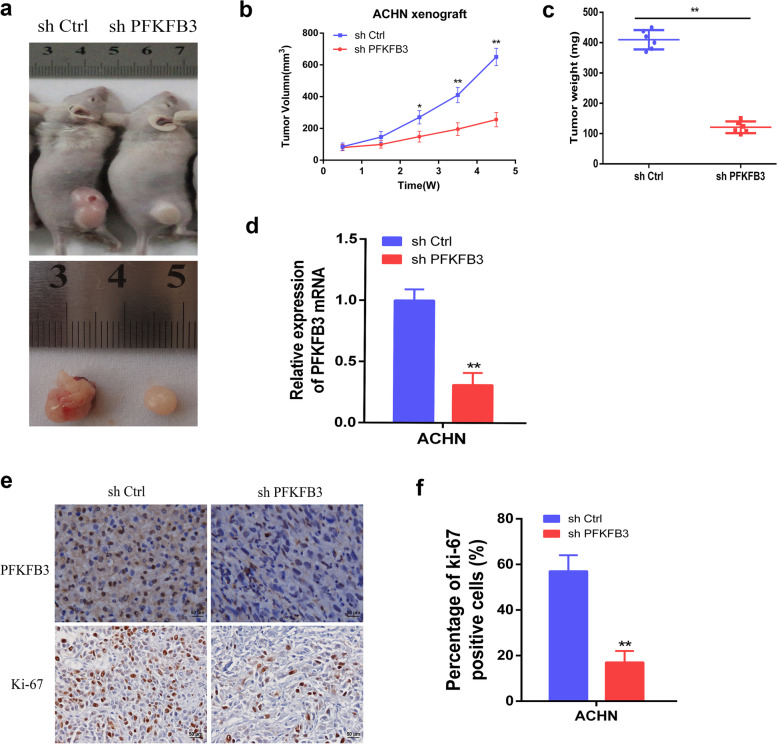
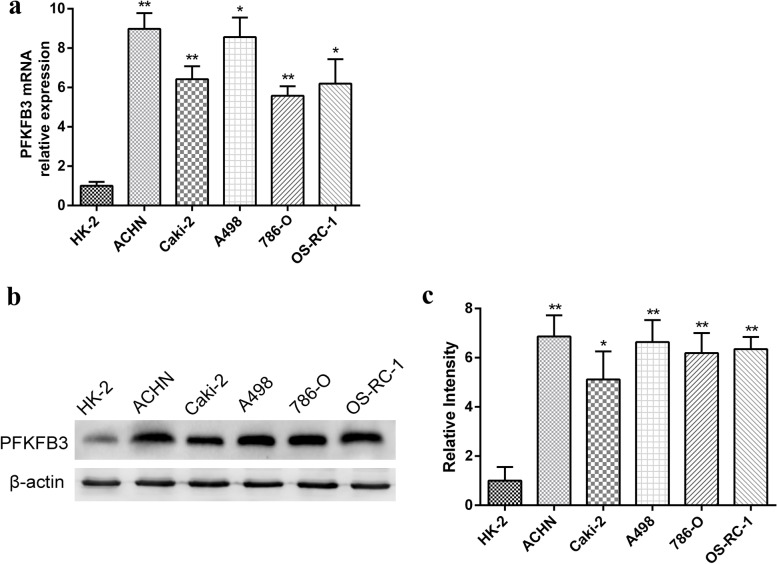
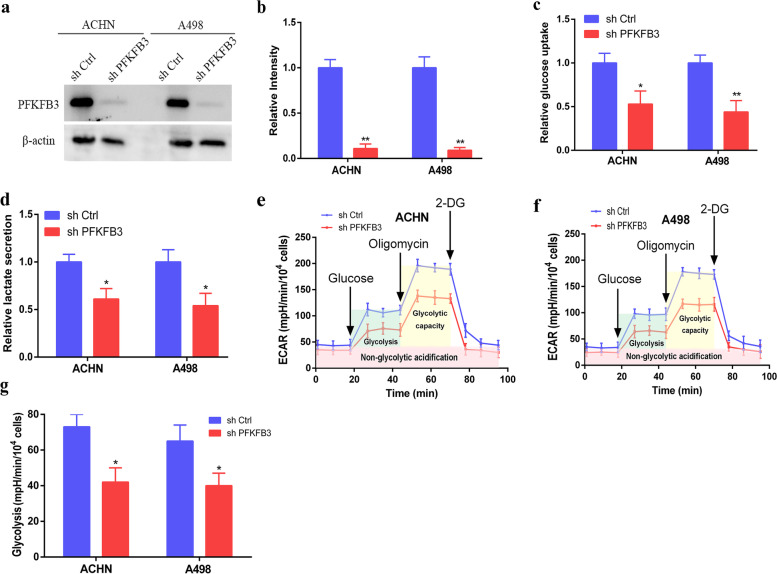
PFKFB3 was significantly up-regulated in RCC specimens and cell lines in comparison to normal control. Overexpression of PFKFB3 was directly correlated to later TNM stages, thus becoming a robust prognostic biomarker for ccRCC cases. Furthermore, PFKFB3 knockdown suppressed cell glycolysis, proliferative rate and cell-cycle G1/S conversion in RCC cells. Importantly, in vivo experiments confirmed that PFKFB3 knockdown delayed tumor growth derived from the ACHN cell line.
Such results suggest that PFKFB3 is a key molecular player in RCC progression via mediating glycolysis / proliferation and provides a potential therapeutic target against RCC.
癌细胞为了加剧肿瘤质量和维持不受调节的增殖速率,更倾向于有氧糖酵解。磷酸果糖-2-激酶/果糖-2,6-二磷酸酶 3(PFKFB3)作为一种关键的糖酵解激活剂,已被牵涉到多种肿瘤类型的进展中。然而,PFKFB3 在肾细胞癌(RCC)中的具体功能和临床意义尚不清楚。本研究评估了 PFKFB3 在 RCC 中的作用。
分析了透明细胞肾细胞癌(ccRCC)组织中的 PFKFB3 表达水平及其与 ccRCC 临床特征的关系。采用实时 PCR 和 Western blot 检测不同 RCC 细胞系中 PFKFB3 的表达。此外,通过葡萄糖摄取、乳酸分泌测定和 ECAR 分析来确定糖酵解活性。通过 CCK-8 测定、克隆形成、流式细胞术和 EdU 评估来监测肿瘤增殖能力和细胞周期分布。此外,还构建了一个小鼠异种移植模型来研究 PFKFB3 对体内肿瘤生长的影响。
与正常对照相比,PFKFB3 在 RCC 标本和细胞系中显著上调。PFKFB3 的过表达与较晚的 TNM 分期直接相关,因此成为 ccRCC 病例的一个强有力的预后生物标志物。此外,PFKFB3 敲低抑制了 RCC 细胞的糖酵解、增殖率和细胞周期 G1/S 转换。重要的是,体内实验证实 PFKFB3 敲低延迟了 ACHN 细胞系来源的肿瘤生长。
这些结果表明,PFKFB3 通过调节糖酵解/增殖是 RCC 进展的关键分子参与者,并为治疗 RCC 提供了一个潜在的治疗靶点。