Guangzhou University of Chinese Medicine, 510000 Guangzhou, China.
Southern Medical University, 510000 Guangzhou, China.
Comput Math Methods Med. 2022 Jan 13;2022:3197402. doi: 10.1155/2022/3197402. eCollection 2022.
To explore the active compounds and targets of cinobufotalin (huachansu) compared with the osteosarcoma genes to obtain the potential therapeutic targets and pharmacological mechanisms of action of cinobufotalin on osteosarcoma through network pharmacology.
The composition of cinobufotalin was searched by literature retrieval, and the target was selected from the CTD and TCMSP databases. The osteosarcoma genes, found from the GeneCards, OMIM, and other databases, were compared with the cinobufotalin targets to obtain potential therapeutic targets. The protein-protein interaction (PPI) network of potential therapeutic targets, constructed through the STRING database, was inputted into Cytoscape software to calculate the hub genes, using the NetworkAnalyzer. The hub genes were inputted into the Kaplan-Meier Plotter online database for exploring the survival curve. Functional enrichment analysis was identified using the DAVID database.
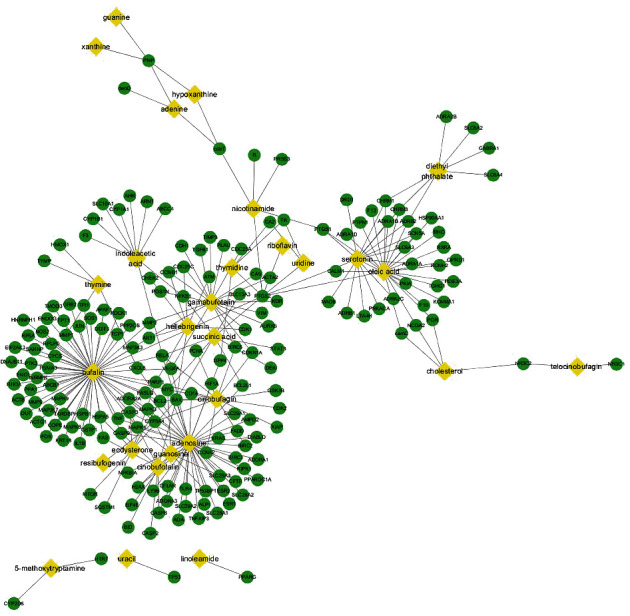
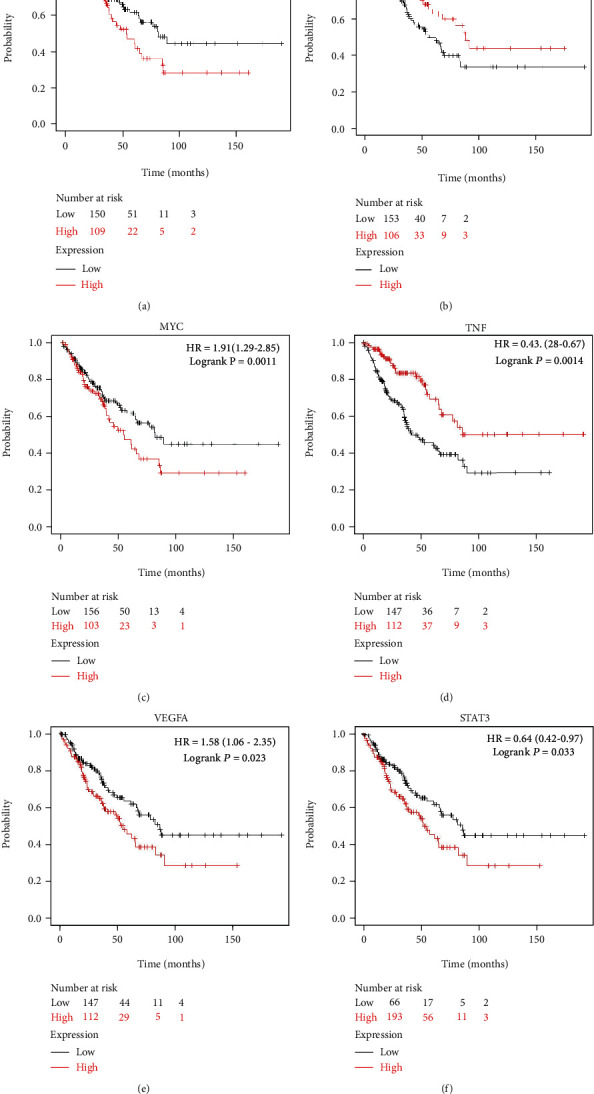
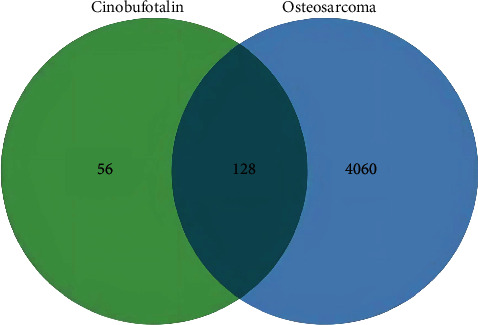
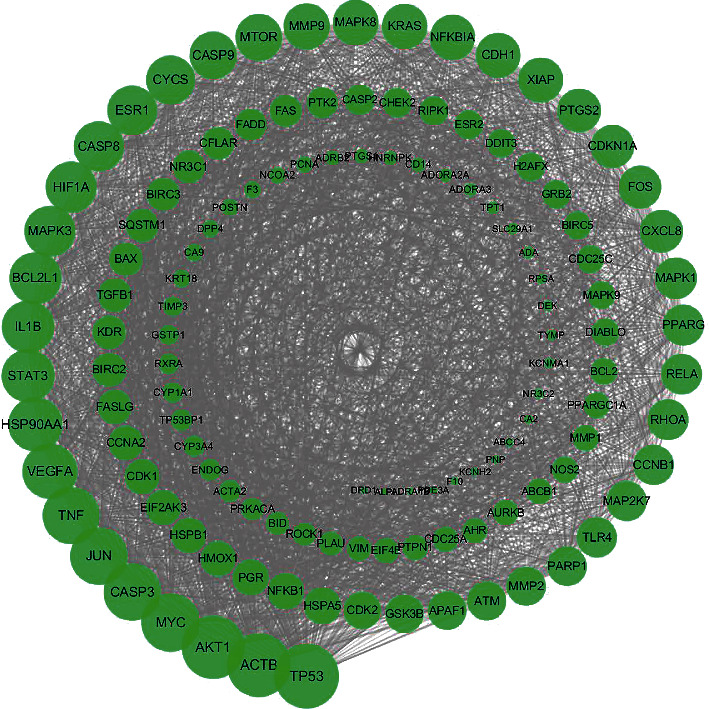
28 main active compounds of cinobufotalin were explored, including bufalin, adenosine, oleic acid, and cinobufagin. 128 potential therapeutic targets on osteosarcoma are confirmed among 184 therapeutic targets form cinobufotalin. The hub genes included TP53, ACTB, AKT1, MYC, CASP3, JUN, TNF, VEGFA, HSP90AA1, and STAT3. Among the hub genes, TP53, ACTB, MYC, TNF, VEGFA, and STAT3 affect the patient survival prognosis of sarcoma. Through function enrichment analysis, it is found that the main mechanisms of cinobufotalin on osteosarcoma include promoting sarcoma apoptosis, regulating the cell cycle, and inhibiting proliferation and differentiation.
The possible mechanisms of cinobufotalin against osteosarcoma are preliminarily predicted through network pharmacology, and further experiments are needed to prove these predictions.
通过网络药理学,探索华蟾素(huachansu)与骨肉瘤基因的活性化合物和靶点,获得华蟾素治疗骨肉瘤的潜在治疗靶点和作用机制。
通过文献检索查找华蟾素的组成,从 CTD 和 TCMSP 数据库中选择靶点。从 GeneCards、OMIM 等数据库中找到骨肉瘤基因,与华蟾素靶点进行比较,获得潜在的治疗靶点。通过 STRING 数据库构建潜在治疗靶点的蛋白质-蛋白质相互作用(PPI)网络,将其输入 Cytoscape 软件计算 hub 基因,使用 NetworkAnalyzer。将 hub 基因输入 Kaplan-Meier Plotter 在线数据库,以探索生存曲线。使用 DAVID 数据库进行功能富集分析。
探索了华蟾素的 28 种主要活性化合物,包括蟾毒灵、腺苷、油酸和华蟾毒精。在华蟾素的 184 个治疗靶点中,确定了 128 个潜在的骨肉瘤治疗靶点。hub 基因包括 TP53、ACTB、AKT1、MYC、CASP3、JUN、TNF、VEGFA、HSP90AA1 和 STAT3。在 hub 基因中,TP53、ACTB、MYC、TNF、VEGFA 和 STAT3 影响肉瘤患者的生存预后。通过功能富集分析,发现华蟾素治疗骨肉瘤的主要机制包括促进肉瘤细胞凋亡、调节细胞周期、抑制增殖和分化。
通过网络药理学初步预测了华蟾素治疗骨肉瘤的可能机制,需要进一步实验来验证这些预测。