Department of Immunology, University of Texas Southwestern Medical Center, Dallas, Texas, USA.
Genetics, Disease, and Development Graduate Program, University of Texas Southwestern Medical Center, Dallas, Texas, USA.
mBio. 2022 Feb 22;13(1):e0209621. doi: 10.1128/mbio.02096-21. Epub 2022 Jan 25.
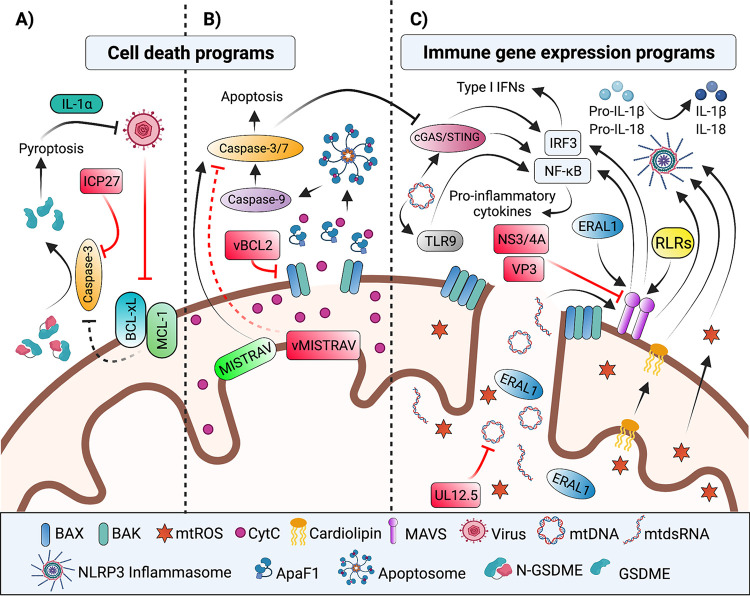
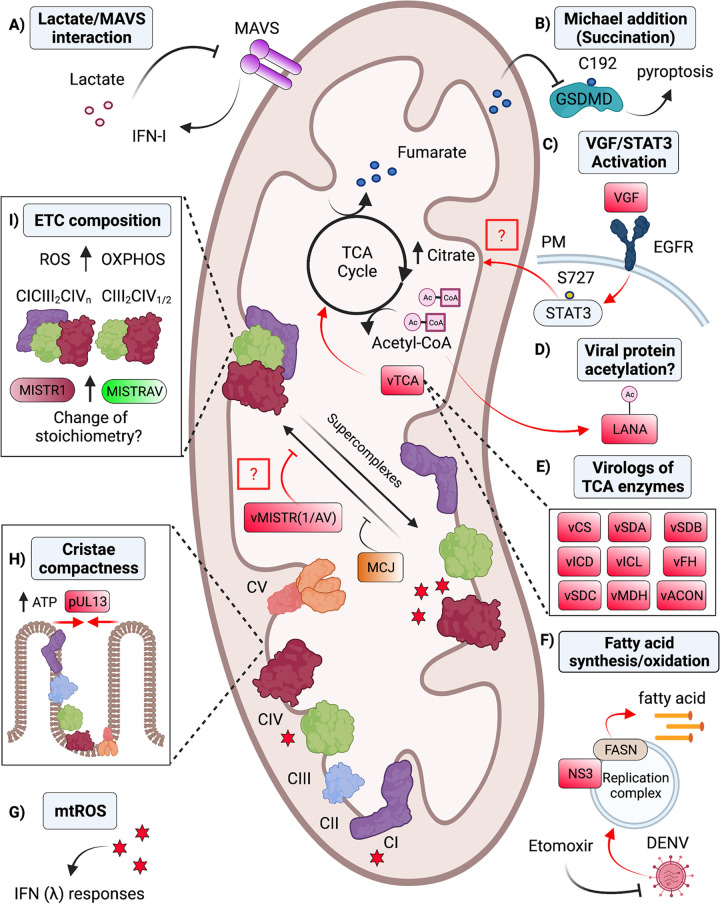
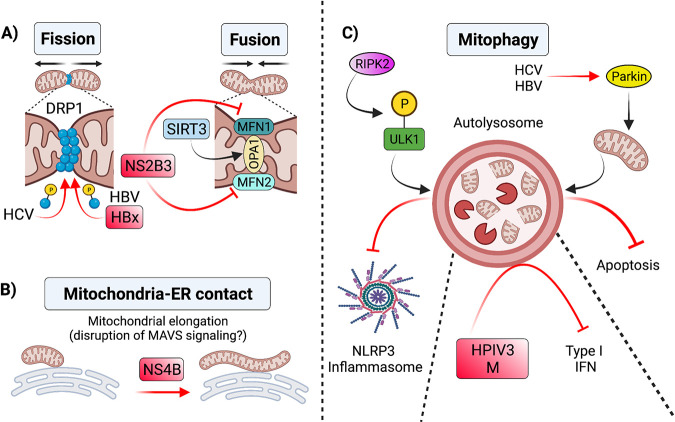
Mitochondria are dynamic organelles vital for energy production with now appreciated roles in immune defense. During microbial infection, mitochondria serve as signaling hubs to induce immune responses to counteract invading pathogens like viruses. Mitochondrial functions are central to a variety of antiviral responses including apoptosis and type I interferon signaling (IFN-I). While apoptosis and IFN-I mediated by itochondrial ntiviral ignaling (MAVS) are well-established defenses, new dimensions of mitochondrial biology are emerging as battlefronts during viral infection. Increasingly, it has become apparent that mitochondria serve as reservoirs for distinct cues that trigger immune responses and that alterations in mitochondrial morphology may also tip infection outcomes. Furthermore, new data are foreshadowing pivotal roles for classic, homeostatic facets of this organelle as host-virus interfaces, namely, the riarboxylic cid (TCA) cycle and lectron ransport hain (ETC) complexes like respiratory supercomplexes. Underscoring the importance of "housekeeping" mitochondrial activities in viral infection is the growing list of viral-encoded inhibitors including mimics derived from cellular genes that antagonize these functions. For example, virologs for ETC factors and several enzymes from the TCA cycle have been recently identified in DNA virus genomes and serve to pinpoint new vulnerabilities during infection. Here, we highlight recent advances for known antiviral functions associated with mitochondria as well as where the next battlegrounds may be based on viral effectors. Collectively, new methodology and mechanistic insights over the coming years will strengthen our understanding of how an ancient molecular truce continues to defend cells against viruses.
线粒体是一种动态细胞器,对于能量生产至关重要,其在免疫防御中的作用现在也得到了认可。在微生物感染期间,线粒体充当信号枢纽,引发免疫反应以抵抗病毒等入侵病原体。线粒体的功能是多种抗病毒反应的核心,包括细胞凋亡和 I 型干扰素信号(IFN-I)。虽然线粒体抗病毒信号(MAVS)介导的细胞凋亡和 IFN-I 是成熟的防御机制,但线粒体生物学的新维度正在成为病毒感染的前沿阵地。越来越明显的是,线粒体作为触发免疫反应的独特信号的储存库,线粒体形态的改变也可能影响感染结果。此外,新数据预示着该细胞器的经典、稳态方面作为宿主-病毒界面的关键作用,即三羧酸(TCA)循环和电子传递链(ETC)复合物,如呼吸超级复合物。在病毒感染中,“管家”线粒体活动的重要性不断增加,越来越多的病毒编码抑制剂包括来自细胞基因的模拟物,这些抑制剂拮抗这些功能。例如,ETC 因子和 TCA 循环中的几种酶的病毒学最近在 DNA 病毒基因组中被发现,这些发现为感染期间确定新的弱点提供了依据。在这里,我们重点介绍了与线粒体相关的已知抗病毒功能的最新进展,以及基于病毒效应子的下一个战场可能在哪里。总的来说,未来几年新的方法和机制见解将加强我们对古老的分子休战如何继续保护细胞免受病毒侵害的理解。