Department of Molecular Biology, Princeton University, Lewis Thomas Laboratory, Princeton, NJ, United States of America.
PLoS Pathog. 2021 Apr 15;17(4):e1009506. doi: 10.1371/journal.ppat.1009506. eCollection 2021 Apr.
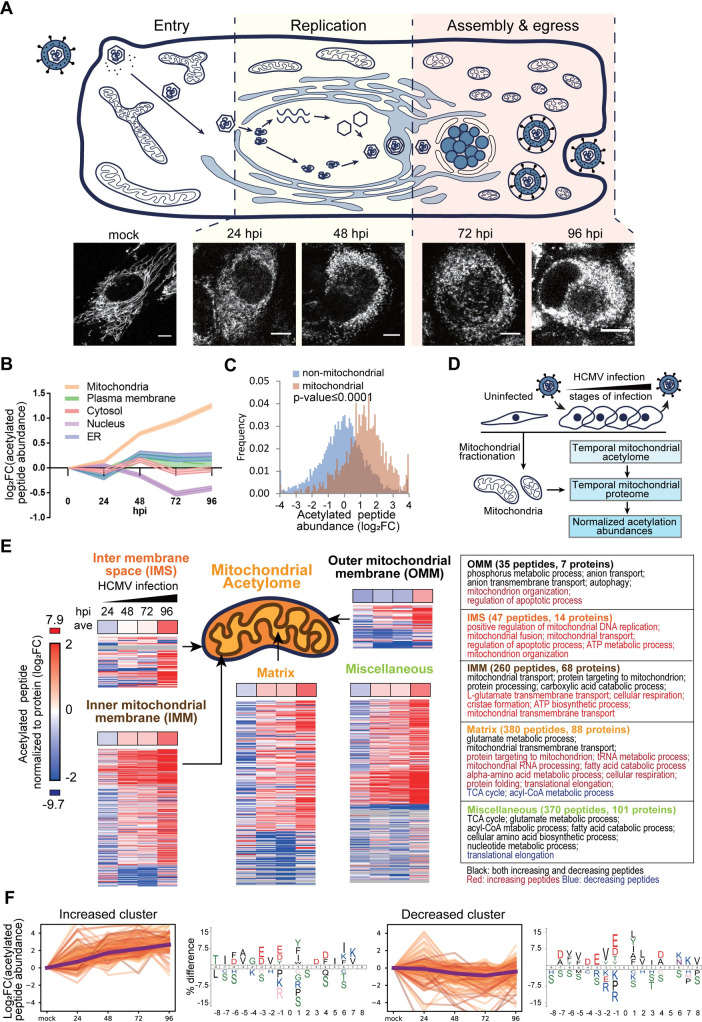
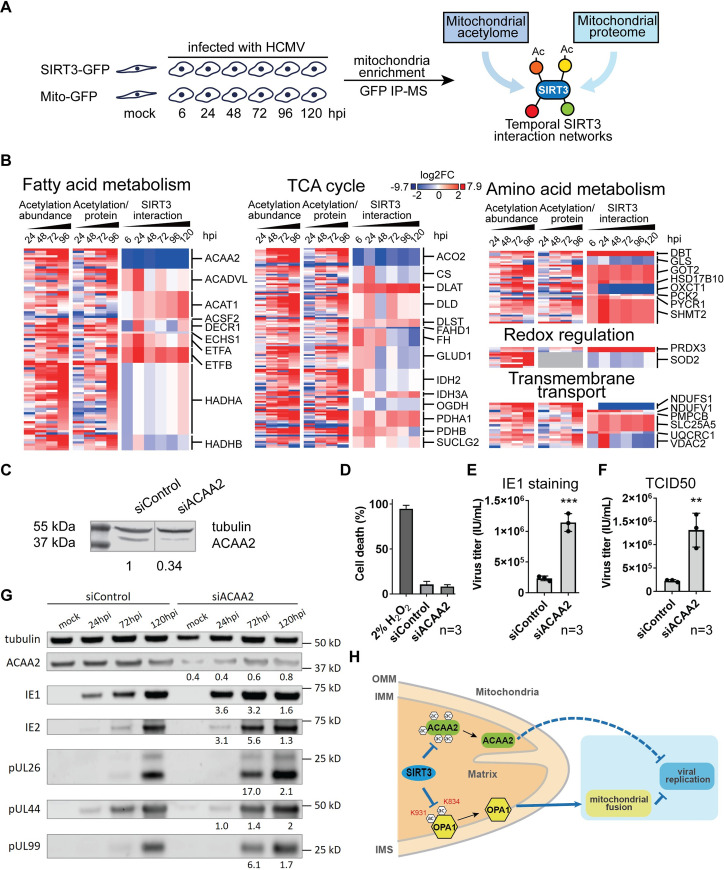
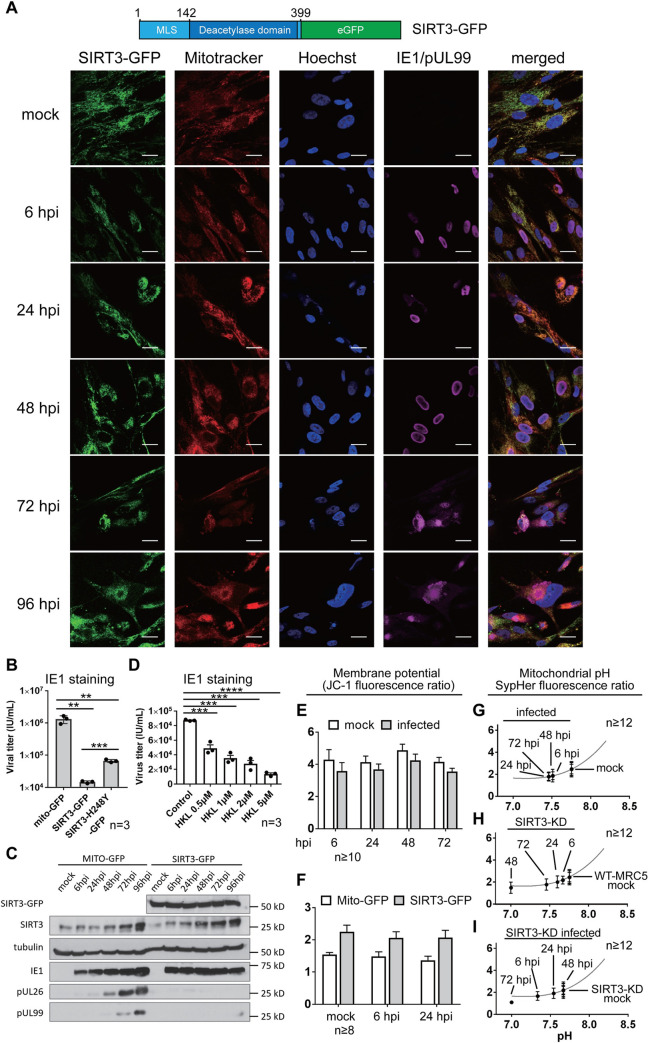
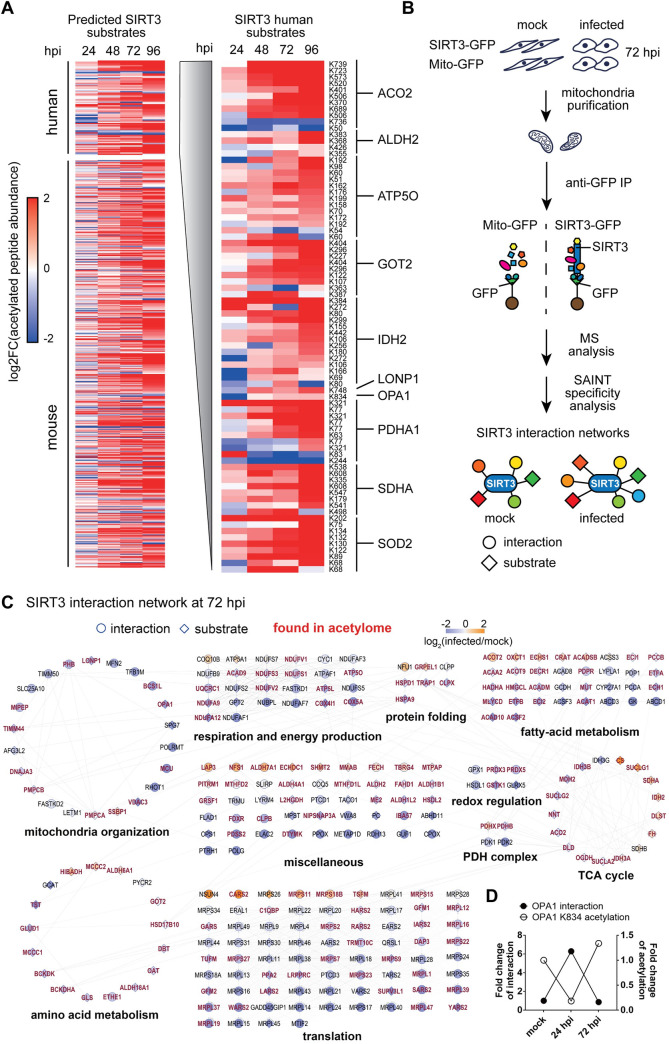
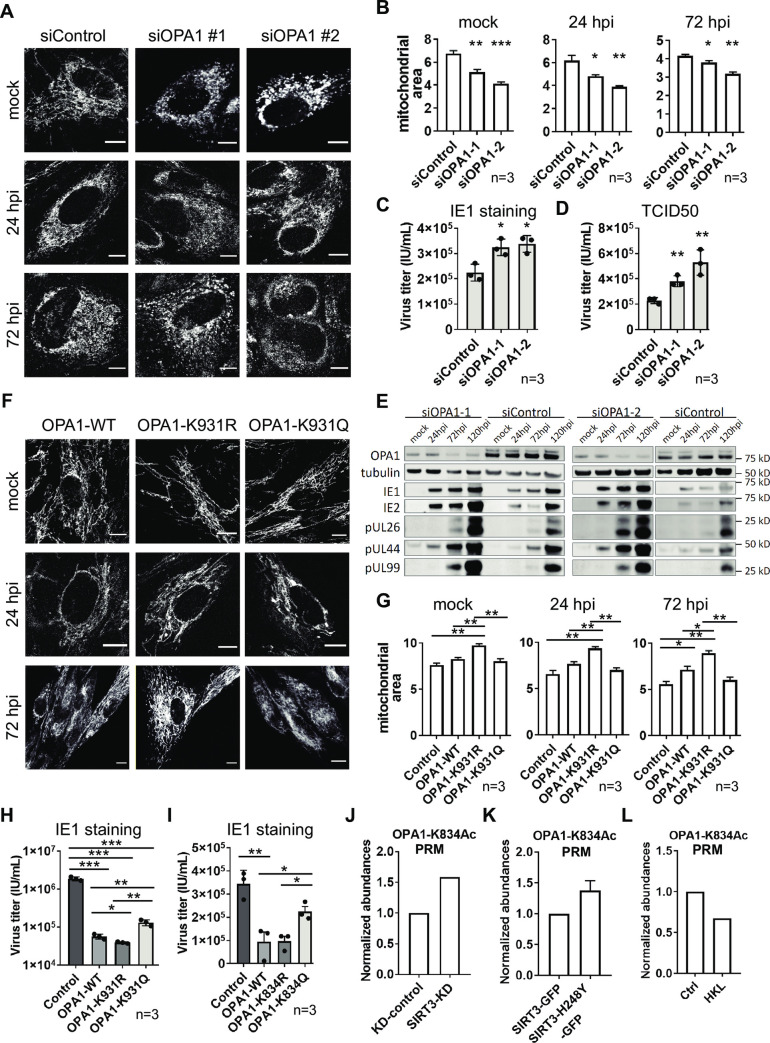
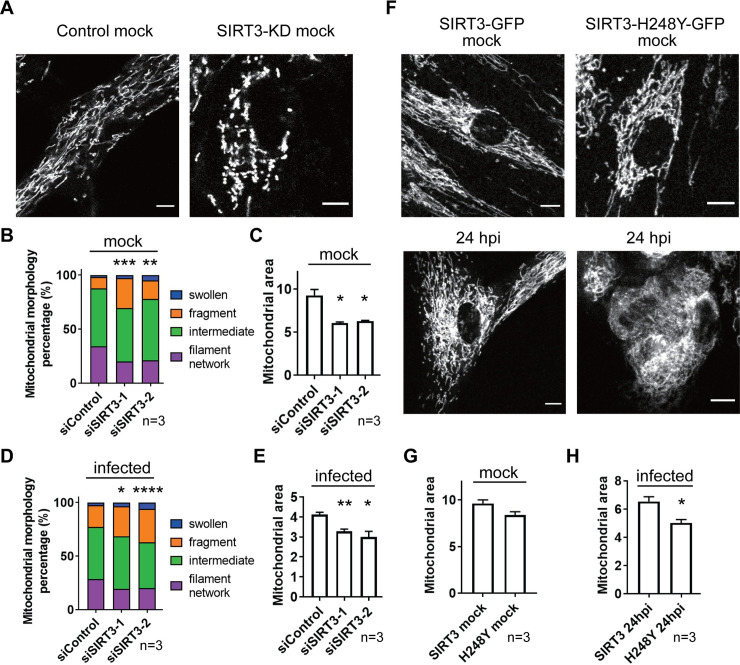
Regulation of mitochondrial structure and function is a central component of infection with viruses, including human cytomegalovirus (HCMV), as a virus means to modulate cellular metabolism and immune responses. Here, we link the activity of the mitochondrial deacetylase SIRT3 and global mitochondrial acetylation status to host antiviral responses via regulation of both mitochondrial structural integrity and metabolism during HCMV infection. We establish that SIRT3 deacetylase activity is necessary for suppressing virus production, and that SIRT3 maintains mitochondrial pH and membrane potential during infection. By defining the temporal dynamics of SIRT3-substrate interactions during infection, and overlaying acetylome and proteome information, we find altered SIRT3 associations with the mitochondrial fusion factor OPA1 and acetyl-CoA acyltransferase 2 (ACAA2), concomitant with changes in their acetylation levels. Using mutagenesis, microscopy, and virology assays, we determine OPA1 regulates mitochondrial morphology of infected cells and inhibits HCMV production. OPA1 acetylation status modulates these functions, and we establish K834 as a site regulated by SIRT3. Control of SIRT3 protein levels or enzymatic activity is sufficient for regulating mitochondrial filamentous structure. Lastly, we establish a virus restriction function for ACAA2, an enzyme involved in fatty acid beta-oxidation. Altogether, we highlight SIRT3 activity as a regulatory hub for mitochondrial acetylation and morphology during HCMV infection and point to global acetylation as a reflection of mitochondrial health.
线粒体结构和功能的调节是病毒感染的核心组成部分,包括人类巨细胞病毒(HCMV),因为病毒意味着调节细胞代谢和免疫反应。在这里,我们将线粒体去乙酰化酶 SIRT3 的活性和全局线粒体乙酰化状态与宿主抗病毒反应联系起来,通过调节 HCMV 感染期间的线粒体结构完整性和代谢。我们确定 SIRT3 去乙酰化酶活性对于抑制病毒产生是必要的,并且 SIRT3 在感染过程中维持线粒体 pH 值和膜电位。通过定义感染过程中 SIRT3 底物相互作用的时间动态,并覆盖乙酰基组和蛋白质组信息,我们发现 SIRT3 与线粒体融合因子 OPA1 和乙酰辅酶 A 酰基转移酶 2(ACAA2)的关联发生改变,同时它们的乙酰化水平也发生变化。通过突变、显微镜和病毒学测定,我们确定 OPA1 调节感染细胞的线粒体形态并抑制 HCMV 产生。OPA1 的乙酰化状态调节这些功能,我们确定 K834 是受 SIRT3 调节的位点。控制 SIRT3 蛋白水平或酶活性足以调节线粒体丝状结构。最后,我们确定了参与脂肪酸β氧化的酶 ACAA2 的病毒限制功能。总之,我们强调了 SIRT3 活性作为 HCMV 感染期间线粒体乙酰化和形态的调节中心,并指出全局乙酰化是线粒体健康的反映。