Meng Dan, Mao Yifei, Song Quan-Mei, Yan Chun-Chun, Zhao Qin-Yu, Yang Mengqi, Xiang Guangxin, Song Yongmei
Institute of Literature and Culture of Traditional Chinese Medicine, Shandong University of Traditional Chinese Medicine, Jinan, Shandong 250355, China.
Institute of Acupuncture, Moxibustion, and Massage, Shandong University of Traditional Chinese Medicine, Jinan, Shandong 250355, China.
Evid Based Complement Alternat Med. 2022 Jan 15;2022:9922879. doi: 10.1155/2022/9922879. eCollection 2022.
This meta-analysis aimed to assess the efficacy and safety of transcutaneous acupoint electrical stimulation (TEAS) for postoperative pain in laparoscopy. The review has been registered on the "INPLASY" website and the registration number is INPLASY202150101.
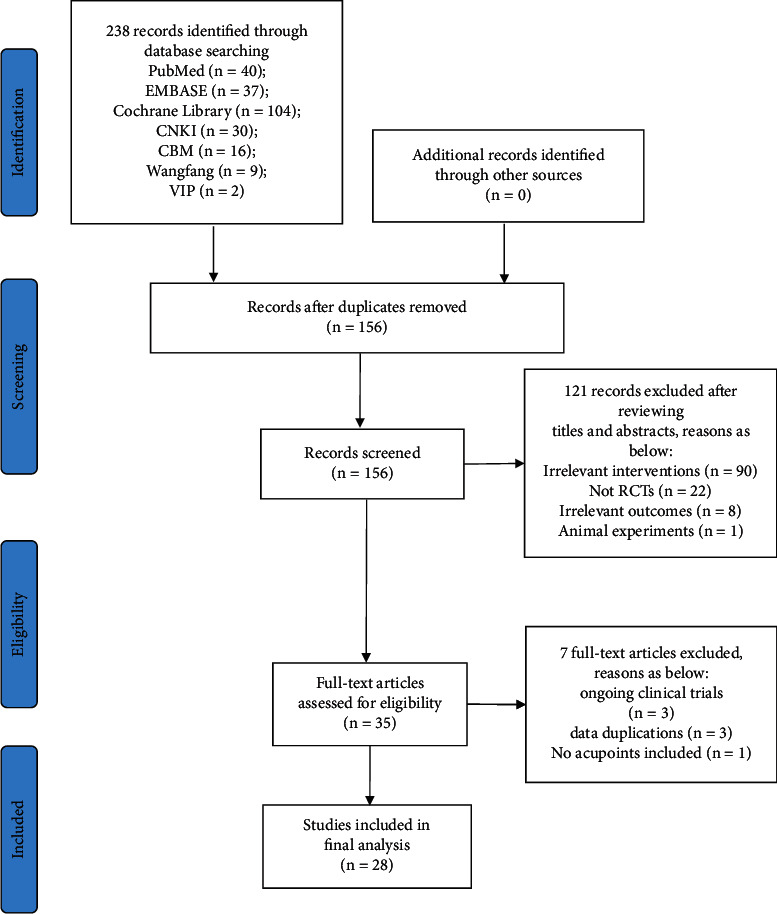
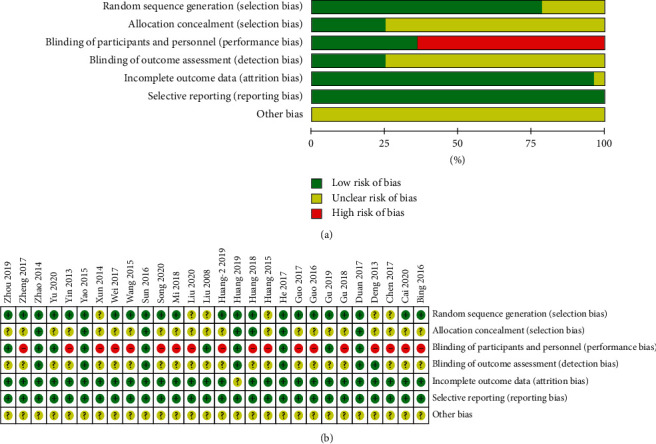
Relevant randomized controlled trials are selected from seven electronic databases (PubMed, the Cochrane Library, Embase, China National Knowledge Infrastructure, Chongqing VIP Information, WanFang Data, and Chinese Biomedical Database) from their inception up to November 30, 2020. Twenty-eight studies were included in this meta-analysis, and the statistical analyses and the exploration of heterogeneity sources were conducted by Stata 15.0 software. Besides, the bias assessment of the included studies was evaluated using the Cochrane risk of bias tool.
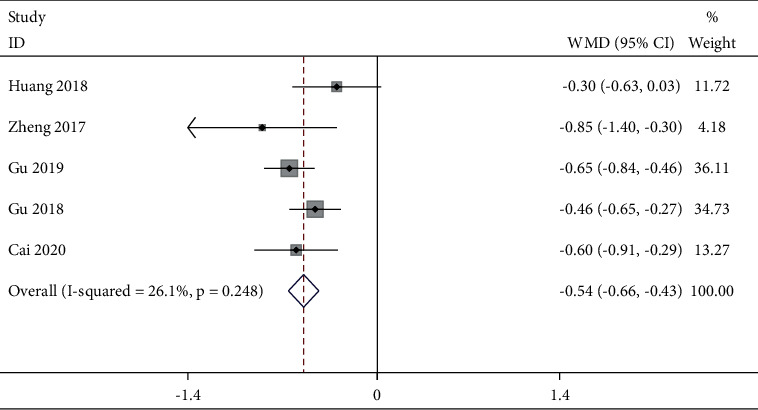
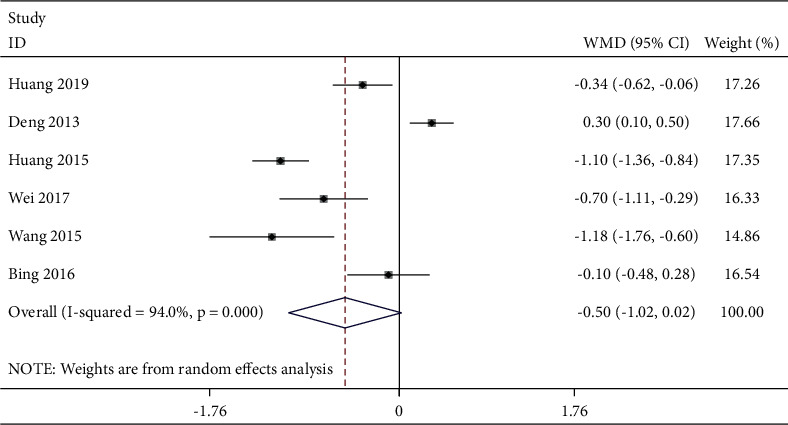
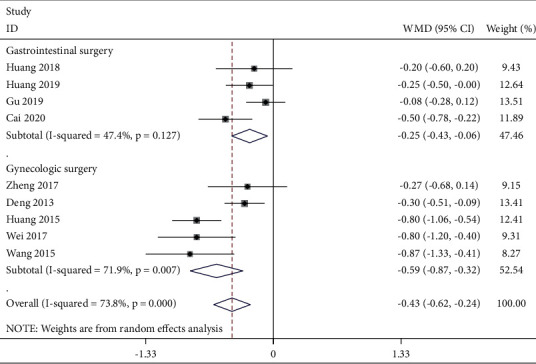
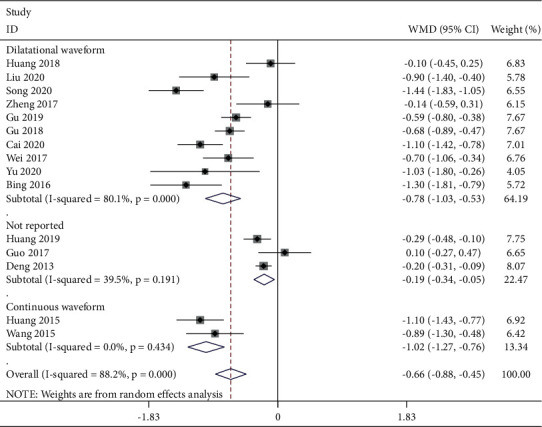
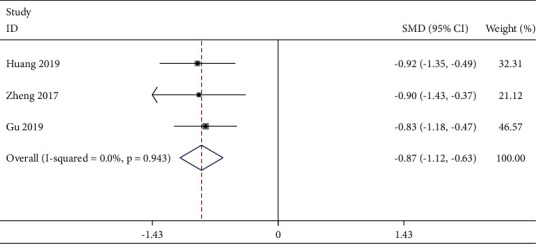
In total, 28 RCTs covering 2787 participants were included. The meta-analysis suggested that TEAS can effectively relieve pain in the short term after laparoscopy, reduce the postoperative consumption of rescue analgesics, improve the quality of life of patients, and shorten the length of hospitalization. And no serious adverse events are related to TEAS. Therefore, TEAS is relatively safe and efficacy for clinical application. The most used acupoints were Hegu (LI14), Neiguan (PC6), and Zusanli (ST36).
TEAS can be recommended as a complementary and alternative therapy for the treatment of postoperative pain after laparoscopy. However, the included RCTs had some methodological limitations. Therefore, larger-size, more rigorous, and higher-quality RCTs are needed in the future to further explore the efficacy and safety of TEAS for postoperative pain after laparoscopy.
本荟萃分析旨在评估经皮穴位电刺激(TEAS)用于腹腔镜手术后疼痛的疗效和安全性。该综述已在“INPLASY”网站注册,注册号为INPLASY202150101。
从七个电子数据库(PubMed、Cochrane图书馆、Embase、中国知网、重庆维普资讯、万方数据和中国生物医学数据库)中选取从建库至2020年11月30日的相关随机对照试验。本荟萃分析纳入了28项研究,并使用Stata 15.0软件进行统计分析和异质性来源探索。此外,使用Cochrane偏倚风险工具对纳入研究进行偏倚评估。
总共纳入了28项随机对照试验,涉及2787名参与者。荟萃分析表明,TEAS可有效缓解腹腔镜手术后短期内的疼痛,减少术后急救镇痛药的使用量,改善患者生活质量,并缩短住院时间。且未发现与TEAS相关的严重不良事件。因此,TEAS在临床应用中相对安全且有效。最常用的穴位是合谷(LI14)、内关(PC6)和足三里(ST36)。
TEAS可作为腹腔镜手术后疼痛治疗的一种补充和替代疗法推荐使用。然而,纳入的随机对照试验存在一些方法学上的局限性。因此,未来需要更大规模、更严谨、更高质量的随机对照试验来进一步探索TEAS用于腹腔镜手术后疼痛的疗效和安全性。