Nepal Community Health and Development Centre, Kathmandu, Nepal.
Mahidol-Oxford Tropical Medicine Research Unit, Faculty of Tropical Medicine, Mahidol University, Bangkok, Thailand.
Global Health. 2022 Jan 31;18(1):8. doi: 10.1186/s12992-022-00798-5.
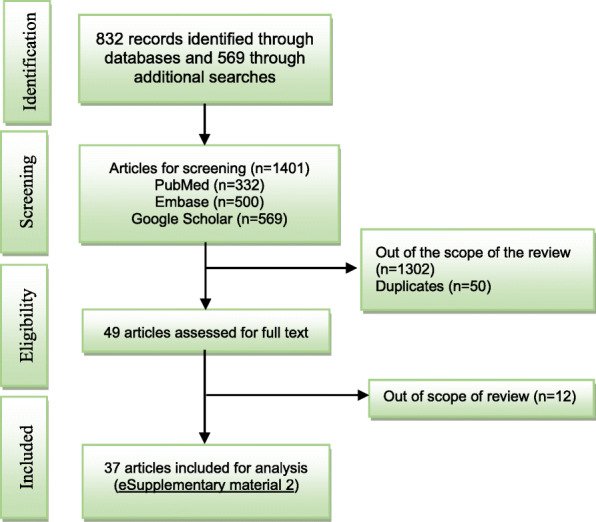
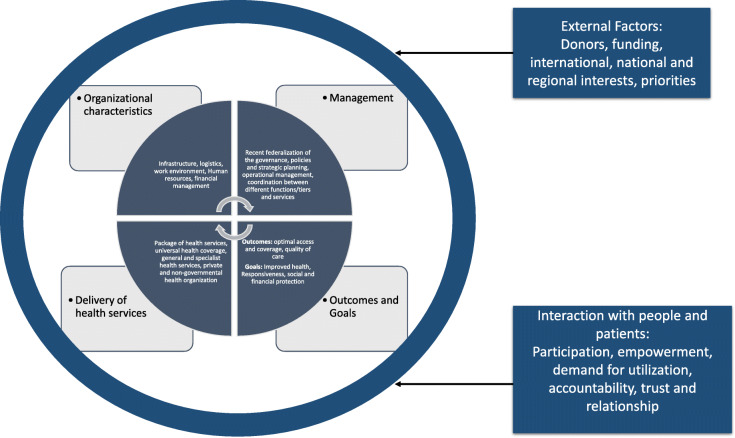
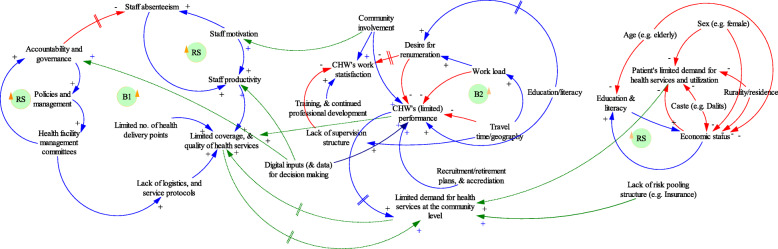
Nepal's Primary Health Care (PHC) is aligned vertically with disease control programs at the core and a vast network of community health workers at the periphery. Aligning with the globalization of health and the factors affecting global burden of diseases, Nepal echoes the progressive increase in life expectancy, changes in diseases patterns, including the current impact of COVID-19. Nepal's health system is also accommodating recent federalization, and thus it is critical to explore how the primary health care system is grappling the challenges amidst these changes. In this review, we conducted a narrative synthesis of literature to explore the challenges related to transformation of Nepal's primary health care delivery system to meet the demands incurred by impact of globalization and recent federalization, covering following database: PubMED, Embase and Google Scholar. Of the 49 articles abstracted for full text review, 37 were included in the analyses. Existing theories were used for constructing the conceptual framework to explain the study findings. The results are divided into four themes. Additional searches were conducted to further support the narrative synthesis: a total of 46 articles were further included in the articulation of main findings. Transforming Nepal's primary health care system requires a clear focus on following priority areas that include i) Revised efforts towards strengthening of community based primary health care units; ii) Adapting vertical programs to federal governance; iii) Reinforcing the health insurance scheme; and iv) Strengthening an existing network of community health workers and health human resources. This review discusses how these broad goals bear challenges and opportunities.
尼泊尔的初级卫生保健(PHC)在垂直方向上与核心的疾病控制计划以及周边庞大的社区卫生工作者网络保持一致。随着卫生的全球化以及影响全球疾病负担的因素的变化,尼泊尔呼应了预期寿命的逐步延长、疾病模式的变化,包括当前 COVID-19 的影响。尼泊尔的卫生系统也适应了最近的联邦化,因此,探讨初级卫生保健系统如何在这些变化中应对挑战至关重要。在本次综述中,我们对文献进行了叙述性综合分析,以探讨与尼泊尔初级卫生保健提供系统的转型相关的挑战,以满足全球化和最近联邦化的影响所带来的需求,涵盖了以下数据库:PubMED、Embase 和 Google Scholar。在对全文进行综述的 49 篇文章中,有 37 篇被纳入分析。现有的理论被用于构建解释研究结果的概念框架。结果分为四个主题。还进行了额外的搜索以进一步支持叙述性综合:总共又有 46 篇文章进一步阐述了主要发现。尼泊尔初级卫生保健系统的转型需要明确关注以下优先领域,包括 i)重新努力加强以社区为基础的初级卫生保健单位;ii)使垂直计划适应联邦治理;iii)加强医疗保险计划;和 iv)加强现有的社区卫生工作者和卫生人力资源网络。本次综述讨论了这些广泛目标所带来的挑战和机遇。