Federal University of Parana (UFPR) and private practice, Av Sete de Setembro 4456, Curitiba, Parana, 80250-210, Brazil.
Private Practice, Munich, Germany.
Prog Orthod. 2022 Feb 1;23(1):3. doi: 10.1186/s40510-021-00397-x.
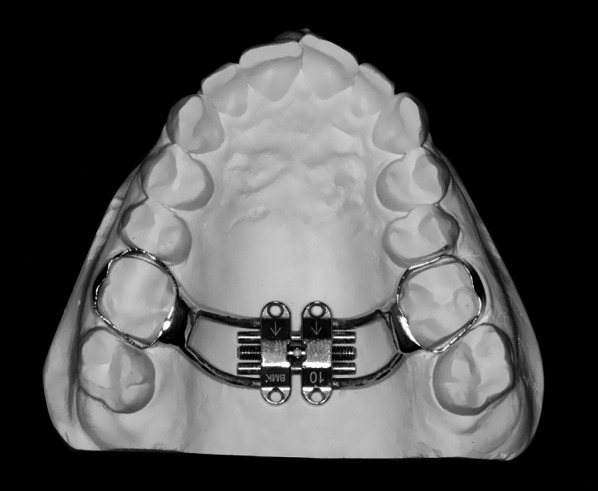
Transverse maxillary deficiency is a high prevalent growth disorder within the adult population that may lead to serious health issues, such as detrimental malocclusions and higher risk of developing obstructive sleep apnea (OSA). Mini-implant assisted rapid palatal expansion (MARPE), as it expands the mid-face and augment the nasal and oral cavities dimensions, may reduce the airflow resistance and thus play an important role on OSA therapy in some patients. The main objective of the present trial is to assess MARPE effects on the sleep and quality of life of non-obese adult OSA patients with transverse maxillary deficiency.
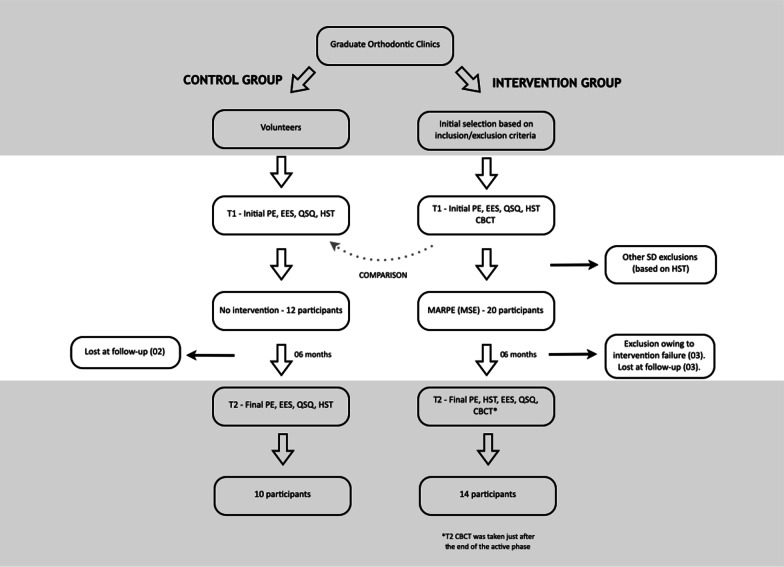
A total of 32 participants were divided into intervention and control groups. They underwent physical evaluation, Epworth Sleepiness Scale (EES) and Quebec Sleep Questionnaire (QSQ), cone-beam computed tomography (CBCT) and home sleep testing (HST) for OSA before MARPE (T1) and 6 months after the intervention (T2).
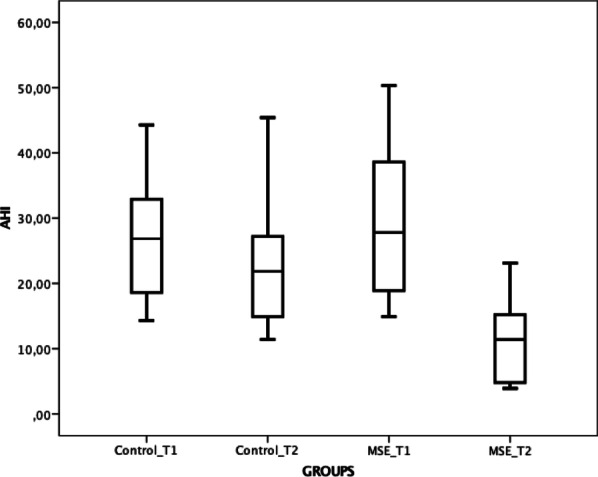
Questionnaires EES (daytime sleepiness) and QSQ (OSA-related quality of life) presented significant statistical differences between the groups. We also found clinical and statistical (p < 0.01) differences between the groups regarding the apnea/hypopnea index (AHI), as well as others HST parameters (mean oxygen saturation and snoring duration).
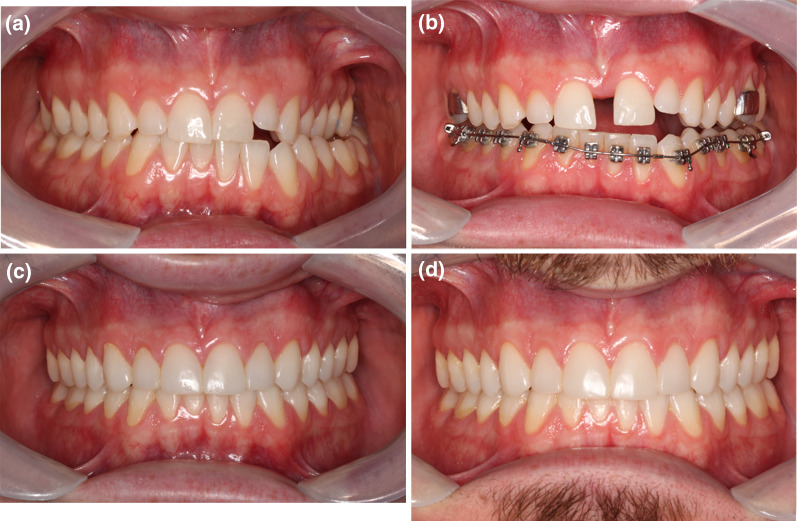
In our sample, MARPE (without any auxiliary osteotomy) showed a good success rate (85%) and promoted important occlusal and respiratory benefits. We observed important daytime sleepiness and OSA-related quality of life improvement, as well as the AHI (65.3%), oxygen saturation and snoring duration.
横向上颌骨发育不足是成年人中一种高发的生长障碍,可能导致严重的健康问题,如不良的咬合不正和更高的阻塞性睡眠呼吸暂停(OSA)发病风险。微型种植体辅助快速腭扩张(MARPE)可扩大中面部并增加鼻腔和口腔的尺寸,从而降低气流阻力,因此在某些患者的 OSA 治疗中可能发挥重要作用。本试验的主要目的是评估 MARPE 对横向上颌骨发育不足的非肥胖成年 OSA 患者的睡眠和生活质量的影响。
共 32 名参与者分为干预组和对照组。他们在 MARPE(T1)之前和干预后 6 个月(T2)接受了身体评估、嗜睡量表(EES)和魁北克睡眠问卷(QSQ)、锥形束 CT(CBCT)和家庭睡眠测试(HST)以评估 OSA。
问卷 EES(白天嗜睡)和 QSQ(与 OSA 相关的生活质量)在组间存在显著的统计学差异。我们还发现组间在呼吸暂停/低通气指数(AHI)以及其他 HST 参数(平均血氧饱和度和打鼾持续时间)方面存在临床和统计学(p < 0.01)差异。
在我们的样本中,MARPE(无任何辅助截骨术)显示出较高的成功率(85%),并带来了重要的咬合和呼吸益处。我们观察到白天嗜睡和与 OSA 相关的生活质量的重要改善,以及 AHI(65.3%)、血氧饱和度和打鼾持续时间的改善。