Department of Pharmaceutical Chemistry, Philipps-University Marburg, Marburg, Germany.
Department of Pharmacology, University of North Carolina School of Medicine, Chapel Hill, North Carolina, USA.
Br J Pharmacol. 2022 Jul;179(14):3651-3674. doi: 10.1111/bph.15811. Epub 2022 Mar 27.
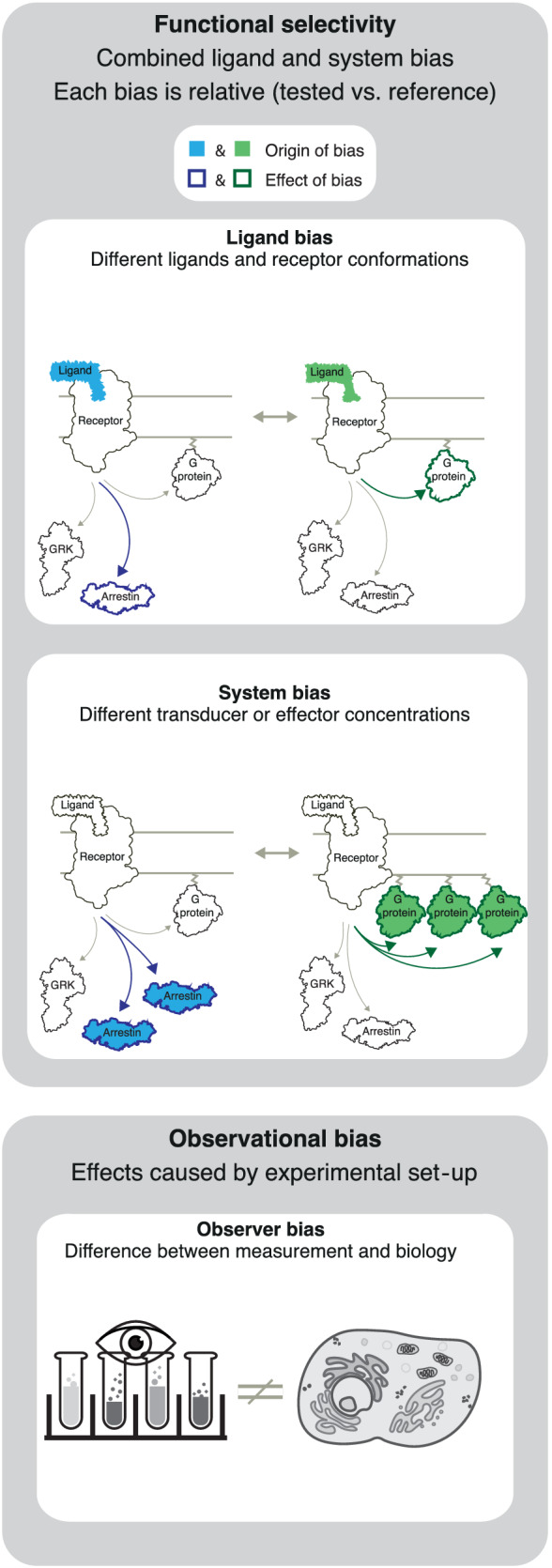
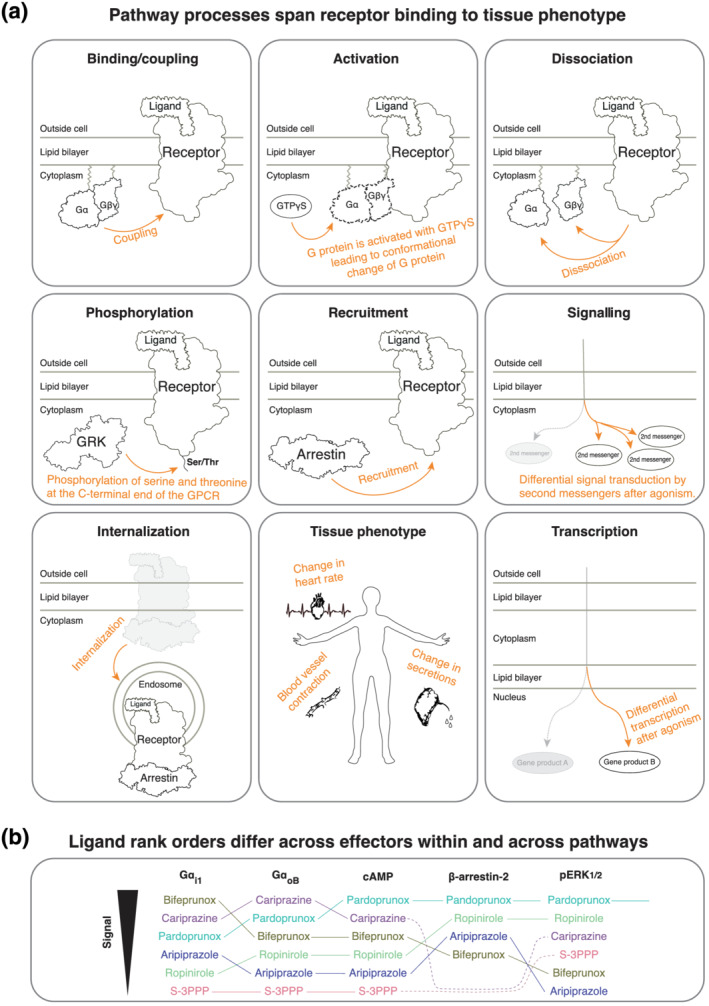
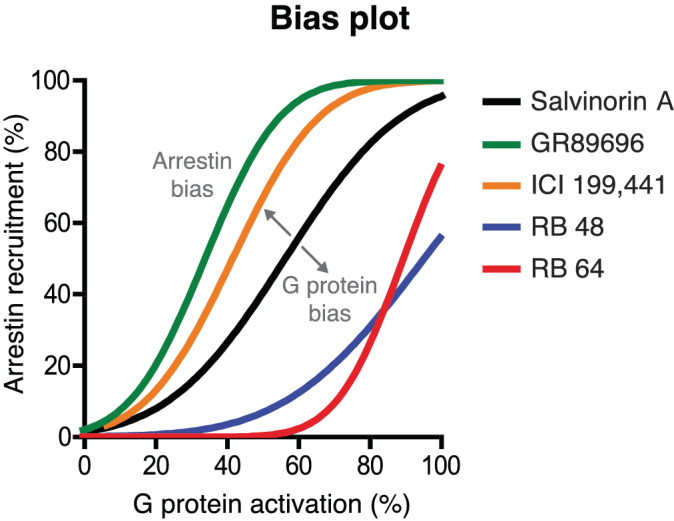
GPCRs modulate a plethora of physiological processes and mediate the effects of one-third of FDA-approved drugs. Depending on which ligand activates a receptor, it can engage different intracellular transducers. This 'biased signalling' paradigm requires that we now characterize physiological signalling not just by receptors but by ligand-receptor pairs. Ligands eliciting biased signalling may constitute better drugs with higher efficacy and fewer adverse effects. However, ligand bias is very complex, making reproducibility and description challenging. Here, we provide guidelines and terminology for any scientists to design and report ligand bias experiments. The guidelines will aid consistency and clarity, as the basic receptor research and drug discovery communities continue to advance our understanding and exploitation of ligand bias. Scientific insight, biosensors, and analytical methods are still evolving and should benefit from and contribute to the implementation of the guidelines, together improving translation from in vitro to disease-relevant in vivo models.
G 蛋白偶联受体(GPCRs)调节着大量的生理过程,并介导了三分之一的美国食品药品监督管理局(FDA)批准药物的作用。根据激活受体的配体不同,它可以与不同的细胞内转导器结合。这种“偏向信号”范式要求我们现在不仅要根据受体,还要根据配体-受体对来描述生理信号。引发偏向信号的配体可能构成更有效、副作用更少的更好药物。然而,配体偏向非常复杂,使得重现性和描述性具有挑战性。在这里,我们为任何科学家提供了设计和报告配体偏向实验的指南和术语。这些指南将有助于一致性和清晰度,因为基础受体研究和药物发现社区继续推进我们对配体偏向的理解和利用。科学洞察力、生物传感器和分析方法仍在不断发展,应该受益于并有助于指南的实施,共同提高从体外到与疾病相关的体内模型的转化。