Center for Global Infectious Disease Research, Seattle Children's Research Institute, Seattle, Washington, United States of America.
Vaccine and Infectious Disease Division, Fred Hutchinson Cancer Research Center, Seattle, Washington, United States of America.
PLoS Pathog. 2022 Feb 2;18(2):e1010282. doi: 10.1371/journal.ppat.1010282. eCollection 2022 Feb.
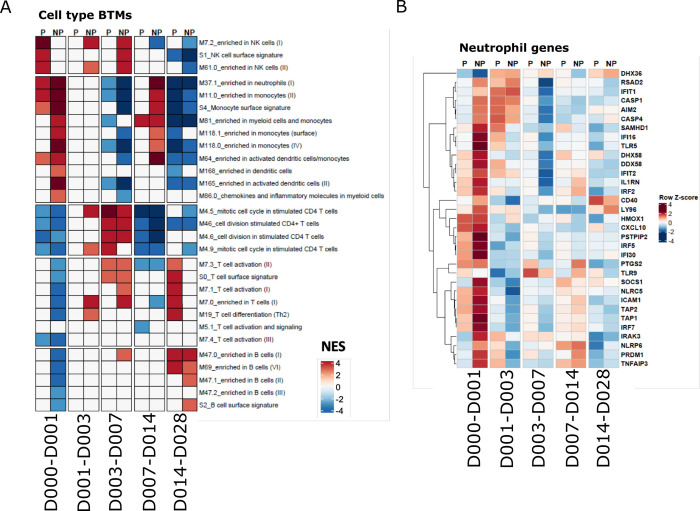
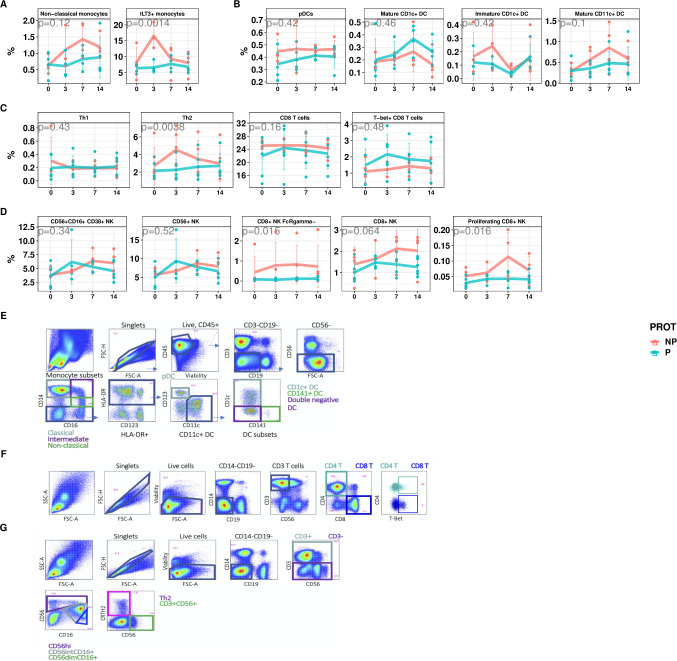
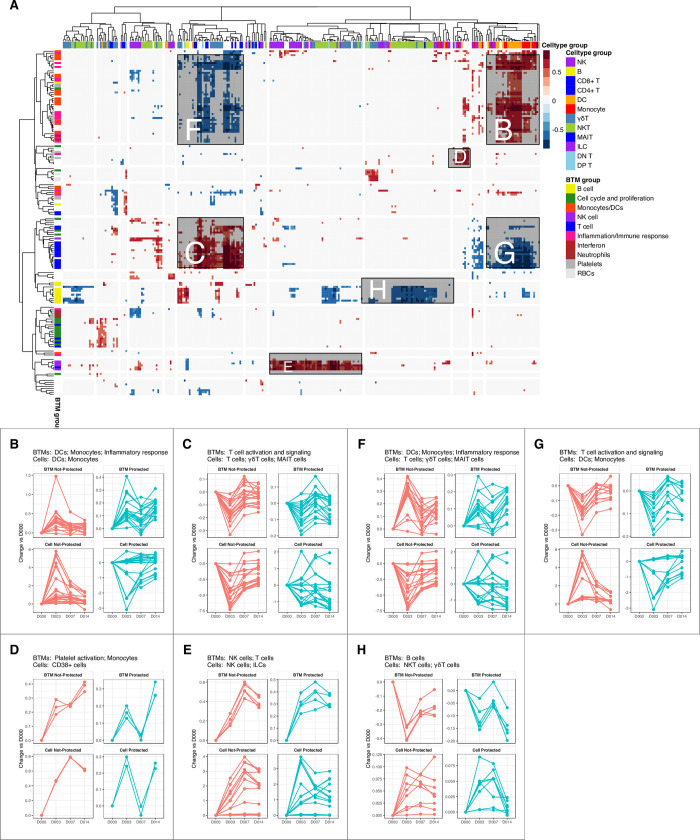
Immunization with radiation-attenuated sporozoites (RAS) can confer sterilizing protection against malaria, although the mechanisms behind this protection are incompletely understood. We performed a systems biology analysis of samples from the Immunization by Mosquito with Radiation Attenuated Sporozoites (IMRAS) trial, which comprised P. falciparum RAS-immunized (PfRAS), malaria-naive participants whose protection from malaria infection was subsequently assessed by controlled human malaria infection (CHMI). Blood samples collected after initial PfRAS immunization were analyzed to compare immune responses between protected and non-protected volunteers leveraging integrative analysis of whole blood RNA-seq, high parameter flow cytometry, and single cell CITEseq of PBMCs. This analysis revealed differences in early innate immune responses indicating divergent paths associated with protection. In particular, elevated levels of inflammatory responses early after the initial immunization were detrimental for the development of protective adaptive immunity. Specifically, non-classical monocytes and early type I interferon responses induced within 1 day of PfRAS vaccination correlated with impaired immunity. Non-protected individuals also showed an increase in Th2 polarized T cell responses whereas we observed a trend towards increased Th1 and T-bet+ CD8 T cell responses in protected individuals. Temporal differences in genes associated with natural killer cells suggest an important role in immune regulation by these cells. These findings give insight into the immune responses that confer protection against malaria and may guide further malaria vaccine development. Trial registration: ClinicalTrials.gov NCT01994525.
用减毒疟原虫孢子(RAS)免疫可提供针对疟疾的绝育保护,尽管这种保护的机制尚不完全清楚。我们对免疫蚊传播的辐射衰减孢子(IMRAS)试验的样本进行了系统生物学分析,该试验包括 PfRAS 免疫的恶性疟原虫(PfRAS)、疟原虫未感染的参与者,他们随后通过受控人类疟疾感染(CHMI)评估了对疟疾感染的保护。分析了初次 PfRAS 免疫后采集的血液样本,以利用全血 RNA-seq、高参数流式细胞术和 PBMC 的单细胞 CITEseq 整合分析,比较保护性和非保护性志愿者之间的免疫反应。这项分析揭示了早期先天免疫反应的差异,表明与保护相关的不同途径。特别是,初次免疫后早期炎症反应水平升高对保护性适应性免疫的发展不利。具体而言,PfRAS 疫苗接种后 1 天内诱导的非经典单核细胞和早期 I 型干扰素反应与免疫受损相关。未受保护的个体还表现出 Th2 极化 T 细胞反应的增加,而我们观察到受保护个体中 Th1 和 T-bet+CD8 T 细胞反应呈增加趋势。与自然杀伤细胞相关的基因的时间差异表明这些细胞在免疫调节中具有重要作用。这些发现深入了解了赋予疟疾保护的免疫反应,并可能指导进一步的疟疾疫苗开发。试验注册:ClinicalTrials.gov NCT01994525。