Center for Systems and Computational Biology, Rutgers Cancer Institute of New Jersey, Rutgers University, New Brunswick, NJ, 08903, USA.
Institute for Cancer Genetics, Columbia University, New York, NY, 10032, USA.
J Transl Med. 2022 Feb 2;20(1):65. doi: 10.1186/s12967-022-03259-0.
Revealing the impacts of endogenous and exogenous mutagenesis processes is essential for understanding the etiology of somatic genomic alterations and designing precise prognostication and treatment strategies for cancer. DNA repair deficiency is one of the main sources of endogenous mutagenesis and is increasingly recognized as a target for cancer therapeutics. The role and prevalence of mechanisms that underly different forms of DNA repair deficiencies and their interactions remain to be elucidated in gynecological malignancies.
We analyzed 1231 exomes and 268 whole-genomes from three major gynecological malignancies including uterine corpus endometrial carcinoma (UCEC) as well as ovarian and cervical cancers. We also analyzed data from 134 related cell lines. We extracted and compared de novo and refitted mutational signature profiles using complementary and confirmatory approaches and performed interaction analysis to detect co-occurring and mutually exclusive signatures.
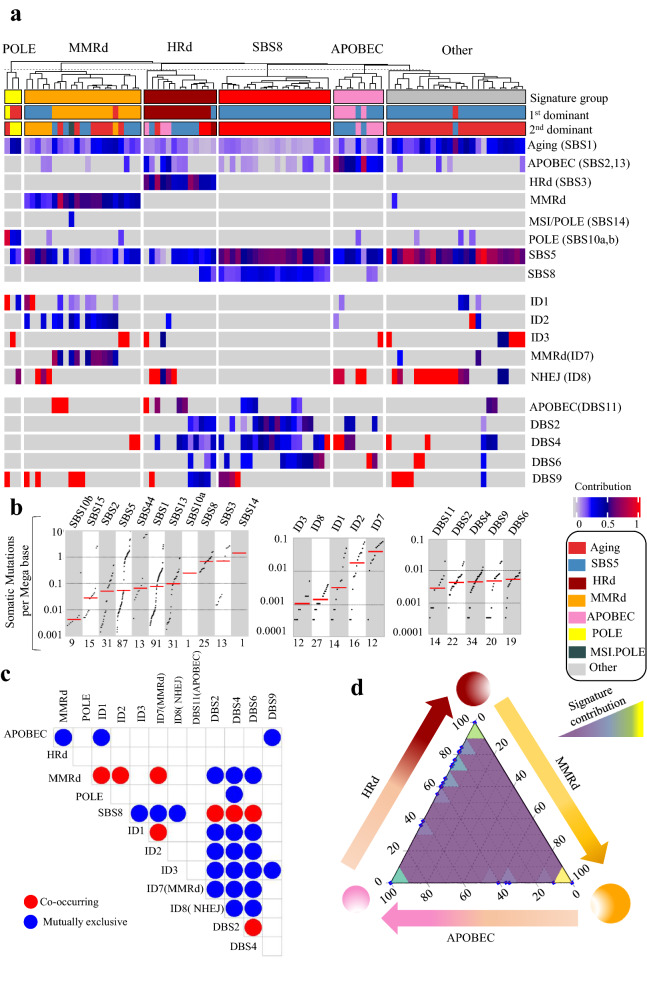
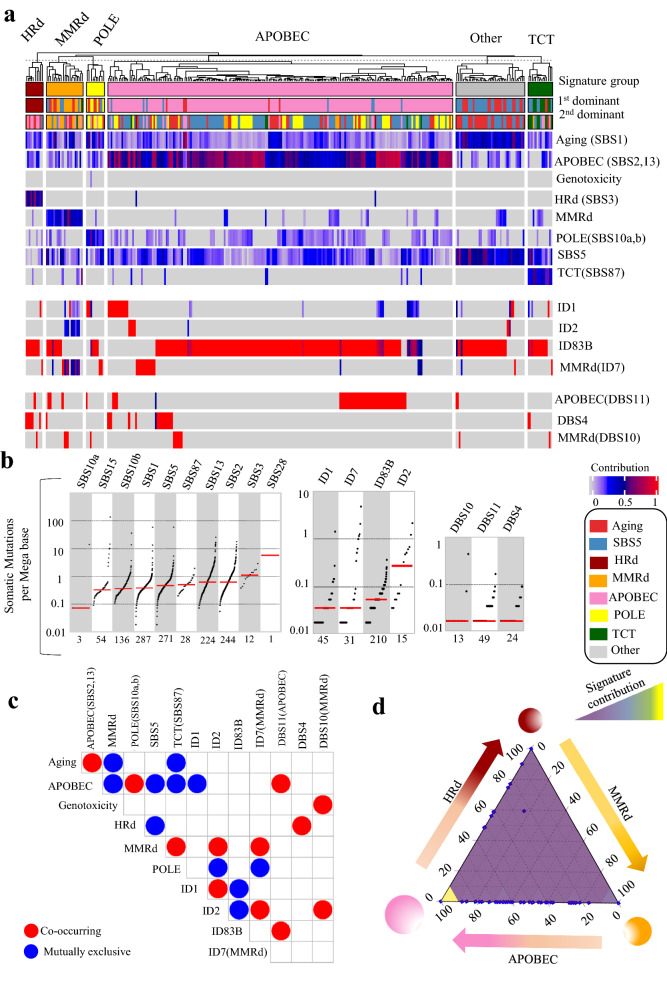
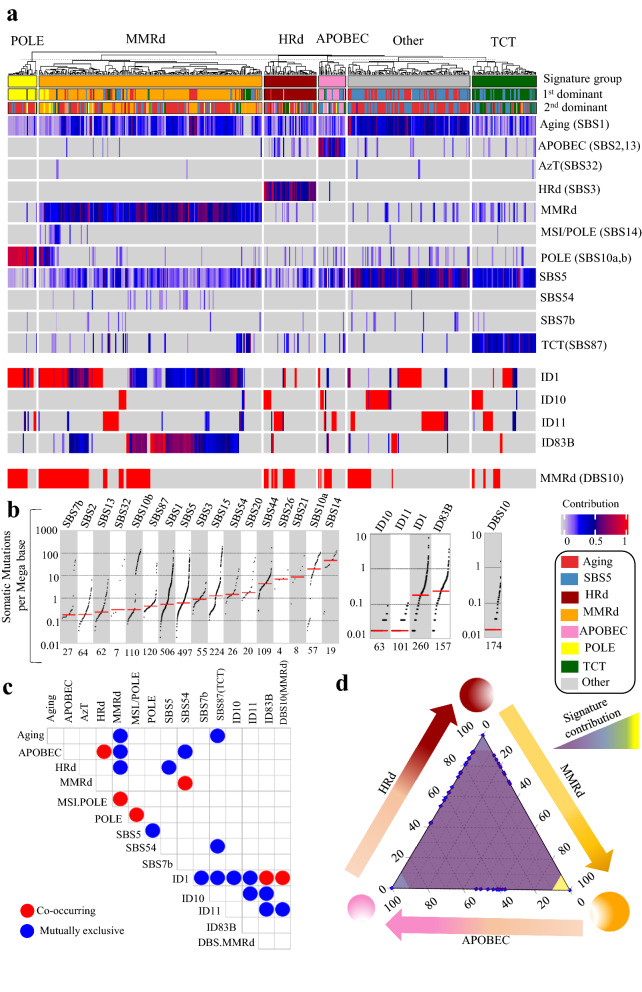
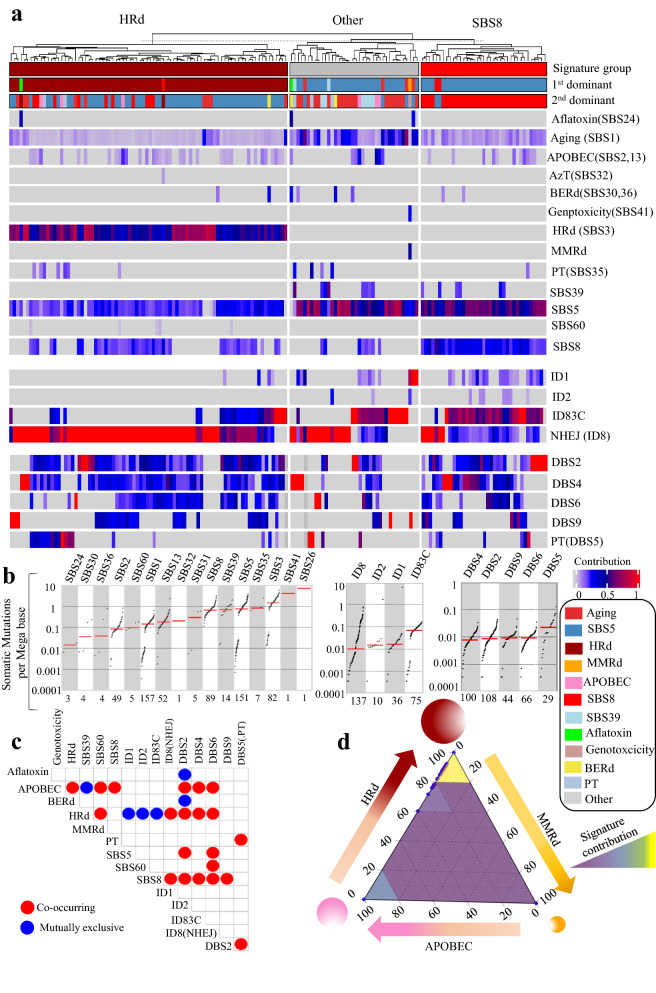
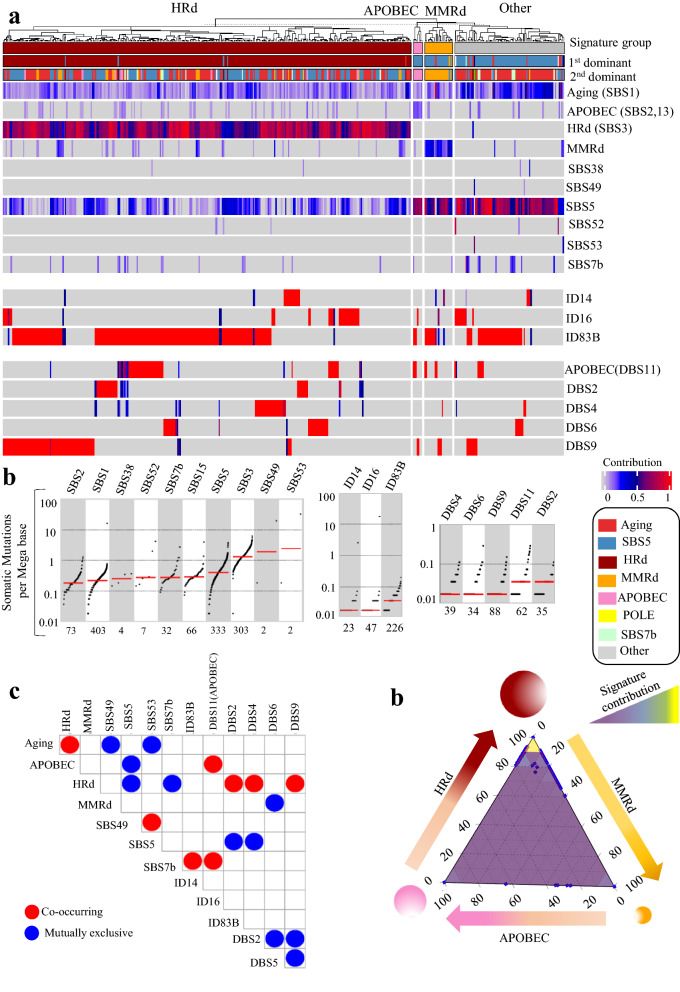
We found an inverse relationship between homologous recombination deficiency (HRd) and mismatch repair deficiency (MMRd). Moreover, APOBEC co-occurred with HRd but was mutually exclusive with MMRd. UCEC tumors were dominated by MMRd, yet a subset of them manifested the HRd and APOBEC signatures. Conversely, ovarian tumors were dominated by HRd, while a subset represented MMRd and APOBEC. In contrast to both, cervical tumors were dominated by APOBEC with a small subsets showing the POLE, HRd, and MMRd signatures. Although the type, prevalence, and heterogeneity of mutational signatures varied across the tumor types, the patterns of co-occurrence and exclusivity were consistently observed in all. Notably, mutational signatures in gynecological tumor cell lines reflected those detected in primary tumors.
Taken together, these analyses indicate that application of mutation signature analysis not only advances our understanding of mutational processes and their interactions, but also it has the potential to stratify patients that could benefit from treatments available for tumors harboring distinct mutational signatures and to improve clinical decision-making for gynecological malignancies.
揭示内源性和外源性诱变过程的影响对于理解体细胞基因组改变的病因学以及为癌症设计精确的预后和治疗策略至关重要。DNA 修复缺陷是内源性诱变的主要来源之一,并且越来越被认为是癌症治疗的靶点。在妇科恶性肿瘤中,不同形式的 DNA 修复缺陷的机制及其相互作用的作用和普遍性仍有待阐明。
我们分析了来自三种主要妇科恶性肿瘤(包括子宫体子宫内膜癌[UCEC])以及卵巢癌和宫颈癌的 1231 个外显子组和 268 个全基因组。我们还分析了来自 134 个相关细胞系的数据。我们使用互补和确认方法提取和比较了新出现和重新拟合的突变特征谱,并进行了相互作用分析以检测共同发生和相互排斥的特征。
我们发现同源重组缺陷(HRd)和错配修复缺陷(MMRd)之间存在反比关系。此外,APOBEC 与 HRd 同时发生,但与 MMRd 相互排斥。UCEC 肿瘤以 MMRd 为主,但其中一部分表现出 HRd 和 APOBEC 特征。相反,卵巢肿瘤以 HRd 为主,而一部分代表 MMRd 和 APOBEC。与两者相反,宫颈肿瘤以 APOBEC 为主,一小部分显示 POLE、HRd 和 MMRd 特征。尽管肿瘤类型的突变特征的类型、普遍性和异质性有所不同,但在所有肿瘤类型中都观察到共同发生和排他性的模式。值得注意的是,妇科肿瘤细胞系中的突变特征反映了在原发性肿瘤中检测到的特征。
综上所述,这些分析表明,突变特征分析的应用不仅可以提高我们对突变过程及其相互作用的理解,而且还有潜力对可能受益于具有不同突变特征的肿瘤治疗的患者进行分层,并改善妇科恶性肿瘤的临床决策。